Painters in Gilbert, AZ

Managing properties in Gilbert means dealing with a very specific kind of pressure. The stucco exteriors across master-planned communities like Seville and Val Vista Lakes look sharp when a coating is fresh, but Gilbert’s UV index routinely climbs into the 9-to-11 range from May through September, and within a couple of seasons, that crisp color starts chalking, fading unevenly, and drawing HOA violation notices before the tenant even considers renewing. Add monsoon season into the equation, and you have moisture forcing its way into hairline stucco cracks every July through September, and the surface failure you see on the wall is only part of what’s happening.

Choosing the wrong painting crew in this environment doesn’t just mean a mediocre finish. It means redoing work that never matched the approved HOA palette, or watching a commercial storefront fade into the background when it should be pulling customers in.

Pro Tech Painting has operated under the same ownership since 1993, with a process built specifically for Arizona’s climate conditions, HOA color requirements, and the surface prep complexity that Gilbert’s stucco-heavy building stock demands.

since 1993

Painting Arizona homes and businesses

free estimate

Written price, no surprise costs

owner-managed crew

Estimate to final walkthrough

UV-faded and chalking stucco on a sun-exposed wall of a Gilbert Arizona master-planned community home before repainting

Why Painting in Gilbert Is More Demanding Than Most Property Owners Expect

Picture a stucco exterior on a master-planned community home near Seville. Two summers of UV exposure at extreme index levels have pulled the color unevenly out of the finish, leaving chalky patches that read as neglect against the neighborhood’s maintained landscaping. The HOA sends a notice. The coating isn’t just faded; it no longer matches the approved palette on file. Now you’re not scheduling a routine repaint. You’re managing a compliance issue with a submission deadline attached.

Gilbert’s monsoon season compounds the problem from a different direction. Moisture doesn’t just land on stucco; it finds hairline cracks in aging surfaces and works inward. A wall that looks cosmetically tired on the outside may already be absorbing moisture through joints and cracks that were never sealed before the last coat went on.

Gilbert’s rapid residential growth through the early 2000s into the mid-2010s produced large volumes of homes that are now hitting their repaint window simultaneously. Property managers overseeing multiple units are juggling HOA color submissions, approval timelines, and surface histories across buildings that weren’t all primed the same way when they were first painted. Some of those original coatings went onto alkaline stucco without adequate primer, which means the prep work today is more involved than it would be on newer construction.

The cost of delaying isn’t abstract. A tenant who sees a tired exterior decides to look elsewhere when the lease ends. A retail storefront in a high-foot-traffic corridor that looks past its prime signals the same thing to every customer walking by.

A Contractor Who Has Managed Gilbert’s Conditions Since Before It Was a Boomtown

When Al Levon started this company in 1993, Gilbert was a fraction of the size it is today. That longevity isn’t just a line on a website. It means the crew has watched what happens to paint on Arizona stucco when prep is skipped before monsoon season, has seen which UV-resistant products actually hold their color through multiple summer cycles and which chalk out within two years, and has worked through enough HOA color approval processes to understand where delays come from and how to get ahead of them.

Three decades under the same ownership changes what a client actually gets. A contractor still running the same business after thirty-plus years has dealt with difficult surface conditions, color mismatches, and jobs where the previous coat created complications for the next one. That experience shapes how an estimate is written, how a prep sequence is designed, and how a final walkthrough is conducted.

For a property manager or homeowner in Gilbert, the practical value is this: the person who walks the property and commits to a scope is the same person accountable when the job is done. There is no handoff to a subcontracted crew, no estimator who disappears after the paperwork is signed. Al’s direct involvement in job oversight means the standard doesn’t shift between the promise made at estimate and the finish delivered on the last day of work.

That continuity is especially relevant in Gilbert’s HOA-governed communities, where a color match that is even slightly off from the approved swatch creates a problem the property owner has to solve, not the painting crew that already left.

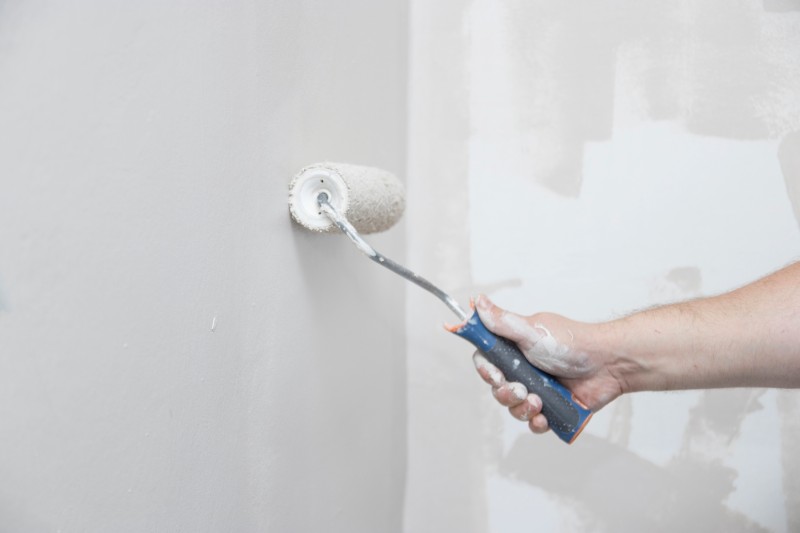
Painting Works Man Paints Light Wall Paint Roller Close Hand Tool
Man Roller Painting Wall Close House Paint Roller Home Repairs Family

Painting Services for Gilbert Homes, Rentals, and Commercial Properties

Property managers and homeowners in Gilbert need surfaces that hold up under the UV load, satisfy HOA color requirements, and don’t take a building offline for a week to accomplish. The services below are built around those specific pressures, not around what’s easiest to deliver.

Tenant turnover in a Gilbert master-planned community rental triggers a familiar sequence: walls scuffed along traffic paths, trim dinged at door frames, and a finish that read fine three years ago but now makes the unit look dated compared to newer inventory down the street. The same reset is common in professional office suites near Rivulon, where a healthcare-adjacent or tech tenant expects neutral, clean interiors that don’t draw attention to the walls.

Every interior repaint starts with walls patched and primed where needed, trim taped, and floors protected before a brush opens. Sheen selection matters in high-occupancy Gilbert rentals: a washable eggshell finish on walls that get daily contact reduces maintenance calls between lease cycles and holds up better than a flat finish that shows every wipe.

Stucco in Gilbert is porous, alkaline, and highly reactive to the UV and moisture cycle the climate delivers every year. A finish that wasn’t applied over properly primed stucco begins absorbing moisture at the surface within a few monsoon seasons, and a coating without UV-resistant pigment chemistry starts chalking before its rated lifespan is reached.

The prep sequence for every Gilbert exterior repaint includes pressure washing to remove chalk and contamination, scraping loose material, and spot-priming bare or cracked stucco before any finish coat goes on. Flexible acrylic coatings like SuperPaint are used where conditions warrant, because they accommodate the minor movement stucco undergoes through heat cycles without cracking at the surface. For HOA-governed properties, color matching to the approved swatch is a quality-control step built into the process, not an afterthought on the final day.

Arizona’s heat cycles cause cabinet doors to swell, warp slightly, and discolor along edges in ways that become more visible every year. A kitchen or primary bath refresh doesn’t require a full remodel to correct this.

Doors are removed, finished in a controlled environment where temperature and humidity don’t interfere with curing, and rehung once fully dry. The result is a smoother, more even surface than spraying or brushing doors while they hang in place, where drips, sags, and brush marks are harder to control. This service also suits property managers refreshing multi-unit interiors between long-term tenants, where a cabinet repaint extends the life of the unit’s finishes without the cost of replacement.

A retail storefront in Heritage District, an office suite at Rivulon, or a multi-unit residential building in south Gilbert all carry the same core requirement: the work gets done without shutting the operation down for longer than necessary. Crews schedule around normal business hours where possible, and the scope of that scheduling conversation happens during the estimate walkthrough, not after work has already started.

The crew handling commercial projects is the same directly managed team used on residential work. There is no separate commercial division and no subcontracting to an unfamiliar crew. Prep standards, surface protection, and finish quality don’t scale down based on property type or size.

Painting Gilbert’s Neighborhoods: What Changes Block by Block

Gilbert’s submarkets don’t share the same surface conditions, HOA structures, tenant mixes, or building age profiles. A spec sheet written for a 2003 stucco home in Power Ranch doesn’t translate directly to a Heritage District storefront or a newer construction unit in Morrison Ranch. Understanding what’s actually on the wall in each part of Gilbert, and who’s looking at it once the job is done, is where local knowledge earns its value.

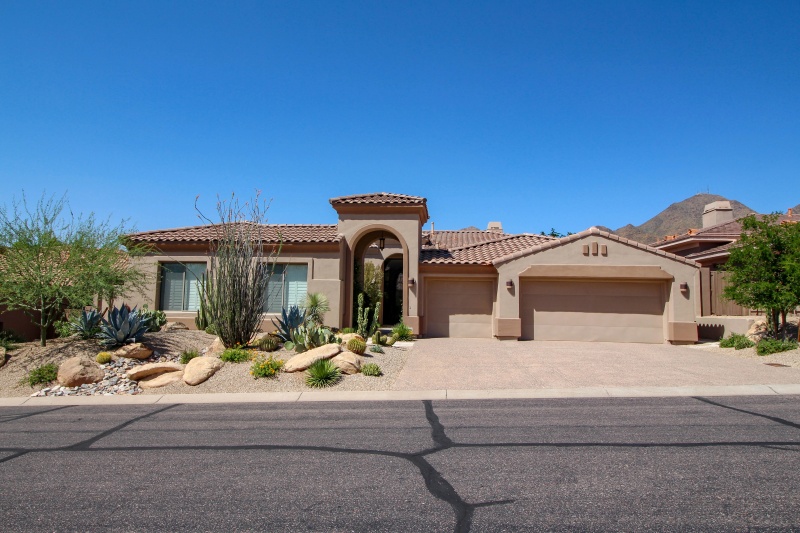
The property owner or retail tenant in Gilbert’s walkable downtown core operates in one of the highest-visibility environments in the city. Storefronts along Gilbert Road draw foot traffic from the farmers market, weekend events, and daily lunch and dinner service, meaning a building’s exterior is reviewed by hundreds of people on a busy Saturday who weren’t looking for it specifically. The surface mix in Heritage District spans older stucco facades, painted brick infill, and mixed-use ground-floor retail with second-story residential or office above, each requiring a different prep approach and finish strategy.

A peeling soffit, a mismatched trim color, or a facade that’s faded unevenly against a neighboring storefront that was just repainted sends a signal that competes directly with whatever the business inside is trying to say. In a corridor built around the idea that walking around is pleasant and worth doing, the exterior is part of the product.

Tight-access scheduling matters here in ways it doesn’t on a residential cul-de-sac. Adjacent businesses are open, delivery traffic runs through the alley, and sidewalk clearance on Gilbert Road requires job-site management that keeps the work contained without blocking foot traffic or customer entry. Clean setup and controlled site management are part of the job, not extras to be negotiated.

Color selection in Heritage District also carries more visual consequence than in a residential neighborhood. A finish that reads slightly warm or cool against a neighboring building’s palette is visible from across the street, and getting it right means testing it against the actual light conditions in the space before the full coat goes on.

Morrison Ranch presents a specific painting challenge that separates it from other Gilbert master-planned communities: the community’s visual identity is built around white rail fencing, mature tree canopy, and a tightly maintained color palette enforced by an active HOA. A property owner here isn’t just choosing a color they like. They’re choosing a color that will be reviewed against the community’s approved palette, measured against neighboring exteriors, and visible from the greenbelt paths that run through the neighborhood.

The surface mix is more varied than in communities built entirely of stucco. Rail fence sections are wood or composite, requiring a different primer and finish strategy than the stucco exterior walls of the home itself. Getting the transition between these surfaces right, in both finish consistency and color accuracy, is a detail that stands out immediately in Morrison Ranch’s open-plan streetscape.

Finish quality expectations here are high by any measure. The community’s median home values create an audience that notices edge work, spots where the color breaks inconsistently at trim lines, and walls where the finish is thin or uneven. These are visible at normal viewing distance in Morrison Ranch because the homes are set back from wide, well-lit streets with few visual distractions between the viewer and the wall.

HOA color submissions for Morrison Ranch require patience on the schedule. Approval timelines vary, and mobilizing a crew before the color is confirmed creates risk. Building that approval window into the project timeline from the first estimate conversation avoids delays once the crew is ready to work.

The Val Vista corridor concentrates some of Gilbert’s highest-density commercial real estate, including specialty clinics, professional offices, and healthcare-adjacent tenants whose interior environment communicates something specific to their patients and clients before a word is spoken. A waiting room with scuffed, yellowed walls in a medical or dental office signals that maintenance is deferred. A freshly repainted interior with clean trim and consistent finish sheen communicates the opposite.

Interior repaint cycles in professional office settings tend to focus on the surfaces that get the most daily contact: door frames, light switch surrounds, high-traffic hallway walls, and reception counters. These are also the surfaces that show wear first and most visibly, and they require more careful prep than open wall surfaces because damage tends to concentrate at edges and corners where cleaning and daily use intersect.

Color selection in medical and professional office environments near Val Vista Lakes typically runs toward neutral palettes that read clean and calm without the institutional flatness of pure white. Warm whites, soft greiges, and quiet blue-greens are common choices for this tenant type. The color consultation step is especially valuable in these settings, because the difference between a color that reads professional and one that reads cold or clinical is a few degrees of undertone, and that’s difficult to evaluate from a paint chip under fluorescent lighting.

Property managers overseeing medical office space along this corridor also deal with tenant-specific requirements around color and finish, which means the estimate walkthrough needs to account for what’s in the lease and what the outgoing and incoming tenants have agreed to before any paint is selected.

Power Ranch and the surrounding early-2000s master-planned communities in south Gilbert represent one of the most common painting scenarios in the city: homes that were built during a specific development window and are now reaching their repaint interval at approximately the same time, across a large geographic area. Property managers overseeing rental inventory here, and homeowners who haven’t repainted since original construction, are often dealing with the same combination of surface conditions.

Chalking is the most visible symptom. When a stucco coating has UV-oxidized through its finish layer, the surface turns powdery and loses its ability to hold a new coat without proper prep. Running a hand across the wall leaves pigment residue on the palm. That chalking layer has to be removed through pressure washing and mechanical prep before a new coating will bond correctly.

Hairline cracking along stucco joints and at corners is the second common condition in this age cohort. These cracks are typically not structural, but they are direct pathways for monsoon moisture into the wall assembly. Flexible acrylic coatings bridge minor cracks more effectively than rigid finishes, but the cracks still need to be cleaned out and spot-primed before the finish coat covers them.

The third condition, less visible but more consequential, appears on homes where the original exterior coating was applied directly onto alkaline stucco without an appropriate primer. Over time, the alkalinity can degrade the bond between the stucco and the coating. When a new coat goes on top without addressing this, the failure repeats on a shorter timeline. Identifying this during the prep phase, rather than discovering it when the new finish starts peeling two summers later, is one of the areas where experience with Gilbert’s specific building stock matters most.

Pro Tech Painting crew working on a multi-unit property in the greater Gilbert Arizona service area

Serving Gilbert Properties and the Broader Service Area

A property manager overseeing a portfolio spread across Gilbert and into surrounding suburbs doesn’t benefit from managing a different painting contractor for each geography. The team’s capacity extends well beyond Gilbert’s city limits, covering surrounding communities and nearby commercial corridors without fragmenting quality or subcontracting work to crews that weren’t part of the original estimate conversation.

For a portfolio owner, a single contractor relationship means one point of contact, one consistent prep standard, and one person accountable for the finish at every address, whether that’s a Gilbert HOA community, a commercial property in a neighboring suburb, or a multi-unit building further out in the broader service area. That consistency is especially valuable when multiple properties need coordinated scheduling across a repaint cycle.

Get a Free Estimate for Your Gilbert Property

If the exterior on your Gilbert property has been on the to-do list for two seasons already, the stucco isn’t waiting. Chalking, hairline cracking, and HOA color compliance don’t improve on their own, and another Arizona summer accelerates the surface conditions that make the next repaint more involved than this one would have been.

Pro Tech Painting offers a free, no-obligation estimate for every project.
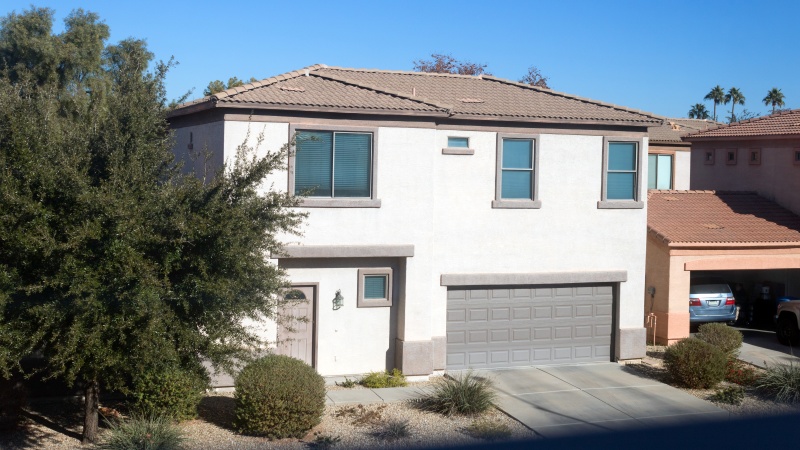
Residential Single Family Stucco House Two Levels Two Car Garage Drive

Frequently Asked Questions About Painting in Gilbert, AZ

Most HOA-governed communities in Gilbert require submitted color samples and written approval before exterior work begins. Getting a written estimate and completing a color consultation early in the planning process creates space in the project schedule for that approval step before the crew is ready to mobilize. Skipping this sequence and starting work before approval is confirmed is the most common cause of costly color corrections.

100% acrylic exterior finishes applied over properly primed stucco perform best in Gilbert’s climate. The prep work underneath the finish coat, including pressure washing, crack repair, and spot priming, determines whether the coating holds through multiple monsoon seasons or begins failing at the surface within a couple of years. The product selection matters, but it doesn’t compensate for a prep sequence that was cut short.

Gilbert’s busiest exterior painting windows fall in spring, roughly March through May, and fall, October through November, when temperatures allow proper application and curing without the extreme heat of mid-summer or the cold nights of winter. Scheduling a few weeks ahead during those periods is advisable, particularly for larger commercial properties or multi-unit buildings where the scope requires more planning time before work begins.

Commercial projects in Gilbert, including retail storefronts in Heritage District and office suites near Rivulon, are scheduled to minimize disruption to normal business operations. The specifics of that scheduling, which hours crews are on-site, how access is managed, and how the job is phased, are discussed during the estimate walkthrough so the plan is set before work starts, not adjusted on the fly once it’s already underway.

Stucco is alkaline and porous, which affects primer selection, how coatings bond to the surface, and how moisture behaves at the wall during monsoon season. Wood and fiber cement surfaces respond differently to moisture and require different primer chemistry than stucco. A crew with specific experience preparing and coating stucco, Gilbert’s most common exterior surface type, produces a longer-lasting result than one applying a generic process regardless of substrate.