Painters in Tempe, AZ

Running a rental portfolio or commercial property in Tempe means managing a city that never really slows down. Units near Apache Boulevard turn over with semesters. Storefronts on Mill Avenue see foot traffic six days out of seven. And through all of it, the sun is doing quiet, steady damage to every exterior stucco surface that faces south or west. Finding a painting contractor who understands that specific pressure, the tenant clock ticking, the HOA color committee waiting, the exterior that looked fine in February but is visibly chalking by July, is harder than it should be in a city this size. Pro Tech Painting has been the locally owned answer to that problem since 1993, serving Tempe homeowners, property managers, and business owners under the same ownership for more than three decades.

since 1993

Locally owned and operated

residential and commercial

Painting across Tempe

written estimate

No surprises, before a single brush stroke

free color consultation

Included with every estimate

UV-faded and chalking stucco on a west-facing wall of a Tempe Arizona home before repainting

Why Tempe Properties Lose Value Between Paint Jobs Faster Than Owners Expect

Tempe summers routinely push past 110 degrees, and UV radiation at that intensity chalks and fades exterior stucco on south- and west-facing walls faster than most paint warranties would suggest. What looks acceptable in March can look dull and oxidized by October. Then the monsoons arrive. Brief, intense humidity hits walls that have been baking for months, and moisture works behind any compromised paint film, lifting it from the stucco in patches that aren’t obvious until the damage is already widespread and expensive to address properly.

The city’s density adds another layer. Tempe is one of the most built-out cities in the region, which means many properties sit close together with limited airflow on certain exposures, accelerating surface moisture retention after a storm. And because rental-heavy corridors like Apache Boulevard cycle tenants quickly, interior walls absorb scuffs, drywall dings, and finish wear at a pace that an owner-occupied home rarely sees.

The cost of ignoring this is concrete: a prospective tenant who walks a unit, notices chalky exterior paint and marked-up hallway walls, and signs a lease two blocks away instead. In a city where competing properties are that close, visible deterioration is a leasing liability.

More Than Three Decades of Painting Tempe From the Same Ownership

Most painting contractors in Arizona don’t last three decades under the same ownership. Crew turnover is high, ownership changes hands, and the institutional knowledge of a particular city’s building stock tends to walk out the door with the people who built it. Owner Al Levon started this business in 1993 and has run it under the same ownership ever since, which is worth saying plainly because it’s genuinely unusual in this trade.

What that longevity actually means for a Tempe property manager or homeowner is that Al and his team have watched this city change in real time. They’ve worked through the redevelopment that reshaped the downtown core and the light rail corridors, through the continued build-out of South Tempe’s residential neighborhoods, and through the ongoing densification of the student-adjacent corridors near the university. That’s not background information. It translates into practical familiarity with the building stock here: which stucco applications from the 1980s and 1990s tend to hold primer well, which mid-century ranch home layouts complicate cabinet painting logistics, which south-facing elevations in Southwest Tempe are showing their age on the original builder’s paint right now.

A newer contractor can read a spec sheet. What they can’t replicate is three decades of working on the actual surfaces in this specific city. The same prep standards, the same finish expectations, and the same walkthrough process that applied to the first Tempe job in 1993 apply to the one scheduled for next week. That consistency is what makes a thirty-year-old business worth choosing over a newer alternative with a lower opening bid.

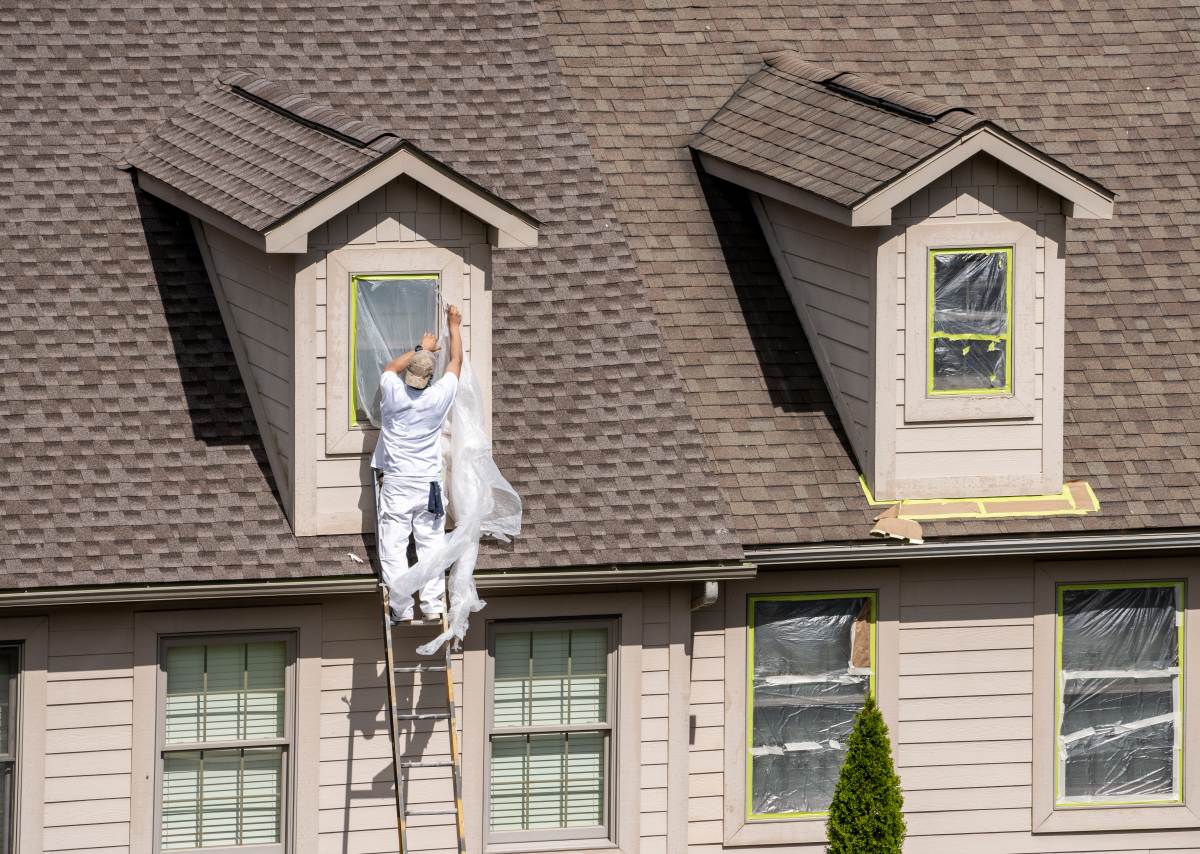
A male painter in a white uniform with a roller works in his hand in a
Masking Tape Holding Plastic Covering Place Windows Prior Spraying Pai

Painting Services for Tempe Homes, Rentals, and Commercial Properties

The situations Tempe property managers and homeowners actually navigate don’t look like a service catalog. They look like a rental unit that needs interior walls turned around in the four days between a move-out and a new lease start. They look like a retail storefront on a busy pedestrian corridor where the exterior has to look sharp year-round regardless of what the summer sun is doing to the finish. They look like a South Tempe home whose stucco hasn’t been repainted since the mid-2000s and whose west-facing wall is starting to show it. The services below are organized as answers to those situations.

Condos near the university corridor, HOA-governed townhomes in South Tempe, and multi-unit rental buildings on Apache Boulevard share a common interior challenge: walls that take heavy wear between tenants and need to recover quickly. Proper prep is what separates a repaint that lasts three years from one that shows wear inside a season. That means patching drywall dings, sanding scuffed surfaces, priming where needed, and taping trim before any finish coat goes on. In high-turnover rentals, sheen selection also matters. A flat finish that photographs well shows every handprint and cleaning mark within weeks. Washable, durable sheens that hold up to frequent wiping without burnishing are the right call for most Tempe rental interiors.

South- and west-facing stucco walls in Tempe absorb direct afternoon sun from May through September, and cheaper exterior paints begin to chalk and fade before the two-year mark under that UV load. Proper exterior prep here means pressure washing dust and oxidation off the surface first, scraping any lifted or bubbled areas, and applying a finish formulated for high-UV exposure rather than a standard exterior latex. The team uses high-performance exterior acrylic paints, including Sherwin-Williams SuperPaint when the project calls for it, because Arizona sun conditions demand a coating rated for that specific load. A paint job applied over an unprepped surface in Tempe’s climate doesn’t fail slowly. It fails in ways that are visible and expensive to correct.

Many of Tempe’s older mid-century ranch homes and 1980s-era multi-unit buildings have kitchens and bathrooms where the layout is functional but the cabinetry looks dated. Full cabinet replacement isn’t cost-effective in a rental unit or a home where the owner isn’t planning a full remodel. Repainting is. The process involves removing cabinet doors and finishing them in a controlled environment rather than painting them in place, which produces a smoother, more even result without the brush lag and uneven coverage that in-place cabinet painting typically shows. Doors are rehung once fully cured, and the result looks closer to a factory finish than a field application.

A retail storefront where foot traffic starts before 8 a.m. can’t shut down for a week while a painting crew works through the building on a residential schedule. Property managers overseeing office space near the light rail corridor or multi-unit complexes with common areas that need refreshing face the same constraint. The work has to happen around normal operations. Scheduling around business hours is standard practice, not a special accommodation. And the crew doing the commercial work is the same crew that handles residential projects, not a separate subcontracted division, which means the prep standards and finish quality are consistent regardless of whether the job is a single-family home or a mixed-use ground-floor retail space.

Painting Services Across Tempe’s Neighborhoods

Tempe is a fully built-out city where the neighborhoods are genuinely different from each other in building age, surface type, density, and the kind of tenant or customer they serve. A painting contractor who understands those differences brings a different result than one who treats every job as a generic flat-surface problem. The four areas below represent the actual property mix across Tempe and how the service fits each one specifically.

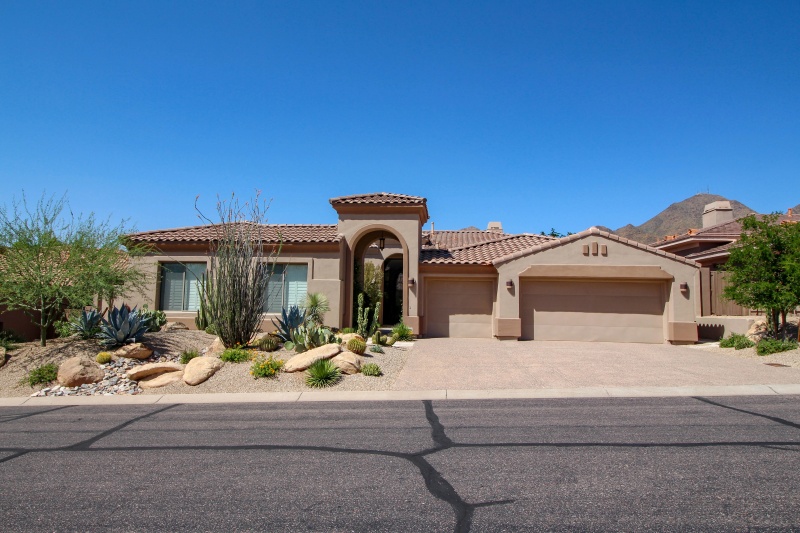
If you manage a storefront, restaurant, or mixed-use building in downtown Tempe, the exterior is never just a background element. It’s visible simultaneously from the light rail platform, from street level, and from the pedestrian flow that moves through the corridor on weekday evenings and weekends. At that visibility, surface wear reads quickly. Eye-level scuffing from pedestrian contact accumulates faster on Mill Avenue storefronts than on properties set back from foot traffic, and any visible deterioration works against the commercial energy the corridor depends on for its retail vitality.

Scheduling is as important as quality in this environment. Accessing a building exterior during business hours in a corridor this dense requires coordination with neighboring tenants, awareness of foot traffic patterns by time of day, and a crew that can work efficiently in a compressed window without leaving equipment and materials in a way that disrupts the sidewalk. That’s not a minor logistical note. A crew that doesn’t understand how to stage a job in a high-foot-traffic pedestrian environment creates problems for neighboring businesses and for the property manager responsible for tenant relationships in the building.

The character of the Mill Avenue corridor also means that visible deterioration carries a reputational cost beyond the individual property. Storefronts that read as well-maintained signal something to the customers and businesses around them. Ones that don’t read the same way do the opposite. The exterior of a property in this corridor is doing active commercial work year-round, and the paint condition is part of that work.

The stretch running east-west through this part of Tempe is one of the densest, most transit-connected corridors in the city, and the property mix reflects that: older commercial strip buildings, multi-unit rentals, and student-adjacent housing with tenant turnover rates that are among the highest anywhere in Tempe. Interior repaint cycles on Apache Boulevard run shorter than almost anywhere else in the city because the tenant population turns over quickly and each new tenancy typically reveals the wear the previous one left behind.

Exterior surfaces in this corridor face a compounding challenge. Heavy vehicle traffic on a major arterial road generates exhaust and particulate deposits that accelerate oxidation on painted surfaces, layering on top of the direct sun degradation that aging stucco in this part of Tempe already faces. The result is an exterior that can look dirty and dull even when the paint hasn’t technically failed yet, because the surface condition underneath the finish is driving what the eye sees.

A property manager overseeing multiple units in the same building here needs a contractor who can move efficiently and hold a consistent quality bar across all of them. Variability between units in the same building creates its own problems when prospective tenants walk the property. Getting a consistent finish across a multi-unit repaint on Apache Boulevard, where wall conditions vary by unit and tenant damage is uneven, requires the kind of prep discipline and crew consistency that only comes from working under the same ownership standards job after job.

South Tempe’s established residential corridors, including the areas around Kiwanis Park and The Lakes community, are home to predominantly owner-occupied single-family homes and townhomes built from the 1970s through the 1990s. The original stucco on many of these homes is approaching or past its typical repaint interval, which means the conversation a homeowner needs to have with a painting contractor isn’t just about color. It’s about surface assessment: which elevations have held up, which ones are starting to chalk or lift near the trim, and what prep is going to be required before new material goes on.

HOA governance is common in this part of Tempe, and that adds a specific wrinkle to the estimating conversation. A homeowner who selects a color they like, purchases paint, and then discovers it doesn’t match the approved palette faces a potentially costly repaint before the job is even done. The complimentary color consultation included with every estimate is particularly useful in HOA-governed neighborhoods precisely because it happens before paint is purchased or committed. Walking through compliant color options with someone who understands how those colors read on stucco in Tempe’s afternoon light, and how the HOA approval process typically works in South Tempe neighborhoods, changes what the estimating visit is worth to the homeowner.

The homes in this corridor are also, for many of their owners, long-term investments where exterior condition ties directly to property value. A house in The Lakes area whose exterior paint is visibly chalking reads differently to a buyer or appraiser than one whose stucco looks well-maintained. The repaint decision in this neighborhood isn’t just about aesthetics. It’s about protecting what the homeowner has spent decades building.

The newer residential and commercial development in the southwestern part of the city includes a mix of single-family homes and small commercial clusters built primarily in the 2000s and early 2010s. These properties don’t carry the visible age of a 1970s ranch home in South Tempe, which can make it easy for owners to assume the exterior paint situation is still fine. It often isn’t.

Stucco on homes built in this era is now reaching the age where exterior paint needs evaluation. The south- and west-facing elevations, which absorb the most direct sun, often show early chalking or slight fading while the shaded sides of the same house still look acceptable. That uneven presentation is the signal that the original builder’s exterior paint is nearing the end of its useful life on the sun-exposed surfaces, even if the overall impression is that the house still looks okay from the street.

The monsoon exposure compounds this. A home in Southwest Tempe that went through ten-plus monsoon seasons with the same paint film is likely showing microscopic moisture intrusion behind any compromised areas on the stucco, even if surface lifting hasn’t started yet. Addressing the exterior before that progression advances is significantly more cost-effective than addressing it after active peeling begins and repair becomes part of the scope. The homeowner in this part of Tempe who schedules an estimate now is making a different financial decision than the one who waits until the damage is visible from the curb.

Pro Tech Painting crew working on a multi-unit property in the greater Tempe Arizona service area

Serving Tempe Properties and the Broader Region

Some property managers based in Tempe oversee portfolios that don’t stop at the city limits. A commercial building here, a multi-unit complex in a neighboring community, a retail property in a surrounding suburb. Managing painting contractors separately for each geography adds coordination overhead that compounds quickly when leases turn over on different schedules and multiple properties need attention at once.

The team’s capacity covers Tempe fully and extends into the broader service area, so a portfolio that spans beyond the city doesn’t require sourcing a second contractor relationship. One point of contact, one set of prep standards, one estimating process handles the work wherever it needs to happen. For a property manager whose job already involves juggling more variables than one person should reasonably track, that operational simplicity has real value. The work gets done consistently, the communication stays in one place, and the finish quality doesn’t vary based on which side of a city boundary the property happens to sit on.

Get a Free Estimate for Your Tempe Property

The properties that hold their value and earn consistent tenant confidence in Tempe share something simple: an owner who addressed the exterior before the damage was visible from the curb, and who turned the interior around before a prospective tenant walked the unit and signed a lease two blocks away instead. Every estimate starts with a physical walkthrough of the actual space rather than a per-square-foot calculation over the phone, because surface condition is what drives scope and a phone quote can’t account for the difference between a wall that needs light prep and one that needs patching, priming, and two finish coats.

The written estimate covers the full scope of work with no obligation to move forward. There’s no charge for the visit, and the complimentary color consultation happens in the same conversation, before paint is purchased and before an HOA approval becomes a problem. Same ownership since 1993, the same prep standards, and the same crew on residential and commercial work across Tempe.
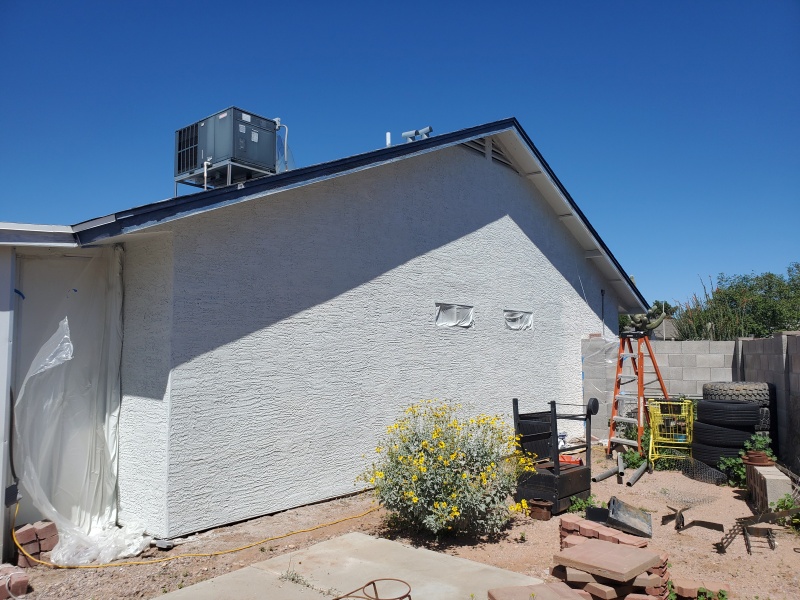
Painting Exterior Stucco House Gray Apache Junction Arizona Home Owner

Frequently Asked Questions About Painting in Tempe, AZ

National averages for exterior repaint intervals typically run seven to ten years, but Tempe’s UV intensity and monsoon humidity cycles compress that timeline on the surfaces that take direct sun. South- and west-facing stucco walls often show chalking, fading, and paint lifting near trim lines within five to seven years when a standard exterior latex was used. If you’re running a hand across the exterior and coming away with a chalky residue, or seeing visible fading on one side of the house while the shaded side still looks acceptable, the surface is telling you it’s ready before active peeling begins.

For a single unit in average condition, interior repainting is realistic within a short turnaround window. What affects that timeline most is wall condition. A unit that needs significant patching before paint goes on takes longer than one with minor scuffs. The number of rooms matters, and so does how much masking and trim work the space requires. The estimate walkthrough gives a realistic timeline based on the actual condition of that specific unit, not an assumption based on square footage alone.

Many Tempe neighborhoods, particularly in South Tempe and in areas with character-area designations, operate under HOA color approval requirements. That means a color selection needs to go through an approval process before paint is purchased. The complimentary color consultation included with every estimate is designed to help property owners work through compliant color options before committing to a shade, which avoids the scenario where an unapproved color requires a repaint before the job is fully complete.

High-performance exterior acrylic formulations rated for high-UV environments consistently outperform standard exterior latex on Tempe stucco, particularly on south- and west-facing elevations. Sherwin-Williams SuperPaint exterior is one formulation used specifically because its UV resistance and adhesion characteristics match what Arizona sun conditions require. Prep is equally important: pressure washing oxidation and dust off the surface, scraping any lifted areas, and spot-priming before the finish coat goes on determines how long the coating lasts regardless of what product is applied over an unprepared surface.

Every estimate starts with a physical walkthrough of the actual space rather than a per-square-foot calculation over the phone. For multi-unit and commercial properties, that distinction matters because surface condition varies by unit, and a phone quote can’t account for the difference between a wall that needs light prep and one that needs patching, priming, and two finish coats. The written estimate covers the full scope of work with no obligation to move forward. There’s no charge for the visit, and the color consultation is included in the same conversation.