Painters in Mesa, AZ

Picture a property manager driving past a retail storefront in the Fiesta District on a Tuesday morning, glancing at the south-facing stucco facade and clocking what she already knew was coming: the paint has gone dusty and flat, the color faded to a pale shadow of what it was two summers ago, and a long horizontal crack near the window header has started lifting at the edge. Or a homeowner in Dobson Ranch who repainted three years ago and is already staring at chalky residue on his fingertips after running a hand along the west-facing wall. These are not maintenance failures. They are what Mesa’s climate does to surfaces that were not painted with the right system, the right prep sequence, or both.

Mesa sits in one of the most punishing paint environments in the country. Months of intense UV exposure bake southwest-facing stucco until the binder in the paint film breaks down. Monsoon season follows, sending wind-driven moisture into every crack the sun opened. Getting exterior or interior painting right in this environment requires a contractor who has worked in Arizona for decades, not one learning the climate on your property.

Pro Tech Painting has been doing exactly that since 1993.

since 1993

Mesa homes and commercial work

licensed contractor

Arizona licensed, same ownership

free estimate

Written price, no obligation

color consultation

Complimentary on every job

UV-faded and chalking stucco on a southwest-facing wall of a Mesa Arizona home before repainting

Why Paint Fails Faster in Mesa Than Most Property Owners Expect

Mesa’s UV load is relentless. From late spring through early fall, southwest-facing stucco walls absorb direct sun for the better part of every day, and the paint film takes the full brunt. The binder breaks down first, leaving a chalky residue that wipes off on contact. The color shifts from saturated to flat. Beneath that visual change, the film has lost its ability to seal the surface.

Then monsoon season arrives. Any crack or delaminated edge left behind by UV breakdown becomes a water intrusion path. What looked like a cosmetic issue in June is channeling moisture into the substrate by August. On stucco exteriors, which dominate Mesa’s housing stock across neighborhoods like Dobson Ranch, Red Mountain Ranch, and the commercial corridors around Downtown Mesa and the Fiesta District, that sequence plays out faster than most property owners expect when they defer a repaint to save money.

The cost of waiting is not just aesthetic. A tenant approaching a rental unit with peeling trim has already formed an opinion before they step inside. A potential customer reading a faded exterior sign has already made a judgment about the business behind it. And when the stucco cracks that look like surface blemishes have actually opened water paths into the wall assembly, the repair bill stops being a painting conversation and becomes a remediation one.

Surface prep decisions made before a single drop of paint goes on determine whether a finish lasts three years or seven in Mesa’s conditions.

The Experience Behind Pro Tech Painting

Al Levon has owned and operated Pro Tech Painting since 1993, under the same ownership the entire time. In a trade where crew turnover is high and companies fold or change hands every few years, that continuity is unusual and worth understanding for what it actually means to the reader.

A contractor who has been working in Arizona for more than thirty years has watched paint formulations evolve, seen how substrate conditions shift across different construction eras, and learned which shortcuts show up as failures two summers later. That experience does not live in a certification or a marketing claim. It shows up in how a job is estimated, the questions asked during the walkthrough, and the decision to call for additional prep on a wall that looks fine on the surface but shows signs of earlier moisture intrusion.

For a property manager evaluating painters, the question is never just “can they paint?” The question is whether the contractor who shows up for the estimate understands what they’re looking at, prices the prep honestly, and produces a finish that holds up long enough to justify the investment. Thirty years of working on Arizona stucco, interior walls, commercial storefronts, and multi-unit properties builds a specific kind of judgment that a generalist cannot replicate.

When the estimate comes back from Pro Tech Painting, it reflects that judgment. The line items make sense, the prep scope is explained, and there are no surprises once the crew arrives.
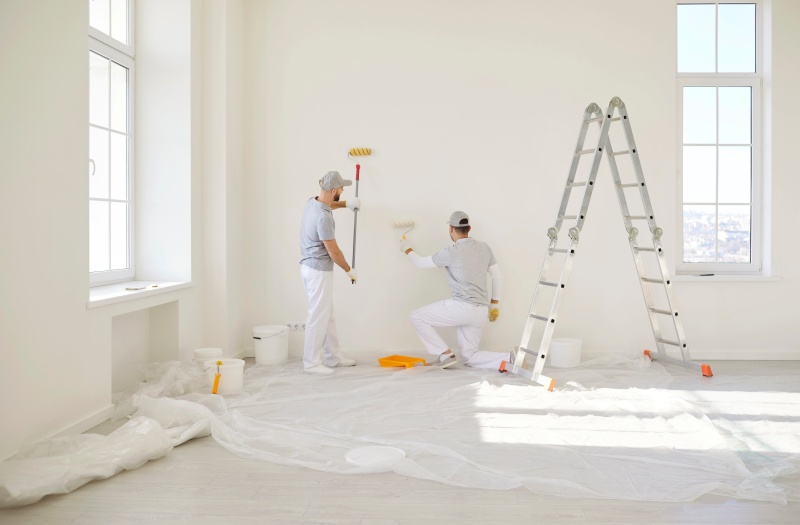
Painters Team Wall Painting Construction Workers Professional Service
Painting

Painting Services for Mesa Homes and Properties

A property in Mesa rarely presents just one surface challenge. A homeowner in Red Mountain Ranch may need exterior stucco repainted, interior walls refreshed, and kitchen cabinet doors done between seasons. A property manager with a multi-unit building off a major commercial corridor may need common area interiors completed between tenant turns, plus an exterior coat before the next monsoon season. Coordinating multiple contractors across those scopes creates scheduling gaps, inconsistent quality, and no single point of accountability.

The services below cover the full range of what Mesa homes and commercial properties typically need, handled under one agreement by the same crew throughout.

Rental units and older homes across west Mesa and Dobson Ranch often arrive at repainting time with walls that tell a story: screw patches from previous tenants, stress cracks along corners, texture that has been painted over so many times the surface has lost its definition. Putting a finish coat directly over that history produces a finish that looks exactly like what it is.

The prep standard here starts with patching, sanding, and priming wherever the wall surface calls for it. Trim is taped by hand. Floors are covered before anything else happens. The goal is a finish that holds up to a tenant walkthrough, not one that photographs well and peels within six months. For property managers, a clean interior repaint means one less dispute at move-out. For homeowners, it means the room looks the way it should from any angle, not just across the room.

Mesa’s exterior painting process begins well before the first finish coat. Stucco surfaces are pressure washed to strip chalk, dirt, and any loose material that would prevent paint adhesion. Delaminated sections are scraped back. Cracks are inspected and addressed before primer goes on, because sealing over an open crack just delays the moisture entry, it does not stop it.

Bare and spot-primed areas are brought to a uniform surface before the finish coat is selected. For UV and heat resistance in Mesa’s conditions, exterior acrylic paints like the SuperPaint system provide a finish that holds color through a Mesa summer rather than fading to a chalky, sun-washed version of the original shade within a season. The prep sequence is what allows that product to perform. A quality paint applied over inadequate prep fails on the same timeline as a cheap one.

A Mesa homeowner refreshing a kitchen or a property manager turning a unit between tenants faces the same question: how do you get a smooth, durable finish on cabinet doors without the brush marks, sags, and uneven coverage that come from painting them while they hang in place?

The answer is process. Doors are removed from their frames, finished in a controlled environment, and rehung only after full curing. In Mesa’s dry climate, paint sets faster than in more humid regions. Applying finish to a door that is hanging in airflow, particularly outdoors or near an open window, risks a surface that sets before it levels. Working off-wall eliminates that variable and produces a finish that looks factory-applied rather than hand-sprayed on-site.

A business owner in the Gateway corridor or a property manager with retail tenants in the Fiesta District does not have the option of shutting down for a week while the building gets repainted. The tenants are open. The customers are arriving. The work has to happen around the operation, not instead of it.

Commercial scheduling is built around that constraint. Crews sequence the work to keep disruption contained to portions of the property not in active use, shifting to other areas as access opens. The crew handling commercial properties is the same crew used on residential jobs, not a subcontracted commercial division with different supervision and a different quality standard. Prep requirements do not scale down because the client is a business. A commercial exterior in Downtown Mesa that chalks within a year costs the property manager far more than a correct first application would have.

Paint chips viewed under fluorescent store lighting tell almost nothing about how a color will read on a stucco exterior in full Mesa afternoon sun, or on an interior wall that transitions from bright midday light to lamp-lit evenings. The color that looks warm and neutral on the chip can read orange on a south-facing wall or grey under a shallow-overhang shadow.

The complimentary color consultation tests how a shade actually performs in the real space under real Mesa lighting conditions before committing to it. For homeowners who have repainted a room and ended up with a color they did not expect, this step solves the problem at the beginning of the process rather than after the walls are finished. For property managers selecting a color across multiple units, it eliminates the variable of color appearing differently on each exposure.

Painting in Mesa’s Neighborhoods

Mesa covers more than 130 square miles, and the properties within it are not interchangeable. A property manager overseeing a retail strip in the Fiesta District is dealing with surface conditions, foot traffic expectations, and tenant profiles that have nothing in common with an HOA-governed home in Dobson Ranch or a large custom build in Red Mountain Ranch. The prep approach that applies to a 1970s stucco home is meaningfully different from what a newer construction in Superstition Springs requires. A painter who has worked across Mesa’s submarkets understands why those differences matter and accounts for them from the first walkthrough.

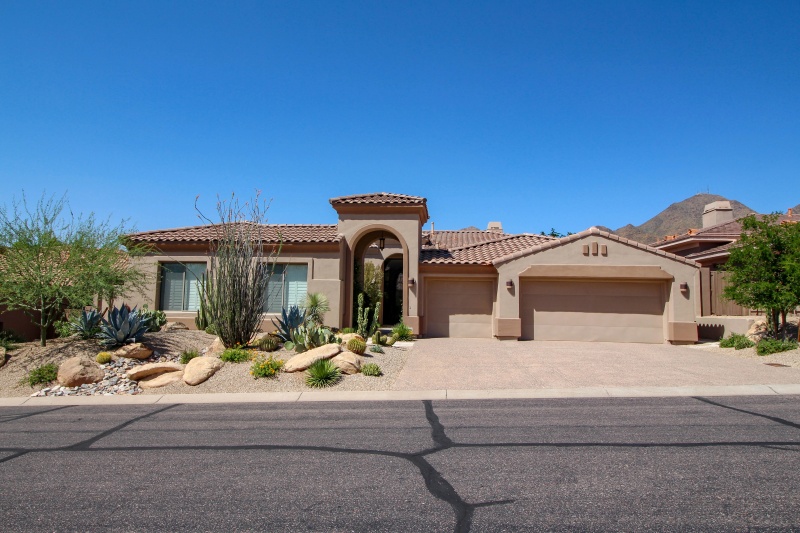
Downtown Mesa has been adding density for years. Along Main Street and Center Street, the building stock includes adaptive reuse of older commercial structures, ground-floor retail with loft apartments above, civic buildings, and mixed-use blocks that draw foot traffic from the light rail corridor. For a property manager or business owner in this district, the exterior presentation of a building is constantly visible to people passing on foot, which means peeling paint on a storefront facade or a faded color on an upper-floor parapet is not a background detail. It is the first thing a prospective tenant or customer notices, and it signals whether the building is being maintained.

Interior conditions in Downtown Mesa buildings present their own complexity. Many of the older commercial conversions retain original block or masonry walls that were never properly sealed. Drywall added over those walls may have been patched multiple times, creating a layered surface history with inconsistent texture and absorption. Newer loft interiors may have high ceilings, exposed mechanical systems, and finish expectations that are closer to residential than commercial. Each of those environments requires a different prep approach before a finish coat goes on.

For the property manager overseeing a Downtown Mesa building, the painting scope needs to account for all of those conditions on a schedule that does not empty the building. Work is sequenced around tenant occupancy and retail operating hours, with common areas and exteriors addressed during off-peak windows so the building stays functional throughout.

Dobson Ranch is one of Mesa’s most established communities, a planned neighborhood of nearly 5,000 homes built primarily from the 1970s onward. The housing stock ranges from single-family homes on larger lots to townhomes managed under HOA oversight, and the community’s lake system, mature landscaping, and maintained common areas create expectations for property upkeep that carry over to individual homes.

A homeowner in Dobson Ranch preparing for an exterior repaint is often working within two constraints simultaneously: HOA color guidelines that limit the palette to community-approved shades, and a stucco surface that has weathered decades of Mesa summers and monsoon seasons. A home built in the 1970s has surface history. Previous paint layers have different compositions. Cracks that have been caulked and repainted multiple times may have inconsistent adhesion beneath the current surface. Prep on a home like that is not a simple pressure wash and prime. It involves inspection, scraping, and addressing anything that would compromise the new finish before it goes on.

For HOA board members managing the community’s visual standards, the concern is consistency across properties. A repaint that fades quickly, chalks within a year, or reads a different shade than the approved color because it was applied over inadequate primer creates compliance issues and callbacks. The estimate walkthrough for a Dobson Ranch home surfaces HOA requirements early, so the color selection and surface prep both meet the community’s standards before any paint is purchased.

Red Mountain Ranch occupies northeast Mesa at the base of the Usery Mountain range, a master-planned community built around golf course views, larger custom homes, and gated sub-communities with their own HOA standards. The homes here regularly exceed 3,000 square feet, with many reaching 5,000 square feet and above, and the exterior elevations face in multiple directions, meaning a single property can have a south-facing rear elevation in full sun from midmorning to late afternoon, a north-facing front elevation that stays in shade for much of the day, and east and west elevations that absorb intense morning and late-afternoon sun respectively.

That sun exposure variation within a single property creates a real challenge for exterior paint selection. A finish coat chosen for the harshest elevation needs to perform on the more protected north-facing walls without looking noticeably different in color temperature or sheen. UV degradation happens fastest on the south and west exposures, but a paint system applied uniformly across all four elevations needs to hold together visually for years.

Homeowners in Red Mountain Ranch are also repainting into a high-visibility context. Properties here are visible from the fairway, from neighboring homes, and from the street entry of gated sub-communities. A finish that fades unevenly, or that was applied in a color that looked right on the chip but reads differently against the desert landscape and mountain backdrop, is immediately apparent to everyone in view of the property. The color consultation and prep walkthrough account for that exposure before committing to a product.

Superstition Springs sits in eastern Mesa, a neighborhood of larger single-family homes and upscale residential properties with proximity to major retail corridors. Homes here often have more exterior surface area to cover than those in denser neighborhoods closer to the city core. Block walls along the property perimeter, covered patios with exposed beam ends, multi-level facades, and larger lot footprints mean that an exterior repaint scope here is rarely a simple flat calculation.

The eastern Mesa location also means west-facing elevations absorb intense late-afternoon sun through the hottest months of the year. A finish applied without UV-rated product over adequate primer on a west-facing wall in this part of Mesa can show visible fade by the second summer. Homeowners in Superstition Springs preparing a property for sale need that fade to not happen before the listing photographs are taken. Those planning a long-hold repaint need the finish to carry them through multiple monsoon seasons without cracking or chalking back to bare primer.

Larger properties in this neighborhood also call for more careful scheduling. A full exterior repaint on a home with significant square footage requires sequencing that accounts for which elevations are workable in the morning versus the afternoon, since painting into direct sun affects how the finish coats lay down and cure. That sequencing is established during the estimate walkthrough, not improvised once the crew arrives.

Pro Tech Painting crew working on a multi-unit property in the greater Mesa Arizona service area

Coverage Across Mesa and the Surrounding Area

Property managers who oversee portfolios rather than single addresses have a specific operational problem: coordinating different painting contractors for different properties produces inconsistent quality, inconsistent scheduling reliability, and no single accountability point when something needs to be addressed after the job is done.

The team works across Mesa’s full geographic range and extends coverage to surrounding communities and outlying areas for property managers and business owners who need one contractor relationship for their entire portfolio. The written estimate process, the prep standard, and the crew used on each job do not change based on which property in the portfolio is being painted. A property manager can request estimates for multiple buildings across their holdings, compare the pricing in a consistent format, and count on the same quality standard showing up at each address.

For portfolios that extend beyond Mesa’s boundaries into neighboring communities, the same approach applies. One relationship, one quality standard, one point of contact.

Ready to Schedule a Painting Estimate in Mesa?

If you are looking at a chalking exterior wall, an interior that needs to be ready before the next tenant walkthrough, or stucco cracks that have started lifting at the edges, the next step is a written price with the prep scope explained. Pro Tech Painting provides a free, no-obligation written estimate and a complimentary color consultation on every Mesa project, so you know what the work involves, what it costs, and how the color will actually read on your walls before any paint is purchased.

Get in touch to request your free estimate and schedule a walkthrough of the property.
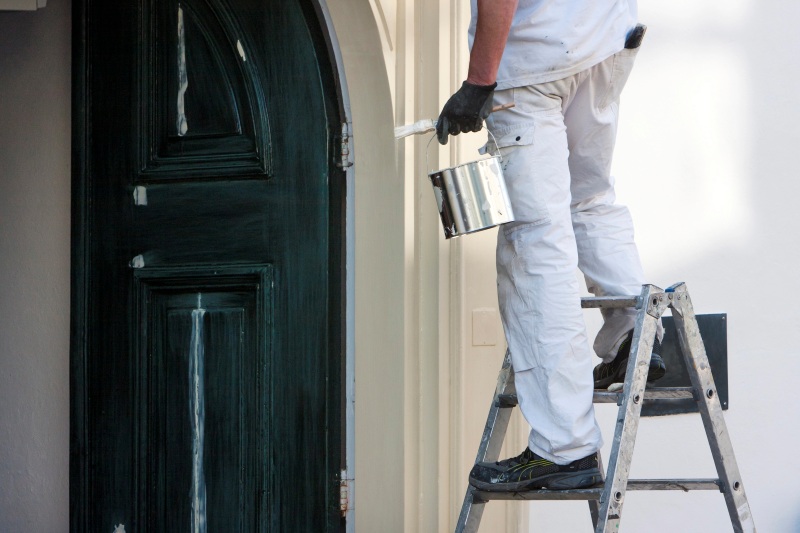
House painter on a ladder

Questions Mesa Property Owners Ask Before Hiring a Painter

Mesa’s UV load, monsoon moisture, and stucco-heavy housing stock produce a consistent set of questions from homeowners and property managers planning a repaint. The ones that come up most often are answered below.

There is no single honest answer to this question that ignores prep and product. A stucco exterior painted over inadequate primer with a base-grade exterior paint in Mesa’s UV environment may show visible fade and chalking within two to three years. The same surface, properly washed, crack-inspected, spot-primed, and finished with a UV-rated exterior acrylic, can hold its color for six to seven years. Prep quality, primer coverage, and product selection are the variables that determine the outcome, not the paint brand alone.

For commercial properties and multi-unit buildings, the approach is to sequence work around operational hours rather than ask tenants or customers to work around the painting schedule. Common areas, exterior facades, and interior units are staged so that active portions of the property remain accessible while work proceeds in phases. The goal is a completed repaint with minimal visible disruption to the people using the building throughout the process.

Exterior prep on a Mesa stucco surface begins with pressure washing to remove chalk, dirt, and surface contamination. Delaminated paint is scraped back to sound material. Visible cracks are inspected to determine whether they are surface-only or indicate movement, and addressed accordingly before any primer goes on. Bare and repaired areas are spot-primed to create a uniform absorption surface. Only after that sequence is complete does the finish coat go on. That order is not optional. It is what allows the finish to adhere and hold through Mesa’s conditions.

The complimentary color consultation included with every estimate goes beyond handing over a paint chip. It tests how a specific color reads in the actual space under real lighting conditions, which matters in Mesa because afternoon sun and interior shadow patterns can shift a color significantly from what it looked like in the store. The consultation is used to confirm that the shade chosen will look the way you expect on the actual surface, in actual Mesa light, before any paint is purchased.