Painters in Surprise, AZ

You manage properties in Surprise, and you already know the window for getting exterior work done is narrower than it looks on the calendar. Between June’s triple-digit heat baking surfaces too hot for proper adhesion, monsoon season bringing humidity swings that cause freshly applied coatings to bubble and blister, and HOA boards that require color approval before a single brush stroke touches a facade, the scheduling math is genuinely tight. Add the reality that most of Surprise’s housing stock was built between 2000 and 2009, meaning a significant portion of those original paint jobs are aging out simultaneously, and you may be fielding pressure from residents, boards, and tenants all at once.

Every project here starts with a free, no-obligation estimate and a complimentary color consultation, so you can know exactly what the work will cost and confirm your color choice before any commitment is made.

since 1993

Painting Arizona homes and commercial properties

free written estimate

On every project, no surprises

owner-operated crew

The same team from estimate through final walkthrough

UV-faded and chalking stucco on a sun-exposed wall of an early-2000s Surprise Arizona home before repainting

Why Surprise Properties Need a Painter Who Understands Desert Conditions

Stucco exteriors in Surprise face a punishment cycle that repeats every year. Summer UV exposure intense enough to chalk and fade paint within a few seasons is followed almost immediately by monsoon-season humidity that exploits every hairline crack in a stucco surface, works behind loose coatings, and accelerates the kind of delamination that turns a cosmetic issue into a moisture-management problem.

Most homes in Surprise were built during the early-2000s construction boom, which means original exterior paint on a large percentage of the city’s housing stock is now well past its useful life. For property managers overseeing multiple units in a single community, that reality tends to arrive as a surprise: an HOA violation letter, a tenant complaint about peeling paint near an entry door, or a lease renewal conversation that goes sideways because the exterior looks worn against neighbors whose homes were recently freshened.

Waiting compounds the problem in several directions at once. A faded or cracking exterior in a Surprise HOA community can trigger formal violation notices, complicate a home’s perceived value during a sale or rental comparison, and create genuine moisture infiltration risk if cracked stucco is left unaddressed through another monsoon season. The path forward is not simply picking a color and scheduling a crew. It is matching the right prep sequence and paint product to what Surprise’s specific climate actually does to a stucco substrate, season after season.

A 30-Year Track Record, Built One Job at a Time

Owner Al Levon started in this trade as a teenager, working alongside a family friend and learning the fundamentals of surface prep, product selection, and what separates a paint job that holds up from one that looks fine at the final walkthrough and starts failing eighteen months later. That was more than thirty years ago. The business has operated under the same ownership ever since.

For property managers and business owners in Surprise, that longevity is not a background detail. A crew that has worked Arizona stucco exteriors through thousands of desert summers has seen every shortcut that gets taken when a painter is moving too fast or pricing too low to do the job properly. They know what happens to a surface that gets painted over without pressure washing, what a spot-prime skipped on bare stucco looks like after the first monsoon season, and what the difference between an elastomeric-grade coating and a standard exterior acrylic means on a wall that faces west at 4 PM in July.

That experience translates directly into what you get on your property: a prep process that does not skip steps because the job is competitively priced, a product recommendation tied to what the surface actually needs rather than what is cheapest to apply, and a crew that has worked in Surprise’s specific conditions long enough to know which approaches hold and which ones do not survive the climate.

The size of the business has stayed deliberate. Keeping the same directly managed crew across both residential and commercial work means the quality standard that applied on the first job still applies on the current one.

Dining room with blue painting and wood table.
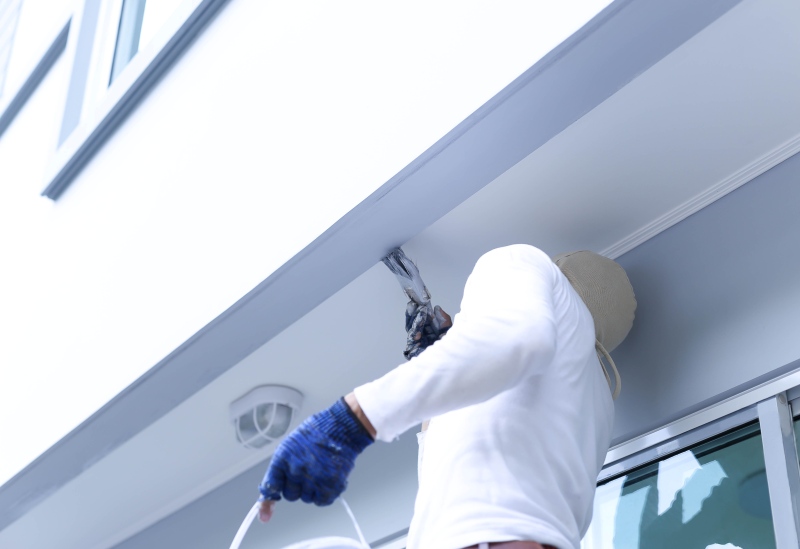
Male in gloves holding pain brush painting building

Painting Services for Surprise Homes and Commercial Properties

A property manager or homeowner in Surprise often faces the full range of painting needs at once: an exterior that needs to survive UV and monsoon conditions on a stucco substrate, rental unit interiors that need to turn over quickly between tenants, cabinets in a kitchen showing wear without warranting a full remodel, and a commercial space that cannot go dark for a week. The service lineup below answers that combined need, all from one crew with a consistent prep and quality standard across every project type.

Surprise interiors present a specific prep challenge before any finish coat goes on. Desert dust infiltrates through window seals and open doors, and HVAC systems distribute fine particulate across wall surfaces in ways that become visible under certain sheens if the surface is not properly cleaned and prepared first. Every interior project starts with that prep step, followed by patching, priming where the surface calls for it, and finish coats in a sheen matched to how the room is actually used. Kitchens and bathrooms take a washable eggshell; bedrooms and living areas get a flatter finish that reads better in natural light. For property managers scheduling between tenants, the timeline confirmed at the estimate walkthrough is the timeline the crew works to, not an approximation revised once work is already underway.

Stucco exteriors on Surprise homes built in the early 2000s have reached or exceeded their original paint lifespan, and applying a new coat over a degraded surface without proper prep simply traps the problem underneath. Every exterior project begins with pressure washing, scraping of loose or peeling material, and spot-priming any bare stucco before a finish coat is considered. Product selection matters significantly on a desert-exposed stucco substrate. Acrylic exterior products formulated to resist UV fading and chalking perform meaningfully better over time than standard exterior paints that look comparable at application but degrade faster under sustained direct sun. The difference between a properly prepped exterior and a painted-over surface with no prep is often visible within a single monsoon season.

Kitchens and bathrooms in early-2000s Surprise builds commonly feature raised-panel cabinets with a wood-grain profile that shows brush marks clearly if painted in place. The process here involves removing doors, finishing them flat in a controlled environment, and rehanging once the coating has fully cured. That sequence produces a smoother, more uniform surface than on-hinge painting, and it removes the risk of doors sticking or pulling paint at contact points before the finish has hardened. For property managers refreshing rental units between tenants, or homeowners updating an owner-occupied kitchen without the cost and timeline of a full remodel, this approach delivers a noticeably cleaner result at a fraction of a cabinet replacement budget.

A retail storefront along one of Surprise’s active commercial corridors, a multi-unit rental building, or an office suite mid-lease all share the same constraint: the work needs to happen without shutting operations down for days at a time. Scheduling for commercial projects is built around business hours and tenant occupancy patterns, not around what is most convenient for the crew. The crew handling commercial work in Surprise is the same directly managed team that runs residential projects, not a subcontracted group with a different standard applied because the job type changed. That consistency matters when a property manager needs to know that the quality on unit twelve will match what was delivered on unit one.

Painting in Every Corner of Surprise, AZ

Surprise is a geographically large city, and the neighborhoods within it are meaningfully different from one another. Age-restricted communities operate under distinct HOA color palettes and approval processes. Master-planned developments have architectural standards that affect product selection and scheduling. Newer construction areas have different surface conditions than neighborhoods built fifteen or twenty years ago. What works in one part of the city, in terms of prep approach, product choice, and scheduling rhythm, is not always the right answer in another. The four submarkets below reflect those real differences.

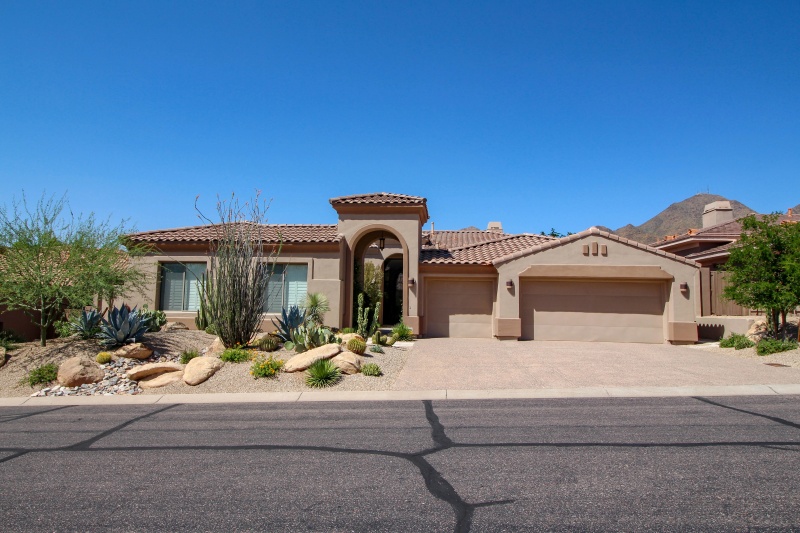
Marley Park is a master-planned community inside Surprise with architectural standards that go beyond a general HOA. The community maintains an approved exterior color palette, and homeowners and property managers here cannot simply choose a color and schedule a crew. Color documentation needs to be submitted and approved before work begins, and the painter needs to be familiar with that process to keep the project timeline from stalling at the approval stage.

Homes in Marley Park feature stucco exteriors with meaningful sun exposure on west and south-facing elevations, where UV degradation accelerates faster than on shaded faces of the same structure. For property managers overseeing attached or single-family units in the community, the practical challenge is finding a painter who can navigate the HOA submission process smoothly, show up with the documentation the review board requires, and deliver a result that passes the community standards inspection on the first walkthrough rather than requiring a callback for a color or coverage correction.

The free color consultation is particularly useful in Marley Park because it helps homeowners and property managers confirm that the selected color falls within the approved palette before any paint is purchased. Testing how an approved shade reads on the actual wall surface, in actual outdoor Surprise light, eliminates the risk of investing in a full exterior repaint only to discover the color reads differently than the chip suggested.

Scheduling in Marley Park also rewards planning ahead. With multiple properties in the community on similar repainting timelines, the favorable painting windows between monsoon season and peak summer heat fill up quickly, and properties that have already completed the HOA approval process are in a significantly better position to secure those windows.

Sun City Grand is one of the largest active-adult communities in Surprise, characterized by single-story, single-family stucco homes with earth-toned exteriors and clay-tile rooflines that establish the neighborhood’s visual identity. The scale of the community means that residents and property managers here are working within a well-established aesthetic context: color choices that drift outside the neighborhood’s established palette can feel out of place even when technically within HOA guidelines.

The practical painting situation in Sun City Grand is shaped largely by age. Original exterior paint on homes built in the late 1990s and early 2000s has been through two decades or more of UV exposure and monsoon cycles, and many of those surfaces have accumulated elastomeric coating layers from previous repaints that need to be evaluated before a new finish coat goes on. Elastomeric layers that have begun to delaminate or bubble cannot simply be painted over. The prep process needs to account for what is already on the surface, not just what is visible from the curb.

Residents in Sun City Grand tend to have strong preferences around communication and minimal disruption. Many are at home during the day and want clear information about when the crew will arrive, what the sequence of work will be, and what the property will look like at the end of each day before the crew leaves. A written estimate tied to the actual scope of work, combined with a confirmed daily schedule, addresses both of those needs directly and is the baseline expectation for any painting project in this community.

For property managers overseeing rental units or investor-owned properties within Sun City Grand, the prep-first approach matters especially because the community’s established standards mean a paint job that fades or peels ahead of schedule is visible immediately against well-maintained neighboring homes.

Ashton Ranch is an established Surprise neighborhood with a mix of family homes across a range of lot sizes and stucco exterior styles. Properties here face the same UV and monsoon exposure as the rest of the city, but the variation in lot size and home footprint means surface area and sun exposure differ significantly from one property to the next. A larger home on a corner lot with full southern exposure has meaningfully different prep and product needs than a smaller home on an interior lot with mature landscaping providing partial shade.

For property managers with rental units in Ashton Ranch, the scheduling challenge is efficiency across multiple properties without letting quality slip as the crew moves from one unit to the next. A flat per-square-foot price that does not account for surface condition is likely to produce problems: a home with significant stucco cracking and multiple areas of peeling paint requires substantially more prep time than a home with a surface in good condition, and pricing that ignores that difference either overcharges on the straightforward job or underdelivers on the one that needed more work.

Written estimates tied to the actual scope at each property, confirmed after a walkthrough of the surface condition, give property managers in Ashton Ranch an accurate budget number for each unit and a clear picture of what the crew will do before work begins. That approach also prevents the “scope creep” conversation mid-project when the painter discovers prep needs that were not included in an initial flat-rate quote.

Exterior color choices in Ashton Ranch tend toward the warm neutrals common across Surprise’s stucco communities, and the color consultation is useful here for testing how those earth tones read on the specific wall texture and orientation of a given home, particularly when a homeowner or property manager wants to shift slightly from the previous color without landing somewhere that looks dramatically different from the neighborhood.

Greer Ranch is a newer, upscale Surprise community with larger single-family homes, more distinctive architectural details, and a homeowner profile that expects finish quality to hold up from close range, not just from across the street. The homes here are visually prominent properties where a paint job that looks acceptable at a distance but shows roller marks, uneven coverage, or missed areas at close range is noticed and talked about.

Interior projects in Greer Ranch often involve more than a standard two-coat repaint. Accent walls with deep or saturated colors, full color refreshes across open-concept spaces where multiple paint zones need to read cohesively, and cabinet repaints in larger kitchens with more extensive door and drawer counts are all common requests. Each of those projects requires the same prep discipline as a more straightforward job, but with tighter execution on cut lines, sheen consistency, and surface uniformity because the homes are large enough that inconsistencies in one area are visible from another.

The color consultation carries particular weight in Greer Ranch because homeowners here are making decisions about higher-value properties where the cost of choosing a color that does not read correctly in the room’s actual light is not just an inconvenience. It represents a repaint budget spent on a result that does not land where the homeowner expected. Testing how a shade reads on the actual wall surface, in the actual room, under the lighting conditions the space experiences at different times of day, eliminates that risk before any paint is purchased. For cabinet repaints especially, seeing the color on a sample door panel before committing to finishing the full kitchen is the step that separates a result the homeowner is genuinely satisfied with from one they are simply resigned to.

Pro Tech Painting crew working on a multi-unit property in the greater Surprise Arizona service area

Coverage Beyond Surprise

Property managers in Surprise often oversee portfolios that extend beyond the city’s borders into surrounding suburbs and neighboring communities. Coordinating separate painting contractors for each geography in a portfolio adds vendor management time, introduces inconsistency in prep standards, and creates communication gaps when work overlaps across locations.

A single vendor relationship that can follow the portfolio reduces that friction significantly. The same crew, the same prep standard, the same written estimate process, and the same direct communication apply whether the property is inside Surprise or in a nearby community. For property managers whose portfolios extend into the broader service area, reach out to discuss coverage for properties outside the city. The team works across surrounding suburbs and neighboring communities and can discuss the full scope of a multi-location portfolio as part of the initial estimate conversation.

Get a Free Written Estimate for Your Surprise Property

Every Surprise project starts the same way: a free, no-obligation written estimate tied to the actual surface condition of the property, and a complimentary color consultation that confirms the color before any paint is purchased. In an HOA community, that consultation is also what produces the documentation the review board needs to approve the color.

Because so much of Surprise’s housing stock is on a similar repainting timeline, the favorable painting windows in late spring and fall fill up quickly. Whether the project is a single-family exterior in Marley Park, a multi-unit interior turnover in Ashton Ranch, or a commercial storefront that cannot go dark for a week, the starting point is the same: a walkthrough of the actual surfaces, a written number, and the same directly managed crew from that first visit through the final walkthrough.

Painter at work on scaffold

Frequently Asked Questions About Painting in Surprise, AZ

On a properly prepped and product-matched stucco surface, exterior paint in Surprise typically lasts seven to ten years under normal conditions. UV intensity here accelerates fading and chalking faster than in cooler climates, and monsoon-season humidity can shorten that window further if the original prep left any surface vulnerabilities. Signs that a stucco exterior is approaching the end of its paint cycle include visible chalking when you run a hand across the surface, fading that has progressed unevenly across different elevations, and hairline cracking at seams or around window and door frames.

Many Surprise communities, including master-planned neighborhoods and age-restricted developments, require documented color approval from the HOA before exterior painting begins. The free color consultation is designed to help homeowners and property managers select a color that falls within the approved palette, generate the documentation the HOA review board requires, and submit it before the project is scheduled, so the approval process does not stall the work once the favorable painting window arrives.

The most favorable exterior painting windows in Surprise fall in late spring, before surface temperatures become prohibitive, and in fall, after monsoon season winds down and before the coldest December nights. During those windows, surface temperatures and ambient humidity are in ranges where paint adheres and cures properly. Because a large share of Surprise’s housing stock is on similar repainting timelines, those windows fill up quickly. Scheduling at least several weeks in advance is the practical way to secure a slot during the periods when conditions are most favorable.

Work across multi-unit properties is staged around tenant occupancy and turnover schedules. Interior units that are between tenants get sequenced first when possible, reducing vacancy extension while work is completed. Exterior work is scheduled to minimize disruption to occupied units and parking access. Written estimates tied to the actual surface condition of each unit, rather than a flat per-square-foot rate, give property managers an accurate budget number for each phase of the project before work begins, which makes it easier to plan across a full portfolio without mid-project surprises.

Interior and exterior work on a Surprise property are handled by the same directly managed crew. There is no separate subcontracted team brought in for exterior jobs while a different group handles interiors. The same prep standard, the same quality control, and the same point of contact apply across both. For a property manager coordinating an interior turnover and an exterior repaint on the same building, that means one schedule, one written estimate process, and one crew accountable for the finished result.