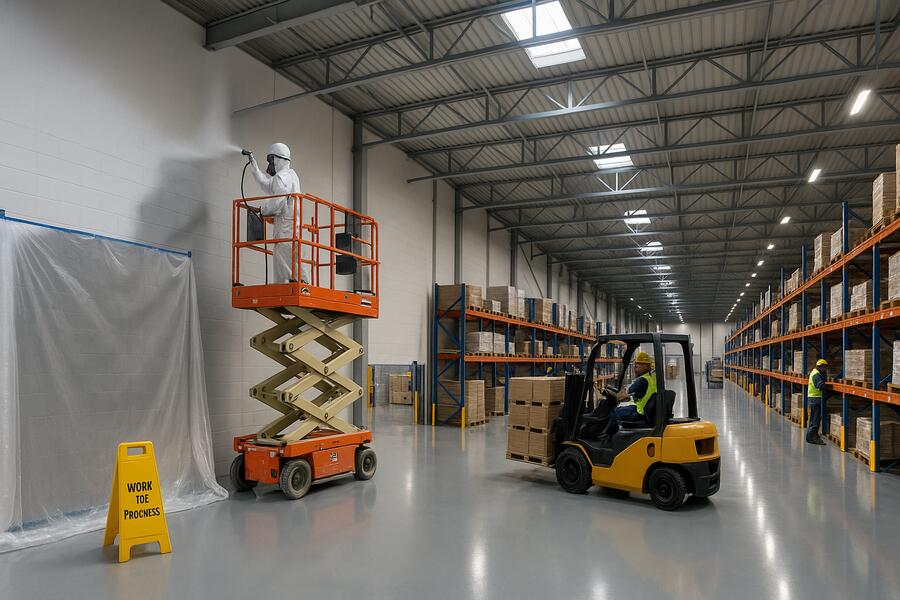
Maintaining a functional and aesthetically pleasing warehouse environment is crucial for operational efficiency, safety, and employee morale. However, the prospect of a full repaint often brings with it the daunting challenge of disrupting operations, leading to costly downtime. The good news is that with strategic planning and experienced commercial painters, it’s entirely possible to undertake significant warehouse repaints without halting your day-to-day operations. The key lies in understanding and implementing smart scheduling warehouse repaints without downtime strategies.
As industrial painting specialists, we’ve refined techniques that allow businesses to revitalize their facilities while maintaining productivity. This involves a blend of careful coordination, phased execution, and the use of appropriate materials and safety protocols.
Strategic Approaches to Minimizing Downtime During Warehouse Painting
Successfully painting an active warehouse requires more than just skilled painters; it demands a partnership approach focused on minimizing interruption. The following strategies are fundamental to achieving this goal.
Phased Painting: Breaking Down the Project
The most effective strategy for continuous operation is often phased painting. This involves segmenting your warehouse into manageable work zones that can be prepped and painted independently.
- Zone Isolation: We work with your team to identify “work zones” that can be temporarily isolated from daily operations. This might involve setting up temporary physical barriers, using dust containment systems, or scheduling work in specific departments during their slower periods.
- Sequential Execution: Painting proceeds from one zone to the next, allowing the painted areas to dry and operations to resume while work continues elsewhere. This method keeps a significant portion of your facility operational at all times.
- Night and Weekend Work: For areas that cannot be easily isolated or for processes that run 24/7, scheduling painting during off-hours, nights, or weekends can be a highly effective way to avoid interfering with peak operational times.
💡 Key Takeaway: Phased painting, utilizing zone isolation and off-hour scheduling, is crucial for maintaining operational continuity during a warehouse repaint.
Advanced Preparation and Safety Protocols
Even with phased work, robust preparation and strict safety measures are non-negotiable, especially in an active industrial environment. This is where experience truly matters.
- Rigorous Safety Planning: Before any work begins, a comprehensive safety plan is developed in coordination with your facility management. This includes identifying high-traffic areas, critical equipment, emergency exits, and establishing clear communication protocols between painting crews and your staff.
- Dust and Debris Containment: Industrial painting generates dust and paint particles. We utilize advanced containment methods, such as plastic sheeting, negative air machines, and specialized vacuums, to prevent contamination of your products, machinery, and air quality. This is vital for maintaining a clean and safe work environment.
- Protection of Assets: All unpainted surfaces, machinery, shelving, and inventory are meticulously covered and protected using heavy-duty plastic, drop cloths, and masking tape. Critical equipment that cannot be moved receives specialized wrapping.
- Clear Signage and Access Control: Establishing clear signage for active work zones, restricted areas, and alternative routes ensures that your employees and visitors are aware of the painting activities and can navigate the facility safely.
💡 Key Takeaway: Comprehensive safety plans, effective dust containment, and thorough asset protection are vital to a successful, disruption-free warehouse painting project.
Optimizing Material Selection and Application
The choice of coatings and application methods plays a significant role in minimizing downtime, especially concerning drying times and odor.
Choosing the Right Industrial Coatings
Selecting the appropriate paint and coating systems is paramount:
- Fast-Drying Formulas: We prioritize industrial-grade paints and coatings with rapid drying and curing times. This allows for quicker re-entry into painted areas and faster reintroduction of equipment.
- Low-VOC Options: Low Volatile Organic Compound (VOC) paints minimize odors and air quality concerns, which is critical in an active warehouse environment where employees are present and inventory might be susceptible to fumes.
- Durable Coatings: Industrial spaces require coatings that can withstand heavy traffic, abrasion, chemical exposure, and frequent cleaning. Epoxy floor coatings, for example, offer exceptional durability and can be formulated for quick return to service.
Efficient Application Techniques
Modern painting techniques contribute to speed and quality:
- Airless Spraying: For large, expansive warehouse walls and ceilings, airless sprayers offer rapid, uniform coverage, significantly reducing application time compared to brushes and rollers.
- Experienced Crews: Highly skilled and efficient painting crews are adept at working quickly and precisely in industrial settings, minimizing the time each zone is under active painting.
💡 Key Takeaway: Utilizing fast-drying, low-VOC industrial coatings and efficient application methods like airless spraying significantly reduces project duration and impact on operations.
Collaborative Planning and Communication
The success of a warehouse repaint with minimal disruption hinges on open communication and strong collaboration between the painting contractor and your facility management team.
- Detailed Project Schedule: A clear, agreed-upon project schedule, detailing timelines for each phase, material delivery, and drying periods, is essential. This schedule should integrate seamlessly with your operational calendar.
- Regular Updates: Constant communication, including daily check-ins and progress reports, ensures that both teams are aligned and any unexpected issues can be addressed immediately.
- Flexibility: An experienced industrial painting contractor understands that operational needs can shift. We build flexibility into our planning to adapt to unforeseen circumstances with minimal impact on your business.
Undertaking a warehouse repaint doesn’t have to mean shutting down your business. By partnering with a commercial painting contractor who specializes in industrial environments and employs strategic planning, advanced techniques, and superior materials, you can achieve a refreshed, professional-looking facility without sacrificing productivity. It’s an investment in your infrastructure that pays dividends in both appearance and operational efficiency. For expert assistance with your next industrial painting project, contact Pro Tech Painting.
Have questions about scheduling warehouse repaints without halting operations? Reach out to our team today.
Frequently Asked Questions
How much lead time is typically needed to schedule a warehouse repaint without downtime?
The lead time can vary based on the size and complexity of your warehouse, as well as the painting contractor’s schedule. Generally, it’s advisable to plan 4-8 weeks in advance for larger projects to allow for thorough site assessments, detailed planning, material procurement, and crew scheduling, ensuring minimal disruption to your operations.
What types of industrial coatings are best for high-traffic warehouse floors?
For high-traffic warehouse floors, epoxy coatings are a popular choice due to their exceptional durability, chemical resistance, and ease of cleaning. Urethane coatings also offer excellent abrasion resistance and flexibility. Often, a combination of these (e.g., epoxy primer with a urethane topcoat) provides the best performance and longevity.
Can painting during off-hours affect paint quality?
No, painting during off-hours, such as nights or weekends, does not negatively affect paint quality, provided the environmental conditions (temperature, humidity) are within the manufacturer’s recommended range for the chosen paint. Professional painters are equipped to work efficiently and effectively during these times, often using specialized lighting and ventilation systems.
What measures are taken to protect sensitive inventory from dust and fumes?
Protecting sensitive inventory is a top priority. Measures include establishing sealed containment zones with plastic sheeting, using negative air pressure machines to control airborne particles, and selecting low-VOC (Volatile Organic Compound) or zero-VOC paints to minimize fumes. Additionally, inventory is often relocated or covered with heavy-duty, impermeable wraps.