
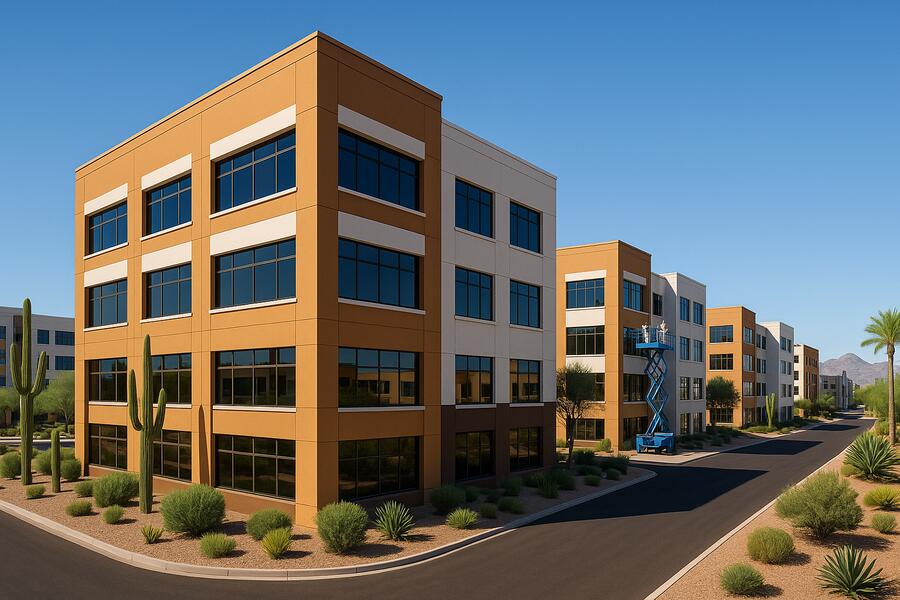
Managing a painting project across multiple commercial or residential buildings is a significant undertaking that demands precision, coordination, and an in-depth understanding of logistics. Unlike single-building jobs, multi-building painting contracts involve complex scheduling, consistent quality control across various sites, and careful communication to minimize disruption for tenants or ongoing business operations. For property managers, facility directors, or HOA boards, understanding what goes into these large-scale contracts is crucial for selecting the right partner and ensuring a successful outcome.
As experienced professionals in commercial painting, we know that success hinges on meticulous planning and execution. This guide explains what you should expect from a comprehensive multi-building painting contract, helping you navigate the process with confidence.
The Scope and Complexity of Multi-Building Projects
Multi-building painting contracts are defined by their expansive scope, requiring a contractor who can manage numerous moving parts simultaneously while maintaining consistent standards.
Initial Site Assessments and Planning
The foundation of any successful multi-building project is a thorough initial assessment of each property. Expect your contractor to:
- Conduct Detailed Site Evaluations: This involves walking through every building to understand its unique challenges, substrate conditions, and specific requirements. Factors like existing paint condition, repair needs, and accessibility for equipment are noted.
- Identify Unique Challenges Per Location: Each building might have different architectural styles, tenant occupancy levels, or operational hours, which all influence the project plan. For instance, a retail center will have different needs than an apartment complex.
- Develop a Comprehensive Project Blueprint: This plan integrates all findings, outlining the scope of work for each building, recommended materials, and a preliminary timeline. A reputable company like Pro Tech Painting will prioritize this detailed planning phase.
Master Scheduling and Phased Execution
Coordination is paramount. A well-structured multi-building contract will feature a master schedule designed for efficiency and minimal disruption.
- Portfolio-Wide Master Schedule: This overarching schedule maps out the entire project, from start to finish, for all buildings involved. It identifies critical milestones and dependencies.
- Phased Execution Across Buildings: Painting is typically conducted in phases, moving from one building or section to another. This approach allows tenants and businesses to continue operations with minimal inconvenience, rather than impacting all properties simultaneously.
- Specific Timelines and Operating Hours: The contract should detail exact start and estimated completion dates for specific buildings. For occupied properties, it will specify the hours crews will be operating, especially for heavy equipment, to avoid peak traffic or business hours.
💡 Key Takeaway: A successful multi-building painting contract starts with meticulous site assessments and a detailed master schedule that enables phased execution across all properties.
Key Considerations for Successful Execution
Beyond initial planning, several operational elements are critical for the seamless execution of multi-building painting projects.
Material Standardization and Consistency
Visual consistency across multiple buildings is often a primary goal, which requires careful material selection and management.
- Standardized Paint Colors and Finishes: The contractor should propose and utilize a consistent palette of paint colors, finishes (e.g., matte, satin), and product lines from reputable manufacturers across all properties. This ensures a cohesive aesthetic throughout your portfolio.
- Quality and Longevity: Material selection should also prioritize durable, high-performance coatings suited to the local climate and property type, ensuring a long-lasting finish and reducing future maintenance costs.
Budgeting and Transparency
Managing finances for a large-scale project requires clear budgeting and detailed cost breakdowns.
- Accurate Budgets and Realistic Timelines: A reliable contractor will develop a comprehensive budget that accounts for labor, materials, equipment, and any necessary repairs for the entire project. Timelines should be realistic, factoring in potential weather delays or specific tenant needs.
- Detailed Estimates Per Building/Phase: Expect a breakdown of costs for each building or phase, allowing for clear financial tracking and accountability.
Communication and a Single Point of Contact
Effective communication is the backbone of any large project, especially one spread across multiple locations.
- Designated Project Manager: A single, accountable point of contact (e.g., a dedicated project manager) should be assigned to oversee the entire contract. This streamlines communication, ensuring all property managers, HOA boards, and stakeholders receive consistent updates and have a clear channel for questions or concerns.
- Regular Updates: Expect regular progress reports, either through meetings, emails, or a shared project management platform, keeping you informed about the status of each building.
💡 Key Takeaway: Consistency in materials, transparent budgeting, and a dedicated project manager are vital for coordinating multi-building painting contracts effectively.
Navigating Logistical Challenges
Large-scale projects inevitably encounter logistical hurdles, and a capable contractor will have strategies to overcome them.
Minimizing Disruption and Downtime
For occupied multi-building properties, minimizing disruption to residents or businesses is a top priority.
- Tenant/Occupant Notifications: The contractor should assist with or provide templates for informing tenants or occupants about upcoming work, including access requirements, noise expectations, and specific hours of operation.
- After-Hours and Weekend Work: For commercial properties, the ability to perform work after business hours or on weekends can significantly reduce operational downtime and impact on customers.
- Safe Work Zones: Establishing clear, well-marked work zones with appropriate signage and barriers ensures safety for both the painting crew and property occupants.
Regulatory Compliance and Environmental Considerations
Adherence to local, regional, and national regulations is non-negotiable.
- Safety Standards: Compliance with OSHA standards for worker safety, including proper scaffolding, fall protection, and personal protective equipment, is essential.
- Environmental Regulations: Expect the use of low-VOC (Volatile Organic Compound) paints and adherence to proper waste disposal protocols to meet environmental guidelines and promote sustainability. Methylene chloride, for instance, has been banned for most commercial and industrial uses, necessitating a switch to safer alternatives.
| Aspect of Contract | What to Expect | Benefit for You |
|---|---|---|
| Pre-Project Assessment | Detailed inspection of each building, condition notes. | Accurate scope, fewer surprises. |
| Scheduling | Master schedule with phased execution per building. | Minimized disruption, predictable timeline. |
| Material Selection | Standardized, high-quality paints and finishes. | Visual consistency, enhanced durability. |
| Communication | Dedicated project manager, regular progress updates. | Clear, consistent information flow. |
| Safety & Compliance | OSHA compliance, low-VOC paints, proper waste disposal. | Safe environment, environmental responsibility. |
💡 Key Takeaway: A proficient contractor manages logistics by minimizing disruption through careful scheduling, tenant notifications, and flexible work hours, while strictly adhering to safety and environmental regulations.
Engaging in multi-building painting contracts requires more than just skilled painters; it demands a partner with robust project management capabilities, a commitment to consistent quality, and a deep understanding of logistical complexities. By expecting and demanding these key elements, you can ensure your multi-building painting project is completed on time, within budget, and to the highest standards, enhancing the value and appearance of your entire property portfolio.
Have questions about multi-building painting contracts? Reach out to our team today.
Frequently Asked Questions
What types of properties typically benefit from multi-building painting contracts?
Multi-building painting contracts are ideal for properties with several structures that require painting, such as apartment complexes, condominium communities, office parks, retail centers, industrial campuses, and educational facilities. These contracts streamline the painting process for an entire portfolio, ensuring consistency and efficiency.
How does a contractor ensure consistent paint quality across different buildings?
Consistency is achieved through several methods: standardizing paint brands, types, and finishes; rigorous quality control checks at each phase of work; using the same crew leads or supervisors across sites; and adhering to a detailed project specification that outlines preparation and application standards for every building.
What measures are taken to minimize disruption to tenants or businesses during painting?
Minimizing disruption involves advanced planning, including phased work schedules, clear tenant/occupant notification protocols, establishing well-defined and safe work zones, and, where feasible, performing noisy or disruptive work during off-hours or weekends. Good communication from a dedicated project manager is also key.
How long does a typical multi-building painting contract last?
The duration of a multi-building painting contract varies significantly based on the number of buildings, their size, the scope of work (interior, exterior, repairs), weather conditions, and accessibility. It could range from a few weeks for smaller complexes to several months or even a year for very large, multi-phase projects. A detailed project timeline should be provided in the initial estimate.
