
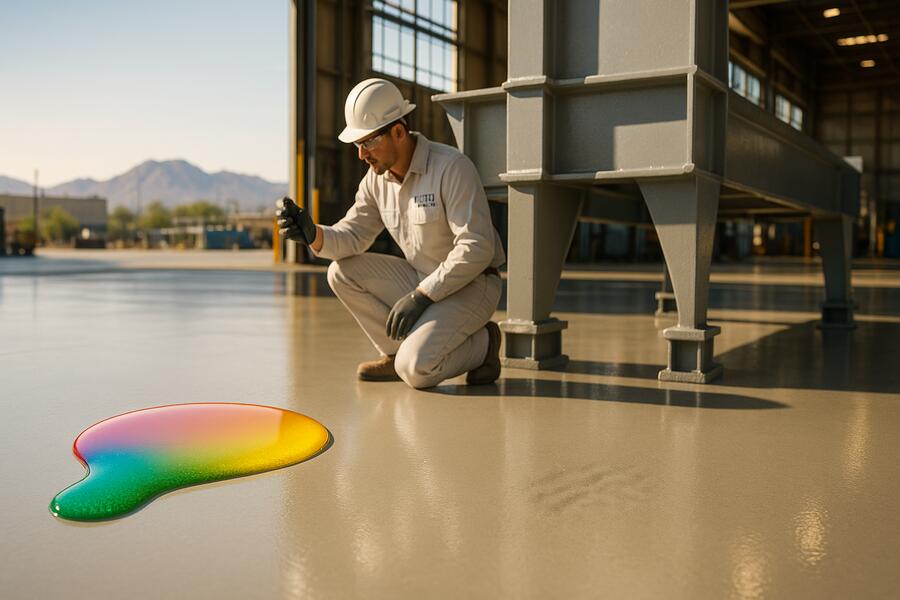
Industrial environments are inherently challenging. From manufacturing plants and warehouses to chemical processing facilities and heavy machinery operations, surfaces are constantly exposed to a relentless assault of corrosive chemicals, abrasive materials, and extreme physical wear. Standard paints simply cannot withstand these conditions. This is where specialized industrial coatings come into play, engineered to provide unparalleled protection and significantly extend the lifespan of critical assets. Understanding the science behind industrial coatings chemical resistance and their ability to endure heavy wear is crucial for facility managers and business owners looking to optimize maintenance strategies and ensure operational continuity.
As experienced industrial painting contractors, we’ve seen firsthand how the right coating system can make a monumental difference in protecting investments and maintaining safety standards. Selecting the appropriate coating is a strategic decision that factors in the specific chemical exposures, mechanical stresses, and environmental conditions unique to each industrial setting.
The Science Behind Industrial Coatings’ Chemical Resistance
The ability of an industrial coating to resist chemical attack is rooted in its molecular structure and formulation. These coatings are designed to form a dense, impermeable barrier that prevents corrosive substances from reaching the underlying substrate.
Understanding Chemical Compatibility
Chemical resistance isn’t a universal property; it’s highly specific. A coating that performs excellently against strong acids might fail when exposed to certain solvents or alkalis. Key factors determining resistance include:
- Polymer Chemistry: The type of polymer resin used is paramount. Epoxies, polyurethanes, and novolac epoxies are widely recognized for their robust chemical resistance. For instance, epoxies are known for their dense cross-linked structure which provides excellent barrier properties against many chemicals, acids, and alkalis.
- Cross-linking Density: In thermoset coatings like epoxies, a higher degree of cross-linking creates a tighter, more resistant film that chemicals struggle to penetrate or degrade.
- Filler Materials: Inert fillers (e.g., quartz, silica, glass flakes) can enhance the coating’s impermeability and chemical resistance by creating a tortuous path for chemical ingress.
- pH Range Performance: Industrial coatings are often rated for their resistance across a broad pH range, from highly acidic (pH 1) to strongly alkaline (pH 14). This specification helps in selecting coatings suitable for diverse chemical exposures.
💡 Key Takeaway: Chemical resistance in industrial coatings is achieved through specialized polymer chemistry, high cross-linking density, and inert fillers, ensuring protection across specific pH ranges against various acids, alkalis, and solvents.
Common Chemical Threats and Resistant Coatings
Industrial settings encounter a variety of corrosive agents:
- Acids and Alkalis: Battery acid, hydrochloric acid, sulfuric acid, caustic soda, etc. Coatings like epoxies (especially novolac epoxies), vinyl esters, and specialized fluoropolymers (e.g., Tefzel, Halar) are highly effective.
- Solvents: Acetone, methanol, xylene, etc. Polyurethanes and advanced epoxy systems often provide good resistance, though some solvents require very specific formulations.
- Oils and Fuels: Petroleum products, hydraulic fluids. Epoxies and certain polyurethanes excel here.
Understanding Wear and Abrasion Resistance
Beyond chemical attack, industrial surfaces are constantly subjected to friction, impact, and heavy traffic, necessitating coatings that can withstand physical punishment.
Mechanisms of Wear
Wear in industrial environments can manifest in several forms:
- Abrasion: Caused by scraping, rubbing, or grinding with abrasive particles (e.g., sand, dust, aggregate). This is common on floors, chutes, and machinery.
- Impact: Sudden force from falling objects, heavy equipment, or collisions, leading to chips, cracks, or delamination.
- Erosion: Wear caused by the impingement of particles or fluids moving at high velocity, often seen in piping or fan blades.
Coating Technologies for Heavy Wear
Several coating types are engineered for superior wear and abrasion resistance:
- Epoxies: Known for their toughness and hardness, epoxies offer excellent resistance to fine, coarse, and large particle abrasion, as well as impact. They are widely used for industrial flooring.
- Polyurethanes: While often used as a topcoat for epoxies, polyurethanes provide excellent flexibility and elasticity, which contributes to their impact and abrasion resistance. They are also UV stable.
- Polyaspartics: These are high-performance polyureas known for extremely fast cure times and exceptional abrasion resistance—often 2-3 times better than traditional epoxies in Taber abrasion tests. This makes them ideal for high-traffic areas needing minimal downtime.
- Ceramic Coatings: Infused with ceramic particles (like chrome oxide), these coatings offer outstanding wear resistance to particle erosion, cavitation, and abrasive grains, often at elevated temperatures.
💡 Key Takeaway: For heavy wear, industrial coatings leverage the inherent toughness of epoxies, the flexibility of polyurethanes, or the extreme abrasion resistance of polyaspartics and ceramic-infused systems.
Factors Influencing Coating Performance and Selection
Choosing the right industrial coating requires a holistic approach, considering not just the immediate threats but also the application and long-term environment.
Surface Preparation
No high-performance coating will perform as intended without meticulous surface preparation. This involves:
- Cleaning: Removing all contaminants like grease, oil, dirt, and old coatings.
- Profiling: Creating an optimal surface profile (e.g., through blasting, grinding) to ensure strong mechanical adhesion of the new coating.
Application Environment
The conditions during application significantly affect the coating’s final properties.
- Temperature and Humidity: These factors influence cure times, flow, and adhesion. Professional industrial painting contractors phoenix az are skilled at managing these variables for optimal results.
- Ventilation: Proper ventilation is crucial for worker safety and to ensure the coating cures correctly, especially with solvent-borne systems.
Maintenance and Lifecycle Cost
The true value of an industrial coating is realized over its entire service life.
- Longevity: While the initial cost of industrial coatings can be higher, their extended lifespan and reduced maintenance requirements often result in a lower total cost of ownership compared to conventional paints.
- Repairability: Some systems are designed for easier touch-ups or repairs, further contributing to long-term cost savings.
| Coating Type | Primary Benefit | Typical Applications |
|---|---|---|
| Epoxy | Excellent chemical & abrasion resistance, strong adhesion. | Concrete floors, tanks, machinery, structural steel. |
| Novolac Epoxy | Superior resistance to concentrated acids & solvents. | Chemical containment, secondary containment, processing areas. |
| Polyurethane | Flexibility, impact resistance, UV stability (as a topcoat). | Exterior steel, machinery, as a topcoat over epoxy floors. |
| Polyaspartic | Very high abrasion resistance, fast cure, UV stability. | High-traffic floors, quick return-to-service areas. |
| Ceramic Coatings | Extreme wear/erosion resistance, heat resistance. | Pumps, valves, fan blades, high-wear machinery components. |
💡 Key Takeaway: Proper surface preparation is non-negotiable for coating performance, and the application environment significantly impacts cure. Considering the lifecycle cost often reveals that higher-quality industrial coatings provide superior long-term value.
The longevity and safety of industrial facilities heavily rely on the protective capabilities of specialized coatings. By understanding how these advanced systems are engineered to resist chemical degradation and heavy physical wear, facility managers can make informed decisions that safeguard their assets, ensure compliance, and minimize costly downtime. Investing in the right industrial coating solution is an investment in durability, efficiency, and the long-term health of your operations.
Have questions about how industrial coatings resist chemicals and heavy wear? Reach out to our team today.
Frequently Asked Questions
What makes epoxy coatings good for chemical resistance?
Epoxy coatings are effective for chemical resistance primarily due to their dense, highly cross-linked polymer structure. This tight molecular network forms an impermeable barrier that makes it difficult for many chemicals, acids, alkalis, and solvents to penetrate and degrade the coating. Specialized novolac epoxies offer even greater resistance to concentrated and aggressive chemicals.
How is abrasion resistance measured for industrial coatings?
Abrasion resistance is often measured using standardized tests like the Taber Abrasion Test. This test involves a rotating abrasive wheel that rubs against a coated sample under a specified load. The amount of weight loss (in milligrams) after a certain number of cycles indicates the coating’s resistance to wear. Lower weight loss signifies better abrasion resistance.
Are all industrial coatings resistant to the same chemicals?
No, chemical resistance is highly specific. A coating formulated for excellent resistance to strong acids might not withstand certain organic solvents, and vice versa. It’s crucial to identify all specific chemicals and their concentrations that the coating will be exposed to, and then select a product with a verified compatibility rating for those substances.
What is the difference between chemical resistance and chemical splash resistance?
Chemical splash resistance means the coating can withstand occasional, short-term contact with chemicals without significant damage, assuming the chemical is quickly cleaned up. Chemical immersion resistance, however, implies the coating can endure prolonged or continuous contact with a chemical without degradation. Industrial applications often require immersion resistance for tanks, containment areas, or processing equipment.
