
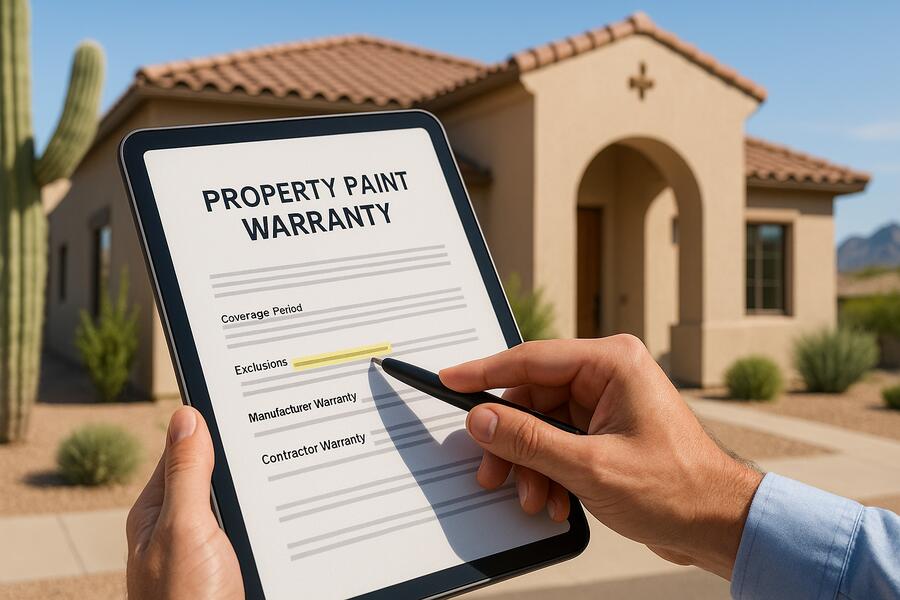
Investing in a professional paint job for your property is a significant decision. You expect the finish to look great and last for years, which is why understanding paint warranty terms is crucial. Many property owners assume that a “warranty” means any issue will be covered, but the reality is more nuanced. There are typically two distinct types of warranties involved: the paint manufacturer’s product warranty and the painting contractor’s workmanship warranty. Each covers different aspects and comes with its own set of exclusions. Misunderstanding these terms can lead to frustration and unexpected costs down the line.
As experienced painting professionals, we believe in full transparency. Helping clients understand what their paint job warranty truly entails is part of our commitment to excellent service. Let’s break down these essential paint warranty terms explained so you can confidently protect your investment.
Distinguishing Between Manufacturer and Contractor Warranties
The first step in understanding your paint warranty is knowing who is offering it and what aspect of the paint job it covers.
Manufacturer’s Product Warranty
This warranty is provided by the paint company (e.g., Sherwin-Williams, Benjamin Moore, Behr). It covers defects in the paint product itself.
- What it Covers: Primarily, the quality of the paint materials. This includes issues like premature peeling, blistering, chalking (beyond normal weathering), or severe fading that are directly attributable to a manufacturing defect in the paint.
- Typical Length: These warranties can range from 3 years to “lifetime,” depending on the specific paint line and brand. However, “lifetime” often refers to the expected life of the product, not the lifetime of the property owner, and may come with specific conditions.
- Limitations: Manufacturer warranties almost always cover only the cost of replacement paint, not the labor to re-apply it. They also typically exclude problems arising from improper surface preparation or application by the contractor, underlying structural issues, or external damage.
Contractor’s Workmanship Warranty
This warranty is provided by the painting company you hire. It covers the quality of their labor and application.
- What it Covers: Issues arising from the painter’s work, such as improper surface preparation leading to adhesion problems (e.g., peeling paint due to inadequate cleaning), poor application techniques, or missed spots.
- Typical Length: Workmanship warranties are generally shorter, often ranging from 1 to 5 years for residential projects, and sometimes longer for premium exterior work with extensive preparation. Commercial project warranties can vary widely based on scope.
- Limitations: This warranty does not cover defects in the paint product itself (that’s the manufacturer’s responsibility). It also excludes damage from natural disasters, accidental impact, structural issues with the property, or lack of proper maintenance by the homeowner.
💡 Key Takeaway: Manufacturer warranties cover paint product defects (e.g., faulty paint causing peeling), typically for longer durations and often only replacement paint. Contractor warranties cover labor and application errors (e.g., poor prep causing peeling), usually for shorter terms and including labor.
Common Exclusions to Be Aware Of
Understanding what’s NOT covered is just as important as knowing what is. Most warranties have clear exclusions to define their limits.
Normal Wear and Tear / Environmental Factors
- Fading and Chalking: Gradual color change and chalking (a powdery residue on the surface) due to UV exposure and normal weathering are generally considered natural aging and are not covered unless specifically stated as a fade-resistance guarantee in a premium product.
- Environmental Damage: Damage from storms, hail, fallen tree limbs, fire, floods, excessive wind, or extreme temperatures (e.g., blistering in excessively hot climates due to direct sun exposure) is almost universally excluded.
Underlying Structural or Moisture Issues
Paint can only perform as well as the surface it’s applied to. Issues not directly related to the paint or its application are excluded.
- Water Intrusion: Leaks from roofs, windows, plumbing, or rising damp that cause paint failure are not covered. The underlying water issue must be resolved first.
- Structural Movement: New cracks in walls, shifting foundations, or substrate failures that cause paint to crack or separate are considered structural problems, not paint defects.
- Previous Paint Failure: If the new paint fails due to adhesion problems with a poorly prepared or failing previous coat that was not part of the current contractor’s scope, it may not be covered.
Client-Caused Damage or Lack of Maintenance
- Impact or Abrasion: Scratches, chips, or gouges caused by impact from objects, furniture, or heavy abrasion are typically not covered.
- Improper Cleaning: Using harsh chemicals, high-pressure washing at close range, or steam cleaning that damages the paint film can void a warranty.
- Altered Substrate: Any changes made to the surface after the painting job is complete that causes paint failure (e.g., installation of fixtures, significant wall modifications) are not covered.
💡 Key Takeaway: Common exclusions include normal weathering, environmental damage, underlying structural/moisture problems, and client-caused damage or improper maintenance. Always read the fine print to understand these limitations.
What to Look for When Reviewing Your Warranty
When you receive a warranty document from your painting contractor or review product information, pay close attention to the details.
Read the Document Carefully
Don’t just skim it. Understand the specific conditions and terms. Any reputable company, like skilled painters in phoenix az, will clearly outline their warranty.
- Coverage Period: Note the exact start and end dates.
- What is Covered: Clearly identify the types of failures (e.g., peeling, blistering, fading beyond normal) that trigger the warranty.
- What is Excluded: Pay close attention to the exclusion list to avoid surprises.
- Who to Contact: Know the process for making a claim and who is responsible for addressing it (manufacturer or contractor).
- Remedy: Understand whether the warranty offers replacement paint, labor, or both.
Ask Questions
If anything is unclear, ask your painting contractor for clarification before the work begins.
- Clarify Definitions: Ask about terms like “normal weathering” or what constitutes a “defect” in their view.
- Discuss Maintenance: Inquire about recommended cleaning and maintenance practices that will help preserve the warranty.
- Get it in Writing: Ensure all warranty terms are clearly written in your contract or a separate warranty document. Verbal agreements are difficult to enforce.
| Warranty Term | Key Aspect to Understand |
|---|---|
| Manufacturer Warranty | Covers paint material defects only; typically provides replacement paint. |
| Contractor Warranty | Covers labor/workmanship errors; may include labor for repairs. |
| Exclusions | What is specifically NOT covered (e.g., normal fading, structural issues, external damage). |
| Coverage Period | The exact duration the warranty is active for each specific type of coverage. |
| Remedy | What actions will be taken if a covered issue arises (e.g., repaint, refund, repair). |
💡 Key Takeaway: Always read your warranty document thoroughly, identify coverage periods, understand exclusions, and confirm the remedy for any covered issues. Get all terms in writing.
Understanding paint warranty terms is a vital part of protecting your painting investment. By knowing the difference between manufacturer and contractor warranties, recognizing common exclusions, and carefully reviewing the terms in writing, you can set realistic expectations and ensure you’re covered for legitimate issues. Don’t hesitate to ask your painting professional to walk you through their warranty details—a reputable contractor will be happy to provide clear explanations and documentation.
Have questions about paint warranty terms every property owner should understand? Reach out to our team today.
Frequently Asked Questions
What is the typical length of a painting contractor’s warranty?
For residential painting, a contractor’s workmanship warranty typically ranges from 1 to 5 years. For exterior work, especially with extensive surface preparation or premium materials, some contractors might offer up to 7 years. The length can also depend on the specific type of service (e.g., interior vs. exterior, deck staining vs. full house paint).
Does a paint warranty cover normal fading over time?
Generally, no. Most standard manufacturer and contractor warranties consider gradual color fading and chalking due to natural UV exposure and weathering as normal wear and tear, not a defect. Some premium paint lines may offer specific “fade resistance guarantees,” but these are usually an added feature and not part of a standard warranty.
What voids a paint warranty?
Common actions that can void a paint warranty include: neglecting proper maintenance (e.g., not cleaning exterior surfaces regularly), using harsh cleaning chemicals or high-pressure washing methods that damage the paint film, making structural changes to the painted surface, improper repairs or touch-ups by untrained individuals, or damage caused by underlying moisture problems that were not addressed prior to painting.
If the paint peels, is it always covered by a warranty?
Not necessarily. If the paint peels due to a manufacturing defect in the paint product itself, it would be covered by the manufacturer’s warranty (typically for replacement paint). However, if the peeling is due to improper surface preparation by the contractor (e.g., not cleaning or priming correctly), it would fall under the contractor’s workmanship warranty. If it peels due to underlying moisture issues (like a leaking wall) or structural movement, it is usually not covered by either warranty, as these are external factors.
