For years, the all-white kitchen reigned supreme, lauded for its timeless appeal and bright, airy feel. While still popular, a significant shift has been underway in kitchen design: the rise of two-tone cabinets. This trend, far from being a fleeting fad, has evolved into a sophisticated and versatile design strategy that allows homeowners to infuse personality, depth, and visual interest into their kitchens. If you’ve been seeing kitchens with different colored upper and lower cabinets or a contrasting island, you’ve witnessed the two-tone cabinets trend explained in action.
As painting professionals who work directly with homeowners and designers, we’ve seen firsthand how effectively two-tone cabinets can transform a space. It’s a strategic use of color that can enhance functionality and aesthetics simultaneously. Let’s delve into why this trend is gaining so much traction and how you can implement it successfully.
What Are Two-Tone Cabinets?
At its core, the two-tone cabinet trend involves using two different colors or finishes for your kitchen cabinetry. This isn’t just about painting; it also applies to different material finishes, such as combining painted cabinets with natural wood tones.
Common Applications
The beauty of two-tone cabinets lies in their versatility. The most prevalent methods include:
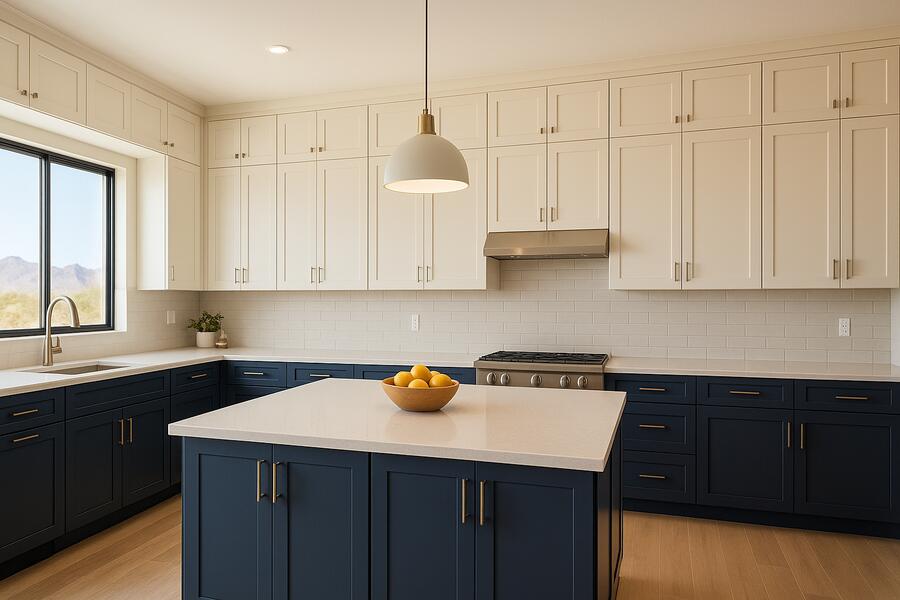
- Lighter Uppers, Deeper Lowers: This is the classic approach. Lighter cabinets on top help maintain an open, airy feel in the upper half of the kitchen, while deeper, often more grounded colors on the lower cabinets add visual weight, create a sense of stability, and can hide scuffs or dirt more effectively.
- Contrasting Island: Another popular strategy is to paint or finish the kitchen island in a distinct color or material that contrasts with the perimeter cabinetry. This makes the island a focal point and adds a layer of design complexity.
- Varying Perimeter Cabinets: Less common but equally effective, some designs might use a different color for a specific section of perimeter cabinets, like a pantry wall or a built-in hutch, to create a distinct zone.
💡 Key Takeaway: Two-tone cabinets use two distinct colors or finishes, most commonly pairing lighter upper cabinets with deeper lower cabinets or featuring a contrasting kitchen island to add visual interest and depth.
Why the Two-Tone Cabinet Trend is So Popular
The popularity of two-tone cabinets isn’t accidental; it’s driven by several compelling design and practical advantages.
Enhanced Visual Interest and Depth
- Breaks Monotony: A single cabinet color throughout a large kitchen can sometimes feel flat or overwhelming. Two tones break up the visual expanse, making the space feel more dynamic and less monolithic.
- Adds Dimension: By contrasting colors, you create depth and draw the eye, highlighting architectural features or specific areas within the kitchen.
Personalization and Style Statement
- Express Your Style: This trend allows homeowners to inject more personality into their kitchens. Whether you prefer subtle contrasts or bold statements, two-tone cabinets offer a canvas for unique design.
- Introduce Saturated Colors: It’s a fantastic way to incorporate a bold or trending color (like a deep green or navy) without committing to it across the entire kitchen. Using it on lower cabinets or an island provides a pop of color that feels grounded and stylish.
Practical Benefits
- Visually Expands Space: Lighter upper cabinets can make a kitchen feel taller and more open, which is particularly beneficial in smaller spaces.
- Hides Wear and Tear: Darker lower cabinets are more forgiving for scuffs, spills, and everyday grime, which are more common on frequently accessed bottom units.
- Cost-Effective Update: If your existing cabinets are in good condition, painting them two-tone is a much more affordable way to achieve a high-end, custom look than replacing them entirely. This is where professional cabinet painting phoenix az can make a significant difference.
💡 Key Takeaway: The two-tone trend offers enhanced visual appeal, allows for personalized style expression with bolder colors, and provides practical benefits like making kitchens feel larger and hiding everyday wear.
Popular Color Pairings and Combinations
The current iteration of the two-tone trend leans towards warmer, more earthy, and sophisticated palettes.
Trending Combinations
- Warm Wood & Cream/White Uppers: A very popular and timeless pairing. Natural wood tones on the bottom cabinets or island paired with soft cream or warm white uppers create a welcoming, organic, and sophisticated feel.
- Greige/Mushroom & Deeper Earth Tones: Warm neutrals like greige (a mix of gray and beige) or mushroom (a soft, earthy brown-gray) are being paired with deeper, muted greens, terracotta, or charcoal on the bottom. This creates a serene, grounded, and very contemporary look.
- Navy Blue/Deep Green & White/Light Gray: Still a classic, but often moving towards richer, slightly muted blues and greens rather than overly bright or stark shades. Paired with crisp white or a soft, warm gray, these combinations offer a timeless yet bold statement.
- Black/Charcoal & Light Neutrals: For a more dramatic and modern aesthetic, deep charcoal or matte black on lower cabinets or the island can be balanced beautifully with warm whites, light grays, or even natural wood on the uppers.
Considerations for Choosing Your Pairings
- Kitchen Size and Light: Lighter colors are often preferred for smaller kitchens or those with limited natural light to keep the space feeling open. Darker colors on lowers can anchor the space without making it feel claustrophobic.
- Existing Elements: Take into account your flooring, countertops, backsplash, and wall color. The two cabinet tones should harmonize with these permanent features.
- Overall Home Aesthetic: Ensure the chosen combination flows with the style and color palette of the rest of your home.
| Placement Strategy | Popular Color Pairings | Design Impact |
|---|---|---|
| Lighter Uppers, Darker Lowers | White/Cream with Navy/Green/Wood | Expands space, adds depth, hides wear. |
| Contrasting Island | Bold color (e.g., Black) with Neutral perimeter | Creates focal point, anchors the room. |
| Accent Wall/Section | Terracotta/Sage with White/Greige | Defines zones, adds unexpected flair. |
💡 Key Takeaway: Current trends favor warmer, earthy tones, often pairing natural wood or deep, muted colors on lowers with creamy whites or light neutrals on uppers. Always consider your kitchen’s size, lighting, and existing elements when choosing pairings.
The two-tone cabinet trend is a testament to the evolving nature of kitchen design, moving beyond monolithic aesthetics to embrace more personalized, dynamic, and functional spaces. By strategically combining colors and finishes, homeowners can create kitchens that are not only beautiful but also feel uniquely their own. If you’re looking to update your kitchen and are considering this popular approach, careful planning and professional execution will ensure a stunning and long-lasting result. This is a design choice that offers both timeless appeal and modern flair.
Have questions about two-tone cabinets: a growing kitchen trend explained? Reach out to our team today.
Frequently Asked Questions
Are two-tone cabinets only for modern kitchens?
Not at all! While often seen in modern and contemporary designs, two-tone cabinets can be adapted to various kitchen styles. For example, a farmhouse kitchen could use distressed white uppers and natural wood lowers. A transitional kitchen might pair soft gray with a deep blue. The key is in the choice of colors, finishes, and hardware to match the desired aesthetic.
Do two-tone cabinets make a kitchen look smaller?
Generally, no. When designed thoughtfully, two-tone cabinets can actually make a kitchen feel larger and more open. Using lighter colors on upper cabinets and darker colors on lower cabinets can draw the eye upward, creating a sense of height. A contrasting island can add depth without overwhelming the space. It’s about strategic placement and balance.
What kind of maintenance do two-tone cabinets require?
Maintenance for two-tone cabinets is similar to that of single-color cabinets. Regular cleaning with a mild, non-abrasive cleaner is essential. Pay attention to the finish of each color, as different sheens may show fingerprints or dust differently. Darker lower cabinets might hide everyday grime better, but consistent cleaning is still recommended to preserve both finishes.
Can I DIY a two-tone cabinet project?
While DIY is an option, achieving a professional, durable finish for two-tone cabinets is challenging. It requires meticulous preparation, precise application (especially with two colors), and an understanding of paint types and curing. Mistakes are more noticeable with contrasting colors. For a high-quality, long-lasting result, especially for intricate work like cabinet painting, hiring experienced professionals is often the best investment.