For any exterior painting project, success hinges not just on the skill of the crew or the quality of the paint, but significantly on understanding and respecting “weather windows.” These aren’t just arbitrary dates on a calendar; they are specific periods when atmospheric conditions—temperature, humidity, moisture, and wind—align perfectly to allow paint to adhere, dry, and cure correctly. Ignoring these critical weather windows for exterior painting can lead to a host of problems, from poor adhesion and premature peeling to an uneven finish and compromised durability. For property owners and managers, this translates to wasted investment and the need for costly rework.
Our experience in the field has shown that meticulously planning around these conditions is fundamental. It means closely monitoring forecasts, understanding the science behind paint curing, and sometimes, having the wisdom to reschedule a job for the longevity and quality of the finish. Let’s break down the key atmospheric factors that dictate when exterior painting can, and should, proceed.
Understanding the Critical Weather Window Components
Each environmental factor plays a distinct role in how paint behaves during and after application.
Temperature: The Primary Driver
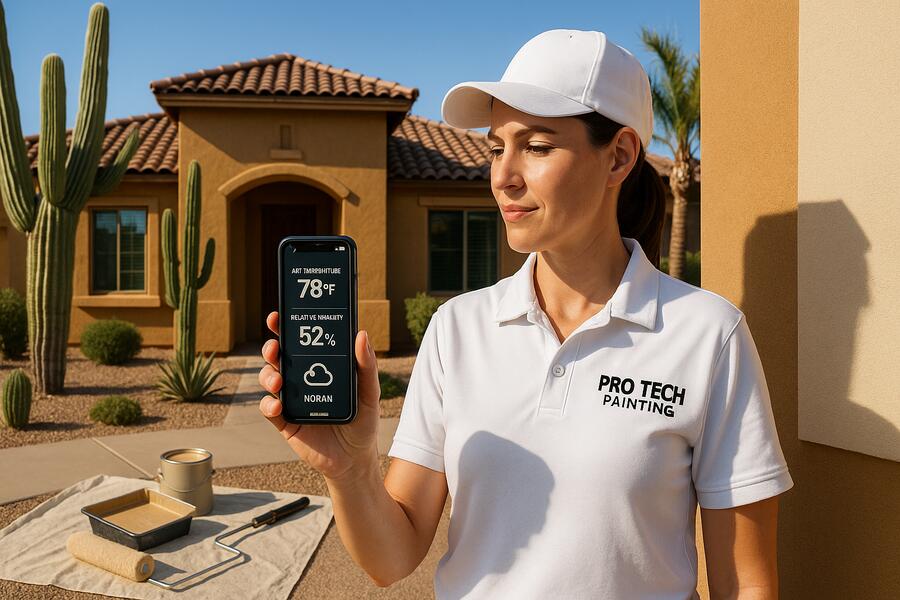
Temperature is arguably the most influential factor in exterior painting. Both air and surface temperatures are critical.
- Ideal Range: Most modern latex (acrylic) exterior paints perform best when air temperatures are between 50°F and 85°F (10°C to 29°C), with a sweet spot often cited as 60°F to 80°F. Oil-based paints can sometimes tolerate slightly cooler starts, around 45°F.
- Overnight Lows: It’s not just the daytime high that matters. The temperature must remain above the manufacturer’s minimum recommended temperature (often 35-40°F) for at least 4-8 hours after application and typically throughout the initial curing phase (up to 48 hours for some paints). If temperatures drop too low, the paint won’t coalesce properly, leading to poor film formation, reduced adhesion, and durability issues.
- High Temperatures: Conversely, painting in extreme heat (above 90°F or 32°C) causes paint to dry too quickly, or “flash dry.” This can result in brush marks, poor leveling, lap marks, and reduced adhesion as the paint doesn’t have enough time to bond correctly to the surface before it skins over.
Humidity and Rain: Moisture’s Impact
Moisture is the nemesis of exterior paint, both during and immediately after application.
- Relative Humidity: The ideal relative humidity (RH) for exterior painting is typically between 40% and 70%. High humidity (above 70%) significantly extends drying and curing times. This leaves the paint susceptible to dust, insects, and moisture damage for longer, increasing the risk of drips, sags, and an uneven finish.
- Rain: Rain is an obvious showstopper. Most exterior paints require a minimum of 4-8 hours of rain-free conditions after application for the first coat to dry sufficiently. For multiple coats, longer intervals are needed. Painting when rain is imminent or surfaces are damp is a recipe for paint failure, including blistering, washing away, or streaking.
💡 Key Takeaway: Temperature is paramount: aim for 50-85°F for optimal adhesion and curing, ensuring overnight lows stay above minimums. High humidity and rain are critical deterrents, demanding rain-free periods of at least 4-8 hours and relative humidity below 70% to prevent adhesion issues and premature failure.
Dew Point: The Hidden Danger
The dew point is a less commonly understood but equally crucial factor. It refers to the temperature at which air becomes saturated with moisture and condensation begins to form.
- Surface Temperature vs. Dew Point: For successful paint application, the surface temperature must be at least 5°F (3°C) above the dew point. If the surface temperature falls to or below the dew point, even if the air temperature seems fine, moisture will condense on the surface. Painting over a condensed surface means painting over water, which severely compromises adhesion, can cause blistering, and leads to premature failure.
- Overnight and Early Morning: This is particularly relevant in the early morning or evening when temperatures drop, and surfaces cool faster than the ambient air. Surfaces can appear dry but still be below the dew point. Professional crews meticulously check this before starting and finishing for the day.
Careful consideration of these factors ensures a long-lasting finish, especially for exterior painting phoenix az where temperature swings can be significant.
Wind and Sun Exposure: Additional Considerations
While not as critical as temperature and moisture, wind and direct sun exposure also play a role.
- Wind: Strong winds can cause paint to dry too quickly, similar to high temperatures, leading to lap marks and poor adhesion. Wind also increases airborne debris, which can embed in wet paint, compromising the finish.
- Direct Sun Exposure: Painting directly in intense sunlight, especially during the hottest part of the day, can also cause paint to flash dry or blister, particularly on dark surfaces. It’s often better to “follow the shade,” painting areas as they move out of direct sun.
- Surface Preparation: Wind can also complicate surface preparation, blowing dust and dirt onto surfaces that have just been cleaned, necessitating re-cleaning before painting.
💡 Key Takeaway: The dew point is a critical but often overlooked factor; ensure surface temperature is at least 5°F above it to prevent condensation and adhesion issues. Strong wind can cause flash drying and introduce debris, while direct, intense sun can also lead to premature drying and blistering.
| Weather Factor | Ideal Conditions for Latex Paint | Impact of Adverse Conditions |
|---|---|---|
| Air Temperature | 50-85°F (60-80°F optimal) | Too cold: poor film formation, adhesion failure. Too hot: flash drying, lap marks. |
| Overnight Lows | Above 35-40°F (for 4-8 hrs post-application) | Compromised curing, reduced durability, peeling. |
| Relative Humidity | 40-70% | Too high: slow drying, drips, dust adhesion. Too low: sometimes too fast drying (rare in exterior). |
| Rain-Free Period | Minimum 4-8 hours after application | Washing off, streaking, blistering, poor adhesion. |
| Surface Temperature vs. Dew Point | Surface must be at least 5°F above dew point | Condensation, severe adhesion failure, blistering. |
| Wind | Light to moderate | Too strong: flash drying, debris embedding, uneven finish. |
| Direct Sun Exposure | Avoid intense mid-day sun on hot surfaces | Flash drying, blistering, lap marks. |
💡 Key Takeaway: A professional painting schedule meticulously accounts for all weather variables, using detailed forecasts to pinpoint optimal weather windows. This proactive approach prevents costly paint failures, ensuring a durable, high-quality finish that stands the test of time.
The impact of weather windows on exterior painting schedules cannot be overstated. It’s a testament to the fact that painting is both an art and a science, demanding respect for environmental conditions to achieve a lasting and beautiful result. Professional painters don’t just pick a sunny day; they analyze temperature highs and lows, humidity levels, dew points, and even wind patterns. This meticulous planning ensures that every coat of paint adheres, dries, and cures as intended, protecting your investment for years to come. By understanding these factors, you can better appreciate the expertise involved in scheduling and executing a successful exterior painting project.
Have questions about how weather windows affect exterior painting schedules? Reach out to our team today.
Frequently Asked Questions
What happens if exterior paint is applied when it’s too cold?
If exterior paint is applied when temperatures are too low, the paint’s components (especially in latex paints) cannot properly coalesce or fuse together to form a continuous, durable film. This leads to poor adhesion, cracking, blistering, reduced washability, and premature paint failure. The paint film will be weak and easily damaged.
Why is high humidity bad for exterior painting?
High humidity causes water-based paints to dry much slower because there is more moisture in the air, preventing the water in the paint from evaporating. This extended drying time leaves the paint film vulnerable to collecting dust, pollen, and insects. It also increases the risk of sagging, dripping, and fungal growth (mildew) if moisture becomes trapped within the paint layer.
How long does paint need to be dry before rain?
Most exterior latex paints need at least 4-8 hours of dry, rain-free weather after application to reach a sufficient level of dry-to-touch or dry-enough-to-resist wash-off. However, full curing can take days or weeks. For multi-coat systems, longer dry times between coats and before significant moisture exposure are always recommended by manufacturers.
What if the forecast changes unexpectedly during an exterior painting project?
Professional painting crews continuously monitor weather forecasts, often using advanced tools, and have contingency plans. If a sudden change in weather (e.g., unexpected rain or temperature drop) occurs, they will take immediate action to protect freshly painted surfaces, cover materials, and cease painting operations to prevent damage. This might involve adjusting the schedule or delaying certain phases of the project.