
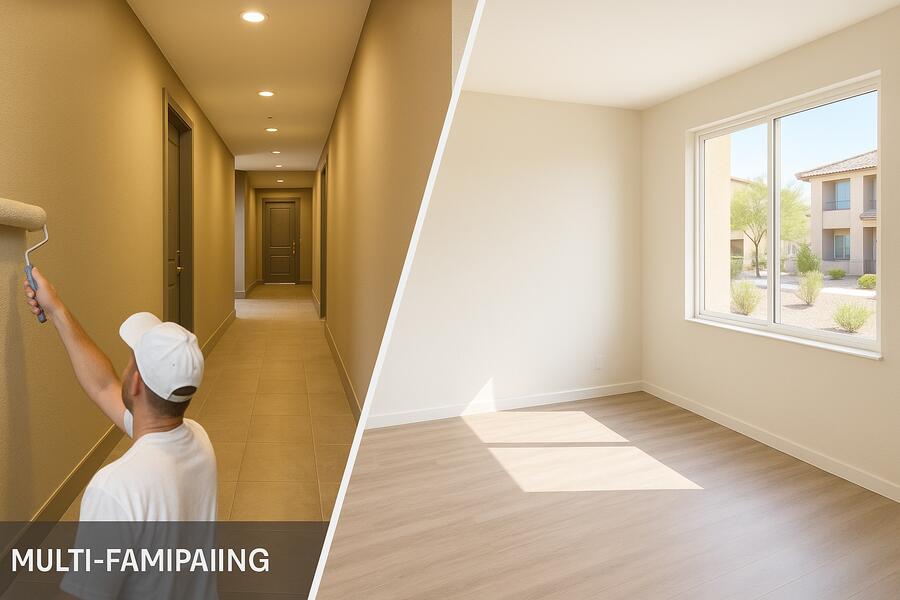
Understanding the Distinct Approaches to Multi-Family Painting
In multi-family properties, the painting needs of common areas versus individual unit interiors present distinct challenges and require different strategic approaches. While both fall under the umbrella of property maintenance, the considerations for common area vs unit interior painting—from logistics and paint selection to aesthetic goals and long-term maintenance—are quite varied. As professionals, we understand that a one-size-fits-all approach simply doesn’t work for these diverse spaces.
Common areas, like lobbies, hallways, stairwells, and recreational spaces, are high-traffic zones that serve all residents and visitors. Unit interiors, conversely, are private living spaces that undergo turnover or specific tenant needs. Recognizing these differences is crucial for efficient project planning, budget allocation, and ensuring resident satisfaction. Whether you’re planning a full exterior refresh or individual unit turnovers, understanding these nuances is key to a successful outcome for any apartment complex painting phoenix az project.
💡 Key Takeaway: Painting common areas and unit interiors requires distinct strategies due to differing traffic, usage, and aesthetic requirements.
Planning and Logistics: Minimizing Disruption
The logistical challenges for painting common areas compared to unit interiors are significantly different. For common areas, the primary concern is minimizing disruption to daily operations and resident access. This often means:
- Phased Scheduling: Breaking the project into manageable sections, such as floor-by-floor or wing-by-wing, to keep portions of the building accessible.
- Off-Hours Work: Scheduling painting during off-peak times, like weekdays when most residents are at work, or even overnight, to reduce inconvenience in high-traffic zones like lobbies or main corridors.
- Clear Communication: Providing ample notice to residents about work schedules, temporary access changes, and expected timelines.
For unit interiors, especially occupied units, the focus shifts to individual tenant coordination and quick turnaround times:
- Vacancy Scheduling: The ideal scenario is painting units during tenant turnover when they are vacant, allowing for unrestricted access and faster completion.
- Occupied Unit Protocols: If painting occupied units, strict scheduling, 48-hour notices, protection of belongings, and often the use of low-VOC, fast-drying paints are paramount to ensure tenant comfort and safety.
- Access Management: Coordinating keys, access codes, and specific entry times with individual residents.
Paint Selection and Durability Requirements
The type of paint chosen for common areas versus unit interiors also varies greatly, primarily driven by durability needs and maintenance cycles.
Common Area Paint Considerations:
- High Durability: These areas experience constant wear and tear, requiring paints formulated for maximum scrubbability, stain resistance, and chip resistance.
- Sheen Levels: Eggshell or satin finishes are common as they offer a balance of aesthetic appeal and washability. Semi-gloss is often used on trim, doors, and high-touch surfaces for even greater durability.
- Specialized Formulations: Often, common areas benefit from paints with antimicrobial properties to inhibit mold and mildew growth, and even graffiti-resistant coatings in certain public-facing zones.
Unit Interior Paint Considerations:
- Versatility and Value: While still needing to be durable enough to withstand normal living, unit interiors often prioritize cost-effectiveness and ease of touch-up.
- Sheen Levels: Matte or flat finishes are popular for walls as they hide imperfections well and create a soft look. Eggshell or satin are also common choices for increased washability, particularly in kitchens and bathrooms. Semi-gloss is standard for trim and doors.
- Low VOC: Especially for occupied units, low-VOC (Volatile Organic Compound) paints are preferred to minimize odors and improve indoor air quality for residents.
💡 Key Takeaway: Common areas demand highly durable, washable paints with higher sheens, while unit interiors balance durability with aesthetic versatility and low-VOC options for tenant comfort.
Color Schemes and Aesthetic Goals
The aesthetic approach for common areas and unit interiors serves different purposes, impacting color choices and overall design.
Common Area Aesthetics:
- Broad Appeal: Neutral palettes (tans, grays, warm whites) are favored to appeal to a wide range of tastes and provide a cohesive, inviting atmosphere for all residents.
- Timelessness: Colors that are less trend-driven help extend the time between major repaints, aligning with longer maintenance cycles.
- Architectural Enhancement: Strategic use of accent walls or contrasting trim colors can add architectural interest without overwhelming the space. Some properties use color zoning to subtly define different functional areas.
Unit Interior Aesthetics:
- Tenant Versatility: Light, neutral colors provide a blank canvas for tenants to personalize their living space without requiring immediate repainting upon move-in. This makes units easier to rent and reduces turnover costs.
- Brightness: Lighter shades can make rooms feel larger and brighter, a desirable quality for many renters.
- Modern Trends: While neutrals dominate, current trends lean towards warmer, softer neutrals (soft beige, light taupe, warm off-white) rather than stark whites or cool grays, creating a more inviting feel.
💡 Key Takeaway: Common areas benefit from timeless, broad-appeal neutrals, while unit interiors require versatile, light colors that tenants can easily personalize.
Maintenance, Longevity, and Cost Efficiency
The long-term maintenance strategy and cost efficiency also differ between these two painting projects.
Common Area Maintenance:
- Frequent Cleaning: Due to high traffic, common areas require more frequent cleaning, necessitating highly washable paints.
- Repaint Cycle: Typically, common areas might need repainting every 3-7 years, depending on traffic volume and the quality of the initial paint job. Touch-ups are often needed more frequently.
- Long-term Value: Investing in higher-quality, more durable paints for common areas extends their lifespan and reduces the frequency of major repaints, offering better long-term value despite higher initial material costs.
Unit Interior Maintenance:
- Turnover Focus: Units are most commonly repainted during tenant turnover. The condition of the paint dictates whether a full repaint or just touch-ups are needed.
- Less Frequent Cleaning: While residents clean their units, the overall wear and tear from the property management perspective is concentrated during turnover.
- Cost-Effective Solutions: Balancing durability with budget is key. While quality matters, choosing a paint that offers good coverage and is easy to apply can expedite turnover processes and reduce labor costs.
| Aspect | Common Areas (Lobbies, Hallways) | Unit Interiors (Apartments) |
|---|---|---|
| Logistics | Phased work, off-hours scheduling, broad resident notices. | Vacancy preferred, individual tenant coordination, quick turnaround. |
| Paint Type | High durability, scrubbable, often antimicrobial. | Good durability, low-VOC, cost-effective. |
| Sheen | Eggshell, satin for walls; semi-gloss for trim/doors. | Matte/eggshell for walls; semi-gloss for trim/doors. |
| Color | Neutral, timeless, broad appeal. | Light, versatile neutrals for tenant customization. |
| Repaint Cycle | 3-7 years, with frequent touch-ups. | Primarily during tenant turnover. |
Conclusion
Understanding the fundamental differences between common area and unit interior painting is essential for property managers and owners. Each space has unique demands regarding planning, paint materials, aesthetic goals, and long-term maintenance. By approaching these projects with a tailored strategy, you can ensure optimal durability, resident satisfaction, and cost efficiency, ultimately contributing to the overall appeal and value of your multi-family property.
Have questions about how to best manage painting projects in your multi-family property? Reach out to our team today.
Frequently Asked Questions About Multi-Family Painting
What is the typical lifespan of paint in common areas?
The lifespan of paint in common areas can vary significantly depending on traffic, paint quality, and environmental factors, but typically ranges from 3 to 7 years. High-traffic areas may require touch-ups or repainting more frequently than low-traffic zones.
Are there specific paint products recommended for high-traffic common areas?
Yes, for high-traffic common areas, we recommend durable, washable paints with good scrub resistance. Products with an eggshell or satin sheen are often preferred for walls, while semi-gloss is excellent for trim and doors. Many manufacturers offer specific lines designed for commercial or institutional use that provide enhanced durability and cleanability.
How do you minimize disruption when painting occupied units?
Minimizing disruption involves careful planning, including clear communication with tenants (48-hour notice is standard), using low-VOC and fast-drying paints, protecting personal belongings, and scheduling work efficiently. Sometimes, offering temporary relocation for tenants with specific needs can also be considered.
What are the trending colors for apartment unit interiors in multi-family properties?
While specific trends evolve, light and warm neutrals remain consistently popular for apartment unit interiors. Soft beiges, light taupes, and warm off-whites are favored as they provide a versatile backdrop for tenants’ personal decor, make spaces feel larger, and contribute to a welcoming atmosphere.
