When it comes to protecting and enhancing the surfaces of industrial and commercial facilities, selecting the right coating is paramount. The terms “epoxy” and “industrial coatings” are often used interchangeably, leading to confusion. While epoxy is indeed a prominent type of industrial coating, it’s essential to understand that not all industrial coatings are epoxy, and the broader category encompasses a much wider range of solutions. Deciphering epoxy vs industrial coatings involves understanding their unique properties, applications, and suitability for various demanding environments.
At Pro Tech Painting, our extensive experience in applying specialized coatings has taught us that the right choice hinges on a thorough assessment of the environment, traffic, chemical exposure, and specific performance requirements. This guide aims to clarify the distinctions, helping facility managers and business owners make informed decisions that ensure long-lasting protection and optimal performance for their valuable assets.
💡 Key Takeaway: “Epoxy” is a specific type of durable coating, while “industrial coatings” is a broad category including epoxy and other specialized materials. Choosing between them requires a deep understanding of the environment, usage, and performance needs of the specific facility.
Understanding Epoxy Coatings: The Workhorse of Industrial Floors
What is Epoxy?
Epoxy is a thermosetting polymer material formed by combining an epoxy resin with a polyamine hardener. When mixed, these two components react to form a rigid plastic material that is extremely durable, chemical-resistant, and adhesive. Epoxy coatings are renowned for their strength and protective qualities, making them a popular choice for concrete floors in a wide range of settings.
Key Characteristics and Advantages of Epoxy:
- High Durability: Epoxy coatings are exceptionally hard and resistant to abrasion, impact, and heavy traffic, ideal for warehouses, manufacturing plants, and garages.
- Chemical Resistance: They offer excellent resistance to many chemicals, oils, acids, and solvents, crucial for facilities dealing with spills or corrosive substances.
- Adhesion: Epoxy adheres strongly to concrete and other substrates, providing a long-lasting bond.
- Seamless and Hygienic: When properly applied, epoxy creates a smooth, seamless surface that is easy to clean, inhibits bacterial growth, and meets stringent hygiene standards.
- Aesthetics: Available in a wide array of colors, and can incorporate decorative flakes or aggregates for enhanced appearance and slip resistance.
Types of Epoxy Coatings:
- Water-Based Epoxy: User-friendly with low odor and VOCs, but generally less durable than other types. Often used in lighter-duty applications or where strong fumes are a concern.
- Solvent-Based Epoxy: Stronger and more chemical-resistant, but comes with a stronger odor and higher VOC content, requiring careful ventilation and handling. Historically popular in industrial settings.
- 100% Solids Epoxy: These are the “heavy hitters” in industrial applications. They contain no solvents, meaning they cure to a much thicker and denser film (10-25+ mils, compared to 3-5 mils for regular epoxy paint). They offer maximum durability, chemical resistance, and minimal VOCs, making them ideal for demanding environments.
💡 Key Takeaway: Epoxy coatings are two-part polymer systems known for their exceptional durability, chemical resistance, and strong adhesion. Available in water-based, solvent-based, and 100% solids varieties, they create seamless, hygienic, and aesthetically versatile surfaces ideal for high-traffic, chemically exposed industrial floors.
Understanding Industrial Coatings: The Broader Spectrum
What are Industrial Coatings?
Industrial coatings refer to a broad category of high-performance paints and protective finishes specifically formulated for challenging environments. These coatings are designed to withstand extreme conditions, including heavy abrasion, chemical exposure, temperature fluctuations, UV radiation, and moisture. The category encompasses a variety of chemistries, of which epoxy is just one.
Other Common Industrial Coating Types:
- Polyurethane: Often used as a topcoat over epoxy, polyurethane offers superior UV resistance (making it suitable for exterior applications), excellent abrasion resistance, and a more flexible finish, which can resist cracking better than epoxy in some situations. It’s often chosen for aircraft hangars or facilities where color retention and aesthetics in sunlight are important.
- Polyaspartic: A newer, fast-curing coating that shares many benefits with polyurethane, including high durability, chemical resistance, and UV stability. Its rapid cure time (4-12 hours) is a significant advantage for facilities needing minimal downtime. Polyaspartics are gaining popularity for heavy industrial applications and forklift traffic.
- Urethane Cement: Ideal for environments subject to thermal shock (rapid temperature changes), steam cleaning, and wet processing, such as food and beverage facilities. It’s incredibly durable and resistant to chemicals and moisture.
- Zinc-Rich Primers: Often used as a base coat for metal surfaces in corrosive environments (e.g., structural steel, pipelines). They provide cathodic protection, preventing rust by sacrificing themselves to protect the steel.
- Fluoropolymer (PVDF) Coatings: Known for their exceptional weatherability, UV resistance, and color retention, making them a top choice for exterior architectural metals on buildings.
💡 Key Takeaway: Industrial coatings are a broad class of high-performance finishes designed for extreme conditions. Beyond epoxy, they include polyurethane (for UV and abrasion resistance), polyaspartic (for rapid curing and durability), urethane cement (for thermal shock and wet environments), zinc-rich primers (for corrosion protection), and fluoropolymers (for exterior weatherability).
Epoxy Vs. Other Industrial Coatings: When Each Makes Sense
The choice between epoxy and other industrial coatings depends entirely on the specific demands of the environment. Here’s a breakdown:
When Epoxy Makes Sense:
- Cost-Effectiveness: Generally, epoxy is a more budget-friendly option for achieving significant durability and protection.
- Indoor Concrete Floors: Excellent for warehouses, manufacturing areas (especially those with chemical processing), laboratories, and commercial kitchens in climate-controlled environments.
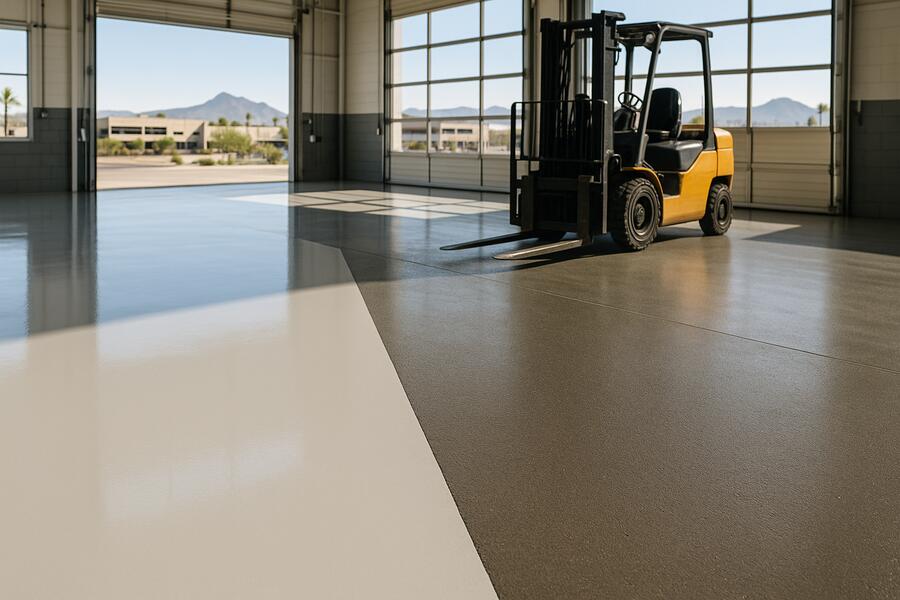
- Heavy Traffic & Impact: Provides robust protection against forklifts, heavy machinery, and dropped tools.
- Chemical Exposure (Indoor): Highly resistant to a wide range of acids, alkalis, oils, and solvents.
- Seamless & Hygienic Requirements: Creates easy-to-clean surfaces ideal for food processing, pharmaceutical, and healthcare facilities.
- For durable, cost-effective floor solutions in demanding indoor environments, consider industrial painting phoenix az.
When Other Industrial Coatings Make Sense:
- Outdoor/UV Exposure: Polyurethane or polyaspartic topcoats are preferred over epoxy for exterior applications or areas exposed to sunlight, as epoxy can chalk or yellow over time.
- Fast Return to Service: Polyaspartic coatings cure much faster than epoxy, making them ideal for facilities that cannot afford long downtimes.
- Thermal Shock & Wet Environments: Urethane cement systems are superior for areas subject to frequent hot wash-downs, steam cleaning, or extreme temperature fluctuations (e.g., breweries, freezers).
- Flexibility & Impact Resistance: Polyurethane’s slightly more flexible nature can provide better resistance to cracking in certain dynamic environments.
- Corrosion Protection for Metal: Zinc-rich primers and specialized industrial enamels are critical for protecting structural steel, machinery, and equipment from rust and chemical attack.
- Specific Abrasive Environments: Some applications might benefit from specialized abrasion-resistant topcoats not typically found in standard epoxy formulations.
| Characteristic | Epoxy (100% Solids) | Polyurethane/Polyaspartic (Topcoats) | Urethane Cement |
|---|---|---|---|
| Primary Use | Base/Body coat for concrete floors | Topcoat for floors, walls; often over epoxy | Floors in thermal shock/wet areas |
| Durability | Excellent (Impact, Abrasion) | Excellent (Abrasion, Scratch) | Superior (Thermal Shock, Impact, Abrasion) |
| Chemical Resistance | Very Good | Excellent | Excellent |
| UV Stability | Limited (can yellow/chalk) | Excellent (color retention) | Good to Excellent |
| Cure Time | 24-72 hours (for light traffic) | Polyurethane: 24-72 hours; Polyaspartic: 4-12 hours | 12-24 hours |
| Cost (per sq ft) | $3 – $7 | $5 – $9 (often as topcoat) | $7 – $12 |
💡 Key Takeaway: Epoxy excels in cost-effectiveness, indoor heavy-traffic areas, and chemical resistance. Other industrial coatings like polyurethane/polyaspartic are preferred for UV exposure and fast curing, while urethane cement is superior for thermal shock and wet processing environments. The choice depends on the specific demands of the facility.
The distinction between epoxy and the broader category of industrial coatings is critical for making informed decisions. While epoxy is a powerful solution for many applications, a true industrial coating strategy often involves a nuanced understanding of various chemistries and their optimal use. Consulting with experienced industrial painting contractors is essential to assess your specific needs and specify the most effective and long-lasting coating system for your facility.
Have questions about how to scheduling commercial painting around business hours? Reach out to our team today.
Frequently Asked Questions About Epoxy and Industrial Coatings
Can I use regular epoxy floor paint from a hardware store for an industrial facility?
It is generally not recommended. Regular epoxy floor paint (often water-based, 40-55% solids) is designed for lighter-duty applications like residential garages. Industrial-grade epoxy is typically a 100% solids, two-component system that cures to a much thicker and more durable film (10-25+ mils) specifically formulated to withstand the extreme conditions, heavy traffic, and chemical exposure found in industrial facilities.
What is the biggest factor in choosing an industrial coating?
The single biggest factor is often the specific operational environment and the demands it places on the surface. This includes the type and intensity of traffic (forklifts, heavy machinery), chemical exposure (acids, solvents, oils), moisture conditions (wet processing, steam cleaning), temperature fluctuations (freezers, high heat), and UV exposure (indoor vs. outdoor). A thorough assessment of these factors dictates the optimal coating choice.
Is a single layer of epoxy enough for an industrial floor?
While some lighter-duty applications might use a single thick layer, most industrial epoxy floor systems involve multiple layers, including a primer, a build coat (often pigmented epoxy), and sometimes a protective topcoat (like polyurethane or polyaspartic). This multi-layer approach provides enhanced durability, chemical resistance, and longevity, tailored to the specific demands of the facility.
How long do industrial coatings typically last?
The lifespan of industrial coatings varies significantly based on the type of coating, the quality of surface preparation, the application process, the specific environment, and the level of maintenance. Epoxy floors can last 5-10 years, while polyurethane and polyaspartic systems might extend to 8-12 years or more. Urethane cement, known for its extreme durability, can last upwards of 15-20 years in challenging conditions. Proper maintenance plays a crucial role in maximizing longevity.