
Maintaining the appearance and integrity of a commercial property is crucial for attracting and retaining tenants, but painting an occupied building presents unique challenges. The last thing any property manager wants is disruptions to business operations, tenant complaints, or safety hazards. Successfully navigating these complexities requires a strategic approach from experienced commercial painters who specialize in painting occupied tenant spaces.
At Pro Tech Painting, we understand that our work is only as good as our ability to minimize impact on your tenants and their businesses. Our methods are built around careful planning, clear communication, and adaptable execution to ensure a seamless painting process with minimal disruption. This guide outlines the key strategies we employ to deliver high-quality results in occupied commercial environments.
💡 Key Takeaway: Painting occupied commercial spaces demands meticulous planning, flexible scheduling, and clear communication to prevent disruption and ensure tenant satisfaction.
Strategies for Painting in Occupied Commercial Environments
Phased Scheduling and Off-Hours Work
The most effective way to avoid disrupting daily operations is to work around them. This often involves:
- Zone Phasing: Dividing the property into manageable work zones. This allows painters to complete one section while business continues as usual in others.
- After-Hours and Weekend Work: Scheduling painting during evenings, nights, weekends, or holidays when tenant activity is minimal or the building is closed. This is often preferred for high-traffic areas like lobbies, corridors, and communal spaces.
- Micro-Windows for Tenant Suites: For individual tenant spaces, scheduling short, precise work windows that align with their specific downtimes or when a space can be briefly vacated.
- Long-Term Planning: For larger projects, integrating painting into a multi-year budget that aligns with lease events or seasonal slower periods can further reduce impact.
Our goal is always to find the schedule that works best for your business and its occupants.
Minimizing Disruption: Noise, Odor, and Access Control
Beyond scheduling, controlling the immediate work environment is crucial:
- Low-VOC and Zero-VOC Coatings: Specifying paints with low or no Volatile Organic Compounds drastically reduces odors, improving indoor air quality and tenant comfort. This is a standard practice for painting occupied tenant spaces.
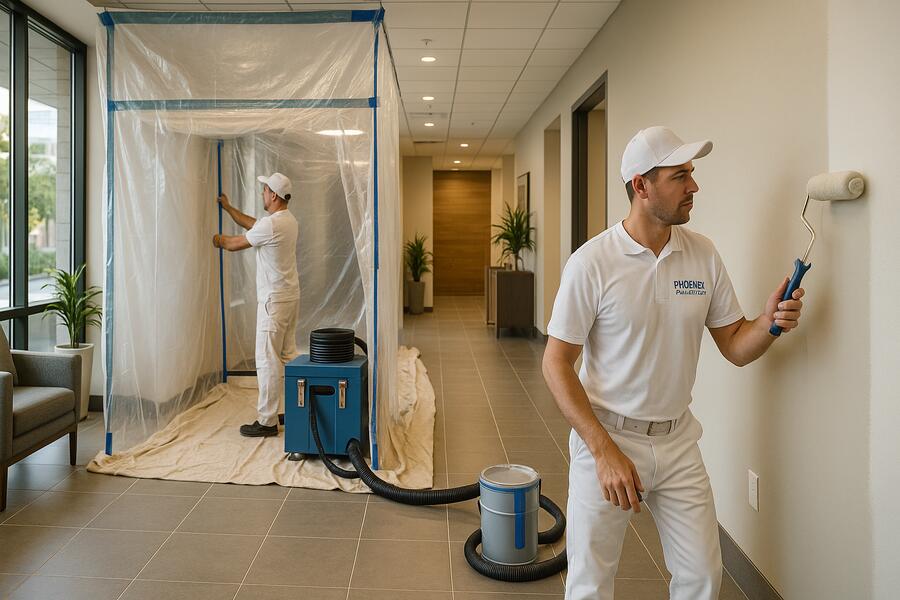
- Containment and Ventilation: Using plastic sheeting, zippered enclosures, and negative air machines to isolate work zones, control dust, and manage fumes. HVAC systems are often isolated in work areas to prevent odor circulation.
- Noise Mitigation: Scheduling noisy activities, like extensive scraping or power washing, during off-hours when possible, or providing advance notice to affected tenants.
- Clear Access Routes: Maintaining clear, safe access paths for tenants, employees, and visitors around work areas, often with temporary signage and protective coverings.
- Daily Cleanup: Ensuring work areas are thoroughly cleaned at the end of each shift, removing equipment, debris, and leaving the space tidy and safe for re-occupancy.
💡 Key Takeaway: Employing low-odor paints, robust containment, and meticulous daily cleanup are essential practices for a truly “zero-disruption” painting project in occupied commercial spaces.
Communication is Key
Even with the best plans, proactive and transparent communication is paramount:
- Pre-Project Briefings: Holding meetings with property management and key tenants to outline the project scope, schedule, expected impacts, and communication protocols.
- Regular Updates: Providing consistent updates on progress, upcoming work zones, and any necessary adjustments to the schedule. This can be via email, bulletin boards, or direct communication with tenant liaisons.
- Designated Contact: Having a clear point of contact from the painting crew for any questions or immediate concerns from tenants or building staff.
- Tenant Notice: Issuing formal notices to tenants well in advance of work beginning in their area, detailing dates, times, and any required actions (e.g., clearing desks).
| Challenge | Pro Tech Painting Solution |
|---|---|
| Business Interruption | Phased scheduling, after-hours/weekend work, micro-windows. |
| Odor/Fumes | Low-VOC/zero-VOC paints, HVAC isolation, professional ventilation. |
| Noise | Schedule noisy tasks during off-hours, provide advance notice. |
| Dust/Debris | Containment systems, thorough daily cleanup. |
| Access/Safety | Clear access routes, safety signage, protective coverings. |
Experienced Crews and Proper Equipment
The success of painting occupied commercial spaces hinges significantly on the expertise and professionalism of the painting crew. An experienced team will:
- Be Efficient: Work quickly and meticulously to minimize the time spent in each area.
- Be Respectful: Understand the importance of maintaining a professional demeanor, respecting tenant privacy, and being considerate of their workspaces.
- Use the Right Tools: Employ specialized equipment for dust control, air scrubbing, and protective containment that is appropriate for an active commercial environment.
- Adhere to Safety Protocols: Follow strict safety guidelines to protect both their team and building occupants.
Choosing an experienced contractor, like those offering commercial painting phoenix az businesses rely on, ensures these critical elements are in place.
💡 Key Takeaway: An experienced, professional painting crew equipped with the right tools and a commitment to communication and safety is indispensable for a successful project in occupied spaces.
Painting an occupied commercial property doesn’t have to be a headache. With careful planning, strategic scheduling, attention to detail, and a commitment to communication, professional commercial painters can revitalize your property without causing significant disruption to your tenants. The result is a refreshed, inviting space that enhances your property’s value and tenant satisfaction.
Have questions about how to schedule commercial painting around business hours? Reach out to our team today.
Frequently Asked Questions About Painting Occupied Commercial Buildings
Can painting really be done without disrupting my tenants?
Yes, absolutely. While some minimal impact is unavoidable, professional commercial painters specialize in “zero-disruption” techniques. This includes rigorous planning, working during off-hours, using low-odor paints, extensive containment, and constant communication to ensure tenants can continue their operations with minimal interference.
What types of paint are used to minimize odor in occupied spaces?
To minimize odor and ensure indoor air quality, professional painters utilize low-VOC (Volatile Organic Compound) or zero-VOC paints. These water-based formulations release significantly fewer chemicals into the air compared to traditional solvent-based paints, making them ideal for occupied commercial environments.
How is dust controlled during painting in an occupied building?
Dust control is critical. Professional teams use a combination of methods including plastic sheeting and zippered barriers to create sealed work zones, HEPA-filtered air scrubbers to clean the air, and meticulous vacuuming and cleaning at the end of each work shift to ensure no dust travels beyond the immediate work area.
What if tenants need access to a painted area during curing?
This is where planning and communication become crucial. Schedules are designed to allow adequate curing time, but if unforeseen access is needed, our team will coordinate with property management to find the safest and least disruptive solution. Using fast-drying paints also helps minimize these situations.
