
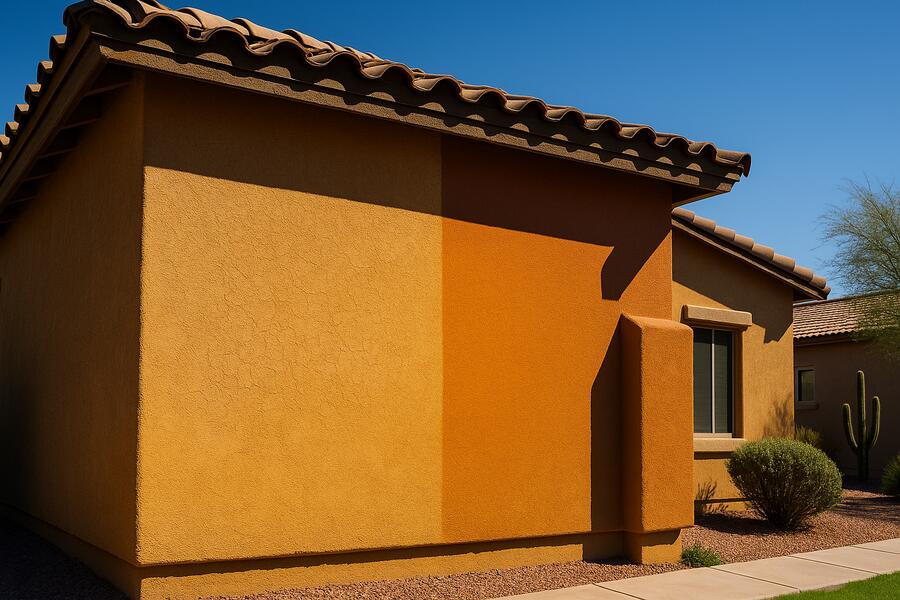
The vibrant color and protective qualities of your home’s exterior paint are constantly battling one of nature’s most powerful forces: the sun. While sunlight is essential for life, its relentless exposure to your home’s exterior can significantly degrade paint over time, shortening its lifespan and diminishing its aesthetic appeal. Understanding how sun exposure affects exterior paint is crucial for homeowners looking to maintain their property’s appearance and protection. It’s not just about fading; it’s about the structural integrity of the paint film itself.
As painting professionals, we frequently see the tell-tale signs of sun damage, particularly in regions with intense, prolonged sunlight. What might seem like simple wear and tear is often a complex chemical process triggered by ultraviolet (UV) radiation. Let’s delve into the science behind sun damage and explore how you can mitigate its effects to ensure your exterior paint lasts as long as possible.
The Science of Sun Damage: UV Radiation’s Role
The primary culprit behind sun-related paint degradation is ultraviolet (UV) radiation. UV rays carry enough energy to break down the chemical bonds that hold paint together, initiating a process known as photodegradation or photooxidation.
Breaking Down the Binders and Pigments
- Binder Degradation: Paint consists of pigments (for color) suspended in a binder (the resin that holds the paint together and adheres it to the surface). UV light directly attacks and breaks down the polymer binders in the paint film. As these binders weaken, the paint loses its adhesion, flexibility, and protective qualities.
- Pigment Fading: UV rays also degrade the chemical bonds within the pigments themselves. This causes the pigment molecules to lose their ability to reflect light at the intended wavelengths, resulting in color fading. Darker colors, which absorb more UV radiation, often show signs of fading more quickly than lighter colors.
- Chalking: As the binder breaks down, loose pigment particles are released and accumulate on the surface, creating a fine, powdery residue. This is known as chalking, a clear sign of UV degradation, often more visible on darker colors as they become lighter and duller.
Thermal Stress from Heat Cycles
Beyond UV, the sun’s heat also contributes to paint degradation. Daily temperature fluctuations cause materials to expand and contract. Over time, this constant thermal stress can lead to:
- Cracking: The expansion and contraction cycles stress the paint film, making it brittle and prone to cracking, especially if the paint has lost its flexibility due to UV damage.
- Peeling: If the paint loses its adhesion to the substrate (often due to binder breakdown or moisture trapped beneath), the thermal stress can exacerbate peeling.
💡 Key Takeaway: UV radiation directly attacks and breaks down paint binders and pigments, leading to fading, chalking, and loss of adhesion. Thermal stress from daily heating and cooling further contributes to cracking and peeling, shortening the paint’s lifespan.
Visible Signs of Sun-Damaged Exterior Paint
Recognizing the signs of sun damage early can help you plan for repainting and prevent more extensive issues.
Common Indicators
- Fading: The most obvious sign, where the original vibrant color dulls, washes out, or changes hue, especially on surfaces that receive direct, prolonged sunlight. Darker colors typically fade faster.
- Chalking: A powdery residue on the paint surface that comes off when rubbed. This indicates the binder has broken down, leaving loose pigment.
- Cracking/Alligatoring: Fine cracks appearing on the paint surface, often resembling alligator scales. This indicates the paint has lost its flexibility and is no longer able to expand and contract with the substrate.
- Peeling/Flaking: Areas where the paint has lifted from the surface, often starting at edges or areas of previous damage. This is a severe sign of adhesion failure.
- Loss of Sheen: A glossy or satin finish becoming dull or flat, indicating the top layer of the paint film has degraded.
Areas Most Affected
Surfaces facing south and west typically experience the most intense and prolonged sun exposure, making them more susceptible to premature degradation. Fascia boards, trim, and areas directly under eaves can also be heavily impacted.
For homes requiring exterior house paint phoenix az, these signs are particularly relevant due to the intense regional sun.
💡 Key Takeaway: Visible signs of sun damage include fading, chalking, cracking, peeling, and loss of sheen, most pronounced on south and west-facing exposures due to direct, prolonged UV radiation.
Strategies to Extend Exterior Paint Lifespan Against the Sun
While sun exposure is inevitable, several strategies can help protect your exterior paint and extend its life.
Choose High-Quality, UV-Resistant Paints
- Premium Acrylic Latex: Modern acrylic latex paints are often formulated with advanced polymers and additives that offer superior flexibility and resistance to UV degradation compared to older oil-based paints.
- UV-Resistant Additives: Look for paints specifically marketed with enhanced UV protection. These paints contain special pigments and binders designed to resist the sun’s harmful rays.
- Color Choice: Lighter colors reflect more sunlight and absorb less UV radiation, making them more resistant to fading and heat-related stress. Darker colors, while stylish, will typically degrade faster under intense sun.
Proper Surface Preparation
- Clean and Dry: Thoroughly clean the surface to remove dirt, grime, and chalking. Ensure the surface is completely dry before painting.
- Repair and Prime: Address any existing damage (cracks, peeling) and properly prime the surface. A quality primer promotes adhesion and provides a consistent base for the topcoats.
Strategic Maintenance and Protection
- Regular Cleaning: Periodically washing your home’s exterior can remove surface contaminants that accelerate degradation.
- Shade and Landscaping: Strategic landscaping, such as planting trees or installing awnings, can provide shade to walls that receive intense, direct sun, reducing UV exposure.
- Multiple Coats: Always apply the recommended number of paint coats. A thicker, well-applied paint film offers better protection and durability.
| Effect of Sun Exposure | Why it Happens | Prevention Strategy |
|---|---|---|
| Fading | UV breaks down pigment bonds. | High-quality UV-resistant paint, lighter colors. |
| Chalking | UV degrades paint binders, releasing pigments. | Premium acrylic latex paints, proper cleaning. |
| Cracking/Peeling | UV and thermal stress reduce flexibility and adhesion. | Excellent surface prep, flexible paint, multiple coats, landscaping for shade. |
💡 Key Takeaway: Extend paint lifespan by selecting high-quality, UV-resistant acrylic latex paints, lighter colors, ensuring thorough surface preparation, and implementing strategic shading through landscaping or architectural elements.
Understanding how sun exposure affects exterior paint is fundamental to protecting your home’s investment. The sun’s powerful UV rays, coupled with thermal stress, can lead to premature fading, chalking, cracking, and peeling. By choosing high-quality, UV-resistant paints, meticulously preparing surfaces, and considering strategic shading, you can significantly extend the life and beauty of your home’s exterior. Don’t underestimate the sun’s impact; with the right choices and professional application, your paint can stand up to its harsh rays for years to come.
Have questions about how sun exposure affects exterior paint lifespan? Reach out to our team today.
Frequently Asked Questions
Does paint color affect how quickly it fades in the sun?
Yes, paint color significantly affects fading. Darker colors absorb more UV radiation and heat, which accelerates the breakdown of pigments and binders, causing them to fade more quickly. Lighter colors reflect more sunlight and heat, making them more resistant to fading and thermal stress, generally lasting longer in sunny climates.
What is chalking, and is it always a sign of bad paint?
Chalking is the formation of a fine, powdery residue on the paint surface, which occurs as the paint’s binder degrades due to UV exposure, releasing pigment particles. While excessive chalking can indicate an aging or lower-quality paint, some degree of controlled chalking in certain exterior paints (especially older formulations) was designed to be a self-cleaning mechanism. However, modern, high-quality paints aim to minimize chalking for better color retention and durability.
Can special additives be put into paint to make it more UV resistant?
Many premium exterior paints already incorporate advanced UV-resistant additives, such as UV absorbers and hindered amine light stabilizers (HALS), directly into their formulations. These additives work to protect the paint’s binders and pigments from UV degradation. While there are some aftermarket additives available, it’s generally best to rely on high-quality paints that have been scientifically formulated and tested by reputable manufacturers for optimal UV resistance.
How often should I expect to repaint my home’s exterior in a hot, sunny climate?
In hot, sunny climates with intense UV exposure, the lifespan of exterior paint can be shorter than in more temperate regions. While a national average might be 5-10 years, homes in very sunny areas might need repainting every 4-7 years. The exact timeline depends heavily on paint quality, surface preparation, color choice, and the amount of direct sun exposure your home receives. Regular inspection for signs of fading, chalking, and peeling will help determine the optimal repainting schedule.
