
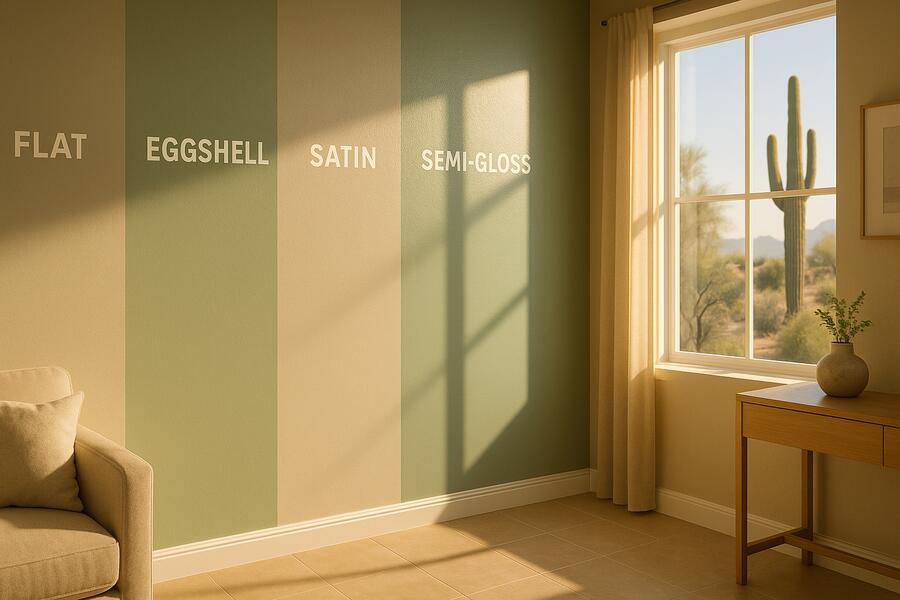
When planning a painting project, most people focus intently on color. While picking the perfect hue is undoubtedly exciting, it’s only half the battle. The paint’s sheen, or finish, is equally important and can dramatically alter how a color appears, how durable the surface is, and how easy it is to maintain. Understanding how to choose paint sheen is crucial for a successful and long-lasting finish.
At Pro Tech Painting, we often guide clients through the nuances of paint sheens. Our experience has taught us that the right finish complements your chosen color, suits the room’s function, and withstands the demands of daily life. This guide will break down the common paint sheen options, explaining their characteristics and best uses, so you can make an informed decision for your next painting project.
💡 Key Takeaway: Paint sheen is as important as color, affecting durability, maintenance, and the final look of a room. Choosing the right sheen is crucial for a successful painting project.
Decoding Paint Sheens: From Flat to High-Gloss
Flat and Matte: The Non-Reflective Choices
These sheens offer the least amount of shine and are known for their ability to hide imperfections. They absorb light rather than reflect it, creating a soft, subtle look.
- Flat:
- Characteristics: Virtually no shine, offers the most subtle appearance.
- Pros: Excellent for hiding surface imperfections, provides a rich, deep color.
- Cons: Least durable and scrubbable, prone to showing marks and scuffs, can be difficult to clean.
- Best Uses: Low-traffic areas like formal dining rooms, master bedrooms, and ceilings. Ideal for walls with minor imperfections you want to mask.
- Matte:
- Characteristics: A step up from flat, with a very slight hint of sheen.
- Pros: Still great at hiding imperfections, slightly more durable and washable than flat.
- Cons: Can still be challenging to clean thoroughly without scuffing.
- Best Uses: Similar to flat, but suitable for slightly higher-traffic areas like living rooms and hallways where minor cleaning might be needed.
Eggshell and Satin: The Versatile Mid-Range Options
These are the most popular choices for general interior walls due to their balance of aesthetics and durability. They offer a moderate sheen that provides some light reflection without being overly glossy.
- Eggshell:
- Characteristics: Resembles the subtle, low-sheen of an eggshell. More reflective than matte, less than satin.
- Pros: Very durable and washable, good at concealing minor imperfections, provides a warm, soft look.
- Cons: None significant for typical use.
- Best Uses: Almost any room in the house, including living rooms, dining rooms, bedrooms, and even hallways. It’s a versatile choice for walls.
- Satin:
- Characteristics: A smooth, velvety finish with a noticeable sheen, often described as having a pearl-like luster. More reflective than eggshell.
- Pros: Highly durable, excellent scrubbability and washability, resists moisture well.
- Cons: Can highlight surface imperfections more than lower sheens.
- Best Uses: High-traffic areas like kitchens, bathrooms, kids’ rooms, utility rooms, and hallways. Also a popular choice for trim, doors, and cabinets.
💡 Key Takeaway: Flat and matte sheens conceal imperfections well but offer less durability, ideal for low-traffic areas. Eggshell and satin provide a versatile balance of durability and aesthetic appeal for most rooms, with satin being more scrubbable.
Semi-Gloss and High-Gloss: The Durable, High-Shine Finishes
These sheens are the most reflective and durable, ideal for surfaces that require frequent cleaning and can handle a bold, shiny look.
- Semi-Gloss:
- Characteristics: A sleek, radiant finish that strongly reflects light.
- Pros: Extremely durable, highly washable and scrubbable, resistant to moisture and stains.
- Cons: Magnifies surface imperfections, requires very thorough surface preparation.
- Best Uses: Trim, doors, cabinets, and high-moisture areas like bathrooms and laundry rooms. It’s also suitable for commercial properties requiring robust, cleanable surfaces.
- High-Gloss:
- Characteristics: The highest level of shine, creating a mirror-like finish.
- Pros: Most durable, easiest to clean, highly resistant to wear and tear.
- Cons: Exaggerates every surface flaw; requires flawless surface preparation and expert application. Can look overly formal or clinical if not used carefully.
- Best Uses: Often reserved for very specific applications like furniture, architectural details, or in commercial settings where maximum durability and cleanability are paramount. Less common for entire walls in residential settings.
| Sheen Type | Shine Level | Durability/Washability | Best For |
|---|---|---|---|
| Flat | No shine | Low; hides imperfections | Ceilings, low-traffic bedrooms |
| Matte | Minimal shine | Slightly better than flat; still good at hiding flaws | Living rooms, dining rooms (moderate traffic) |
| Eggshell | Low sheen (like an egg) | Good; very washable | Most interior walls, bedrooms, living rooms |
| Satin | Medium sheen (pearl-like) | Very good; highly scrubbable, moisture resistant | Kitchens, bathrooms, kids’ rooms, trim, doors |
| Semi-Gloss | High shine | Excellent; extremely durable and washable | Trim, doors, cabinets, high-moisture areas |
| High-Gloss | Mirror-like finish | Superior; maximum durability and cleanability | Furniture, architectural accents, commercial areas |
Considerations When Choosing Your Sheen
Beyond personal preference, several factors should influence your decision:
- Room Function: High-traffic areas and rooms prone to moisture (kitchens, bathrooms) demand more durable, washable sheens like satin or semi-gloss. Low-traffic areas like formal dining rooms can benefit from flatter finishes.
- Surface Condition: Flatter sheens hide imperfections better. If your walls have dings, patches, or uneven textures, a flat or matte finish will be more forgiving. Higher sheens will highlight every flaw.
- Lighting: The amount of natural and artificial light in a room affects how sheen appears. A high-gloss finish can be very reflective and bright in a sunny room, while a flat finish might feel too dull in a dimly lit space.
- Architectural Style: Modern spaces often embrace higher gloss finishes for a sleek look, while traditional homes might lean towards softer sheens.
- Maintenance: How often do you anticipate needing to clean the walls? Higher sheens are significantly easier to wipe clean without damaging the paint.
💡 Key Takeaway: High-gloss and semi-gloss sheens offer maximum durability and washability, making them ideal for trim, doors, cabinets, and high-traffic areas, though they require flawless surface preparation.
Choosing the right paint sheen is a critical decision that impacts the longevity, maintenance, and overall aesthetic of your space. By considering the function of the room, the condition of your surfaces, and your personal style, you can confidently select a finish that brings your vision to life. If you need expert advice or professional application, we invite you to learn more about our services.
Have questions about how to scheduling commercial painting around business hours? Reach out to our team today.
Frequently Asked Questions About Paint Sheens
Can I use different sheens in the same room?
Absolutely! It’s very common and often recommended to use different sheens in the same room to add depth and define architectural features. For example, you might use an eggshell or satin on walls and a semi-gloss on trim, doors, and window sills. Ceilings are typically painted with a flat finish.
Does paint sheen affect color appearance?
Yes, paint sheen significantly affects how a color appears. Flatter finishes tend to make colors look richer and deeper because they absorb light. Higher sheens reflect more light, making colors appear slightly lighter and brighter. This interaction with light also means that higher sheens will highlight color variations more.
Is a higher sheen always better for durability?
Generally, yes. The more light a paint finish reflects (i.e., the higher the sheen), the harder and more durable the surface typically is. Higher sheens contain more resin, which provides a tougher, more washable finish. This makes them more resistant to scuffs, stains, and moisture, making them easier to clean.
What is the difference between “gloss” and “sheen”?
In common usage, “gloss” and “sheen” are often used interchangeably to describe the reflective quality of paint. Technically, “sheen” is the broader term referring to the level of luster, while “gloss” specifically refers to the highest levels of shine (e.g., semi-gloss, high-gloss). Paint manufacturers typically use the terms to indicate the degree of light reflectivity, from flat (no reflectivity) to high-gloss (maximum reflectivity).
