
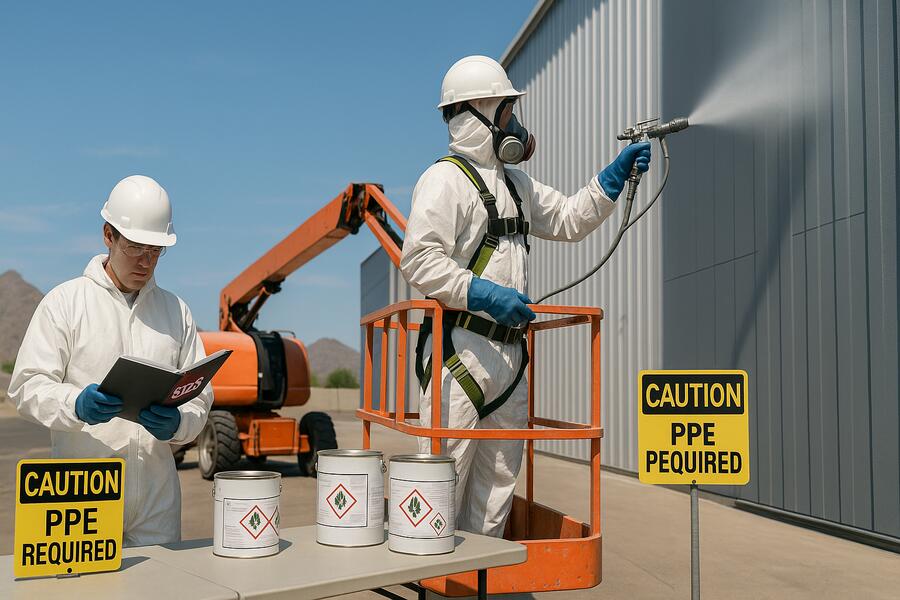
Industrial painting projects are inherently complex, involving specialized coatings, demanding environments, and often significant hazards. Beyond achieving a durable and aesthetically pleasing finish, the paramount concern for any industrial painting contractor is safety. This is where OSHA (Occupational Safety and Health Administration) considerations become not just important, but absolutely critical. Adhering to OSHA standards isn’t merely about regulatory compliance; it’s about protecting workers, preventing accidents, and ensuring the project proceeds without costly delays or tragedies. Ignoring these guidelines can lead to severe penalties, serious injuries, and even fatalities, making a thorough understanding of OSHA considerations in industrial painting non-negotiable.
From surface preparation to final coating application, every step in an industrial painting project carries specific risks that must be mitigated through robust safety protocols. Our experience in the field has shown us that proactive safety planning and continuous adherence to regulations are the cornerstones of successful and safe project execution. Let’s delve into the key OSHA areas that industrial painting contractors and facility managers must address to maintain a secure working environment.
Core OSHA Standards for Painting Contractors
Several fundamental OSHA standards form the backbone of safety for painting operations in industrial settings, particularly those outlined in 29 CFR Part 1926 (Construction) and Part 1910 (General Industry).
Personal Protective Equipment (PPE)
Effective PPE is the first line of defense against many industrial painting hazards. OSHA mandates specific requirements for its selection, use, and maintenance.
- Respiratory Protection (1910.134): Workers are often exposed to hazardous fumes, dusts, and mists. A written respiratory protection program is required, including medical evaluations, fit testing (annually and when changes occur), proper respirator selection based on exposure assessment, and comprehensive training on use, limitations, and maintenance. Exposure monitoring is a documented obligation.
- Eye and Face Protection (1910.133): Safety glasses, goggles, or face shields are necessary to protect against splashes, flying debris from surface preparation (e.g., sandblasting), and chemical exposure.
- Hand Protection (1910.138): Gloves appropriate for chemical resistance (e.g., nitrile, butyl rubber) are vital when handling paints, solvents, and other hazardous materials.
- Protective Clothing: Coveralls or other protective garments prevent skin exposure to chemicals and paints.
Hazard Communication (HazCom)
Workers must be informed about the chemical hazards they are exposed to. The HazCom standard (1910.1200) requires:
- Safety Data Sheets (SDS): Readily accessible SDS for all hazardous chemicals on site, providing detailed information on properties, hazards, protective measures, and safety precautions.
- Labeling: Proper labeling of all chemical containers to identify contents and hazards.
- Training: Comprehensive training for workers on how to read and understand SDS and labels, the specific hazards of the chemicals they work with, and appropriate protective measures.
💡 Key Takeaway: OSHA mandates robust PPE programs (especially respiratory protection with medical evaluations and fit testing) and a comprehensive Hazard Communication plan, ensuring workers are informed and protected from chemical exposures common in industrial painting.
Addressing High-Risk Industrial Painting Areas
Certain aspects of industrial painting inherently carry higher risks, demanding specific attention to OSHA regulations.
Fall Protection
Industrial painting often involves working at heights, making fall protection a leading concern.
- Working at Heights (1926.501): For work at heights above 6 feet in construction, or 4 feet in general industry, fall protection is generally required. This includes guardrail systems, safety net systems, or personal fall arrest systems.
- Ladders and Scaffolding (1926.1053, 1926.451): Proper selection, inspection, setup, and use of ladders and scaffolding are critical to prevent falls. Workers must be trained on their safe use, and equipment must be regularly inspected for damage.
- Aerial Lifts: Operators must be trained and certified. Lifts must be inspected daily, and fall protection (e.g., harness and lanyard) must be used.
Fire and Explosion Prevention
Many industrial paints and solvents are flammable, posing significant fire and explosion risks.
- Flammable and Combustible Liquids (1910.106): Proper storage, handling, and use of flammable liquids are essential. This includes using approved containers, limiting quantities in work areas, and proper ventilation.
- Ignition Sources: All potential ignition sources (e.g., open flames, hot work, sparks, static electricity, non-intrinsically safe electrical equipment) must be controlled or eliminated in areas where flammable vapors are present. Hot work must not be performed in spaces adjacent to painting operations when using materials with flashpoints below 80°F.
- Ventilation (1910.94): Adequate ventilation is crucial to dilute flammable vapors and remove hazardous fumes, preventing the buildup of explosive atmospheres.
💡 Key Takeaway: Industrial painting safety demands rigorous fall protection for work at heights (ladders, scaffolding, aerial lifts) and stringent fire/explosion prevention measures, including controlling flammable liquids and eliminating ignition sources through proper ventilation.
Specialized Hazards and Compliance
Beyond general safety, industrial painting can involve specific materials and environments that require additional OSHA compliance measures.
Lead-Based Paint (LBP) and Other Hazardous Materials
Working on older industrial structures often means encountering lead-based paint, which necessitates strict protocols (1926.62).
- Exposure Assessment: Employers must conduct an initial exposure assessment to determine if workers are exposed to lead at or above the Permissible Exposure Limit (PEL) of 50 µg/m3 (micrograms per cubic meter of air) as an 8-hour time-weighted average.
- Containment and Abatement: Specific procedures for containing lead dust and debris, proper disposal, and decontamination are required.
- Medical Surveillance: Workers exposed above action levels require blood lead testing and medical examinations.
- Cadmium, Chromium, etc.: Other heavy metals and hazardous components in specialized industrial coatings (e.g., chromate primers) also have specific OSHA standards that must be followed regarding exposure limits, PPE, and medical monitoring.
Confined Spaces
Painting inside tanks, vessels, or other enclosed areas presents confined space hazards (1910.146).
- Permit-Required Confined Spaces: Many industrial painting sites contain permit-required confined spaces due to hazardous atmospheres (flammable, toxic, oxygen-deficient), engulfment risks, or other serious hazards.
- Entry Procedures: A written program, atmospheric monitoring, ventilation, attendant presence, and rescue plans are mandatory for permit-required confined space entry.
- Training: All personnel involved in confined space operations (entrants, attendants, supervisors) must receive specific training.
💡 Key Takeaway: Industrial painting projects demand adherence to specialized OSHA standards for lead-based paint (exposure assessment, containment, medical surveillance) and strict confined space entry procedures (permits, atmospheric monitoring, rescue plans) to mitigate unique hazards.
Training, Safety Plans, and Incident Reporting
A culture of safety is built on comprehensive training and meticulous documentation.
Training and Competent Persons
- OSHA Training: All workers should receive basic OSHA safety training (e.g., OSHA 10-hour Construction Safety). Supervisors and those with specific responsibilities (e.g., fall protection, confined space entry) require more advanced training (e.g., OSHA 30-hour for supervisors, competent person training).
- Job-Specific Training: Training must cover the specific hazards and safety procedures relevant to the tasks being performed and the materials being used on each project.
Safety Plans and Documentation
- Corporate Safety Plan: A comprehensive corporate safety plan tailored to painting operations, outlining general safety policies and procedures.
- Activity Hazard Analysis (AHA) / Job Hazard Analysis (JHA): For each project, a specific AHA should be developed, identifying tasks, associated hazards, and control measures.
- Incident Reporting (1904): All work-related injuries and illnesses must be recorded on the OSHA 300 Log. Fatalities must be reported to OSHA within 8 hours, and hospitalizations, amputations, or eye loss within 24 hours.
Navigating these regulations is a crucial aspect of responsible industrial painting phoenix az. Adherence ensures worker well-being and project integrity.
| OSHA Consideration | Key Requirements | Associated Risks Mitigated |
|---|---|---|
| Respiratory Protection | Written program, medical evals, fit testing, training, exposure monitoring. | Inhalation of hazardous fumes, dust, solvents. |
| Fall Protection | Guardrails, fall arrest systems, safe ladder/scaffolding use, aerial lift training. | Falls from heights, leading cause of fatalities. |
| Hazard Communication | Accessible SDS, proper labeling, worker training on chemical hazards. | Chemical burns, poisoning, long-term health effects. |
| Fire & Explosion Prevention | Flammable liquid storage/handling, ignition source control, ventilation. | Fires, explosions, severe burns. |
| Confined Spaces | Permit program, atmospheric monitoring, rescue plan, trained personnel. | Asphyxiation, toxic exposure, engulfment. |
The complexities of industrial painting demand a vigilant and comprehensive approach to safety, driven by strict adherence to OSHA regulations. From ensuring proper personal protective equipment and managing hazardous materials to implementing robust fall prevention and confined space entry protocols, every aspect of a project must be meticulously planned and executed with safety in mind. A strong safety culture, supported by continuous training, detailed safety plans, and prompt incident reporting, not only protects workers but also ensures project efficiency and compliance. For industrial painting to be successful, it must first and foremost be safe.
Have questions about OSHA considerations in industrial painting projects? Reach out to our team today.
Frequently Asked Questions
What is the “competent person” role in industrial painting safety?
An OSHA “competent person” is an individual who is capable of identifying existing and predictable hazards in the surroundings or working conditions which are unsanitary, hazardous, or dangerous to employees, and who has authorization to take prompt corrective measures to eliminate them. For industrial painting, this person often has specific training in areas like fall protection, scaffolding, or confined spaces and is responsible for overseeing safety on site.
How often should respiratory fit testing be done for painting crews?
OSHA requires respirator fit testing to be conducted at least annually for each employee using a tight-fitting respirator. Additionally, fit testing must be performed whenever there is a change in the respirator type or a physical change in the user that could affect the fit (e.g., significant weight change, dental work, facial scarring).
What are the key fire prevention measures for storing industrial paints and solvents?
Key fire prevention measures include: storing flammable liquids in approved, labeled containers and safety cabinets; limiting the quantity of flammables in the work area to only what is needed for immediate use; ensuring proper ventilation to prevent vapor buildup; grounding and bonding containers during transfer; and keeping all ignition sources away from storage and work areas.
Are there specific OSHA requirements for surface preparation methods like sandblasting?
Yes, methods like sandblasting (abrasive blasting) generate significant dust and debris, often containing hazardous materials. OSHA has specific requirements under 1926.57 for abrasive blasting, including proper respiratory protection (e.g., Type CE abrasive-blast respirators), eye protection, protective clothing, noise exposure limits, and ventilation controls to protect workers from airborne contaminants and physical hazards.
