
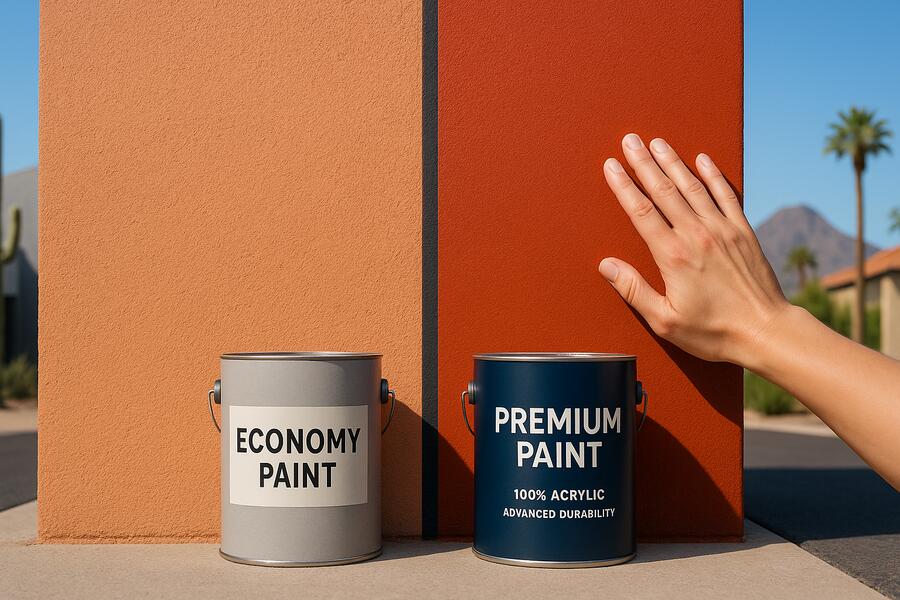
Decoding Paint Composition and Its Impact on Longevity
When selecting paint for any property, whether it’s a residential home or a commercial building, the sheer number of options can be overwhelming. Beyond color, understanding the differences between paint brands and grades explained is crucial for predicting how well a finish will perform and endure over time. It’s not just about aesthetics; it’s about durability, protection, and long-term value. As painting professionals, we see firsthand that the quality of paint directly correlates with its ability to withstand wear, tear, and environmental factors.
The variations in paint quality stem from their core composition. Every can of paint contains pigments for color, binders for adhesion and film formation, solvents for consistency, and additives for specialized performance. The quantity and quality of each of these components differentiate an economy-grade paint from a premium one. Investing in a higher-grade paint means investing in superior durability, better coverage, and a longer-lasting finish, which ultimately reduces the frequency and cost of repainting.
💡 Key Takeaway: Paint quality, determined by its fundamental composition, is the primary driver of durability and long-term performance, influencing everything from coverage to resistance against wear.
The Role of Pigments and Hiding Power
Pigments are the finely ground particles that give paint its color and opacity, or “hiding power.” The most important pigment for opacity in white and light-colored paints is titanium dioxide. The more high-quality pigment a paint contains, the better its hiding power and the truer its color will appear with fewer coats.
- Economy Grades: These typically contain fewer and often lower-grade pigments, resulting in poorer hiding power. This means more coats are needed to achieve uniform color, which can negate any initial savings on material cost due to increased labor.
- Premium Grades: High-quality paints boast a higher concentration of superior pigments. This translates to excellent hiding power, often achieving full coverage in just one or two coats, saving time and labor. Furthermore, premium pigments are more stable, resisting fading and color shifts over time, especially important for exterior applications.
Binders: The Backbone of Paint Durability
The binder, or resin, is the film-forming component that holds the pigment particles together and adheres the paint to the surface. It’s arguably the most critical component for durability, influencing flexibility, adhesion, and resistance to environmental damage.
- Vinyl-Acrylic (Economy/Mid-Grade): While cost-effective, vinyl-acrylic binders are generally less flexible and durable than pure acrylics. They can become brittle over time, leading to cracking, peeling, and chalking, especially in challenging climates.
- 100% Acrylic (Mid-Grade/Premium): Paints formulated with 100% acrylic binders offer superior flexibility, adhesion, and resistance to cracking, blistering, and fading. Acrylics are inherently more durable and weather-resistant, making them ideal for both interior and exterior applications where longevity is a priority. Premium acrylics often include proprietary resin technologies that further enhance performance.
Additives for Enhanced Performance
Additives are specialized ingredients included in paint formulations to provide specific performance characteristics. These are where many premium paints truly differentiate themselves.
- Scrub and Stain Resistance: For interiors, additives enhance scrubbability (ASTM D2486 cycles) and stain resistance, making the paint easier to clean without damaging the finish. Premium interior paints can withstand thousands of scrub cycles.
- Mildewcides and Fungicides: These are crucial for both interior (especially bathrooms and kitchens) and exterior paints, inhibiting mold and mildew growth.
- UV Inhibitors: Particularly important for exterior paints, these additives help resist color fading and chalking caused by sun exposure.
- Flow and Leveling Agents: These ensure a smoother, more uniform application, reducing brush marks and roller stipple.
💡 Key Takeaway: Premium paints utilize advanced binders (like 100% acrylic) and specialized additives (e.g., for scrub resistance, UV protection, and mildew prevention) that significantly boost durability and long-term aesthetic appeal.
Sheen Levels and Their Durability Implications
The sheen, or gloss level, of paint also plays a role in its durability and washability. Generally, the higher the sheen, the more durable and easier to clean the painted surface will be.
- Flat/Matte: These finishes have the lowest sheen and are excellent for hiding surface imperfections. However, they are typically the least durable and most difficult to clean, making them best suited for low-traffic areas like ceilings or adult bedrooms.
- Eggshell/Satin: These are popular choices for walls in living rooms, hallways, and bedrooms. They offer a soft luster, good durability, and are much easier to clean than flat finishes, making them suitable for moderate-traffic areas.
- Semi-Gloss/Gloss: With the highest sheen levels, these are the most durable and easiest to clean. They are ideal for high-traffic areas, trim, doors, cabinets, and bathrooms where moisture and frequent cleaning are concerns. The trade-off is that they highlight surface imperfections more readily.
💡 Key Takeaway: Higher paint sheens generally correlate with increased durability and ease of cleaning, making them suitable for high-traffic or moisture-prone areas.
Comparing Paint Grades for Durability
Paint manufacturers typically categorize their products into economy, mid-tier, and premium grades. These grades provide a quick indicator of the paint’s overall quality and expected performance.
| Paint Grade | Typical Binder | Volume Solids (%) | Hiding Power | Scrub Cycles (ASTM D2486) | Expected Lifespan (Interior) |
|---|---|---|---|---|---|
| Economy | Vinyl-Acrylic | 25-35% | Poor to Fair (2-3 coats) | < 1,000 | 3-5 years |
| Mid-Tier | Good 100% Acrylic | 35-40% | Fair to Good (2 coats) | 1,000 – 3,000 | 5-8 years |
| Premium | Advanced 100% Acrylic | 40-50%+ | Excellent (1-2 coats) | 3,000 – 10,000+ | 8-15+ years |
Higher volume solids mean more paint film remains on the surface after the solvent evaporates, contributing to better coverage and a thicker, more durable film. This is a key indicator of paint quality.
💡 Key Takeaway: Higher-grade paints (mid-tier to premium) feature advanced binders, increased volume solids, and superior resistance ratings, leading to significantly longer-lasting and more aesthetically pleasing finishes.
Conclusion
The choice of paint brand and grade profoundly impacts the durability, longevity, and ultimate satisfaction with your painting project. While economy paints offer a lower upfront cost, they often compromise on key performance factors like hiding power, scrub resistance, and overall lifespan, leading to more frequent repainting and higher long-term expenses. Investing in mid-tier or, ideally, premium-grade paints ensures superior performance, better protection for your surfaces, and a finish that maintains its beauty for years to come. For dependable results and expert guidance on selecting the right paint for your needs, trust experienced house painters phoenix az.
Have questions about how to choose the right paint brands and grades for your property? Reach out to our team today.
Frequently Asked Questions About Paint Durability
What is the most durable type of paint for interior walls?
For interior walls, 100% acrylic latex paints in an eggshell or satin sheen are generally considered the most durable. They offer an excellent balance of washability, scrub resistance, and flexibility, making them ideal for high-traffic areas without being overly glossy.
Do premium paints really last longer than cheaper paints?
Yes, premium paints typically last significantly longer. They contain higher concentrations of quality pigments, superior binders (like advanced 100% acrylics), and performance-enhancing additives. This results in better film integrity, increased resistance to wear, fading, and staining, and a longer overall lifespan, often justifying their higher initial cost.
How can I tell if a paint is high quality from the label?
Look for terms like “100% Acrylic,” “high-volume solids,” and mentions of specific performance enhancements such as “excellent scrub resistance,” “stain-blocking,” or “mildew-resistant.” While labels don’t always list exact percentages, a higher price point from a reputable brand usually indicates better quality ingredients and formulation.
Does the sheen of the paint affect its durability?
Yes, generally, paints with a higher sheen are more durable and easier to clean. For instance, semi-gloss is more durable and washable than eggshell, which in turn is more durable than a flat finish. This is because higher sheens create a harder, smoother surface that resists moisture and abrasion better.
