When it comes to repainting cabinets, one of the most common debates revolves around the application method: to spray or to brush? Homeowners often wonder which technique yields the best results in terms of aesthetics and durability. Understanding the fundamental differences between a spray finish vs brush finish on cabinets is crucial for setting realistic expectations and achieving a truly professional outcome.
At Pro Tech Painting, we’ve refined our techniques over years, recognizing that while both methods have their place, the choice significantly impacts the final look and longevity of your cabinets. Our experience shows that for that coveted smooth, factory-like appearance, spraying is almost always the superior choice. This guide will break down the key differences, helping you understand why one method often outperforms the other, particularly for high-quality cabinet transformations.
💡 Key Takeaway: The choice between spray and brush for cabinet painting significantly impacts the final aesthetic and durability. For a smooth, factory-like finish, spraying is generally the superior method.
The Art and Science of Cabinet Painting Application
Spray Finish: The Factory-Smooth Look
Spraying is the method preferred by professionals aiming for a flawless, unblemished finish:
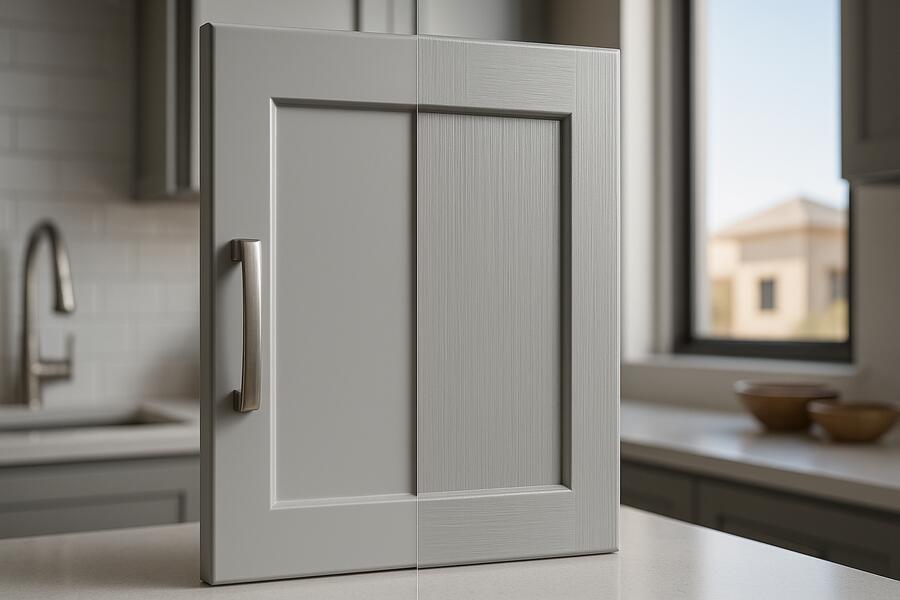
- Achieving Smoothness: A spray gun atomizes paint into a fine mist, which is then evenly laid across the surface in thin, consistent layers. Because there’s no physical contact like a brush or roller, there are no brush strokes, roller stipple, or other texture marks. The paint levels out flat, mimicking the look of new, factory-finished cabinets.
- Durability and Curing: Spray-applied coats tend to be thinner (typically 2-3 mils per pass), but because they are so even, they cure harder and more uniformly. This thinner, harder film is less prone to chipping and scratching over time. The uniform thickness allows for optimal chemical cross-linking during the curing process, enhancing overall durability.
- Speed and Efficiency: Once the extensive setup and masking are complete, actual paint application with a sprayer is significantly faster than brushing. This efficiency is a major advantage for professionals handling large numbers of doors and drawer fronts.
- Equipment and Skill: Achieving a professional spray finish requires specialized equipment (HVLP or airless sprayers) and considerable skill. Proper technique is essential to avoid runs, drips, and uneven coverage.
- Setup and Containment: Spraying produces overspray, meaning the work area must be meticulously masked off and often contained within a spray booth or tent to protect surrounding surfaces and ensure air quality.
Brush Finish: The Traditional, Hand-Applied Look
Brushing offers a different aesthetic and is often chosen for smaller projects or specific desired textures:
- Visible Texture: Brushing inherently leaves behind subtle brush marks, often referred to as “hand-painted” or “artisanal” texture. While skilled brushing can minimize these, they will almost always be present to some degree. Rollers can also leave a slight stipple effect.
- Durability and Curing: Brushed coats are typically thicker (4-6 mils per pass) than sprayed coats. While this might seem more durable, thicker coats can take longer to fully cure internally, potentially leading to a softer surface that’s more susceptible to dings and scratches if not allowed ample curing time. The uneven thickness can also lead to inconsistent curing.
- Control and Detail: Brushing offers greater control for intricate details, touch-ups, or when working in tight spaces where overspray is a major concern. It’s often suitable for stationary cabinet boxes where masking for spraying might be overly cumbersome.
- Equipment Simplicity: Brushing requires minimal equipment: quality brushes, paint, and basic prep tools. This makes it accessible for DIY enthusiasts.
- Time Investment: Applying paint by brush is much more labor-intensive and time-consuming, especially for multiple coats across numerous doors and drawer fronts.
💡 Key Takeaway: Spraying yields a glass-smooth, factory-like finish with thin, uniformly cured coats that are highly durable and resistant to chipping, but requires extensive setup and skill. Brushing leaves subtle textures, applies thicker coats that cure slower, offers greater control for details, and is less equipment-intensive.
Comparative Analysis: Key Differences and Considerations
Aesthetics and Finish Quality
This is where the most significant distinction lies:
- Sprayed: Delivers a consistent, mirror-smooth, seamless finish without any discernible texture. This is the desired look for modern or high-end kitchen transformations.
- Brushed: Creates a textured, handcrafted appearance. While some prefer this look for traditional or farmhouse styles, it’s not the “factory smooth” finish many homeowners expect from professional cabinet painting phoenix az.
Durability and Longevity
Both methods can be durable, but their curing mechanisms affect long-term performance:
- Sprayed: Thinner, more uniform coats cure harder and more completely, leading to superior resistance against scratches, chips, and daily wear. The paint forms a cohesive, protective film.
- Brushed: Thicker, less uniform coats can take longer to fully harden. If not completely cured, the paint film can remain softer and be more prone to damage. However, a well-applied brushed finish with high-quality paint can still be quite robust.
| Feature | Sprayed Finish | Brushed Finish |
|---|---|---|
| Aesthetics | Glass-smooth, factory-like, zero texture. | Subtle brush marks, hand-painted texture. |
| Coat Thickness | Thin (2-3 mils per pass), even layers. | Thicker (4-6 mils per pass), potentially less uniform. |
| Cure Hardness | Cures harder and more uniformly, superior durability. | Cures slower, potentially softer if not fully hardened. |
| Application Speed | Faster application after extensive setup/masking. | Slower, more labor-intensive application. |
| Equipment/Skill | Specialized sprayers, high skill level required. | Basic brushes, accessible for DIY, but still requires good technique. |
| Prep/Cleanup | Extensive masking/containment for overspray. | Less masking, easier cleanup of drips. |
💡 Key Takeaway: A sprayed finish offers superior aesthetics (smooth, factory-like) and greater long-term durability due to thinner, harder, and more uniform cured coats. Brushed finishes are more labor-intensive, leave visible texture, and can be less durable if not given ample time to fully cure.
When choosing between a spray and brush finish for your cabinets, consider your priorities. For a high-end, smooth, and incredibly durable finish that truly replicates the look of new cabinets, spraying is the professional standard. If a slightly textured, handcrafted look is desired, and you are prepared for a more labor-intensive process, brushing can be a viable option. Ultimately, the quality of the prep work and the skill of the applicator are paramount, regardless of the method chosen. For lasting beauty and performance, investing in professional application, especially for spraying, will yield the best results.
Have questions about how to scheduling commercial painting around business hours? Reach out to our team today.
Frequently Asked Questions About Cabinet Finishes
Can I achieve a smooth finish with a brush?
While a perfectly smooth, glass-like finish without any texture is extremely difficult, if not impossible, to achieve with a brush, a highly skilled painter using quality brushes and self-leveling paints can minimize brush marks to create a very pleasing, near-smooth appearance. However, it will not be truly “factory smooth” like a spray finish.
Is a sprayed finish always more durable?
Generally, yes. The key is uniformity. Spraying applies thinner, more even coats, which cure more completely and consistently across the entire surface. This leads to a harder, more resilient paint film that is less prone to chipping and scratching than typically thicker, less uniform brushed coats that may cure unevenly or remain softer internally.
Why is professional spraying better than DIY spraying?
Professional spraying involves specific, high-quality equipment (like HVLP or airless sprayers), extensive training in proper technique (angle, distance, speed, overlap), meticulous prep and masking to prevent overspray, and specialized temporary spray booths for optimal curing. DIY enthusiasts often lack the equipment, skill, and controlled environment to achieve the same level of factory-smooth, durable finish without issues like runs, drips, or inconsistent texture.
What kind of paint works best for cabinet spraying?
For cabinet spraying, professionals typically use high-quality, self-leveling enamels or lacquers. These paints are formulated to atomize finely and level out smoothly, minimizing imperfections. Waterborne alkyds and acrylic-urethane blends are popular choices for their durability, low VOCs, and excellent flow properties when sprayed.