
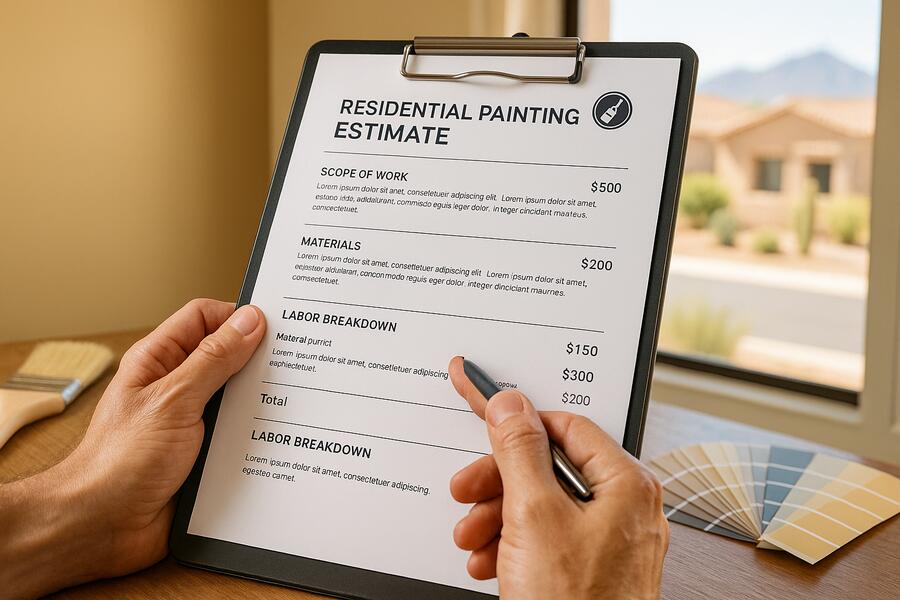
When embarking on a residential painting project, whether it’s refreshing a single room or transforming an entire home’s exterior, a clear and comprehensive estimate is more than just a price tag. It’s a foundational document that sets expectations, prevents misunderstandings, and ensures all parties are aligned on the scope and cost of the work. A professional residential painting estimate breakdown provides transparency, detailing not just the final cost, but every element contributing to it. Without this level of detail, homeowners can face unexpected charges or discover that certain aspects of the job were overlooked.
As experienced painting contractors, we believe that a well-structured estimate is crucial for building trust and ensuring a smooth project. It reflects the professionalism and thoroughness of the painting company, giving you confidence in your investment.
residential painting phoenix az
Essential Components of a Transparent Residential Painting Estimate
A truly informative residential painting estimate goes beyond a single bottom-line figure. It meticulously itemizes the various aspects of the project, allowing you to understand where your money is going and what to expect.
1. Detailed Scope of Work
This is arguably the most critical section, outlining exactly what will and will not be painted. It should leave no room for ambiguity.
- Areas to be Painted: Clearly specify each room (for interior projects) or exterior surface (siding, trim, doors, eaves, fences, decks) included in the project.
- Surfaces Covered: Distinguish between walls, ceilings, trim, doors, windows, and any built-in features. For exteriors, specify if soffits, fascia, or special architectural elements are included.
- Preparation Steps: Detail all necessary prep work, such as cleaning, sanding, patching holes/cracks, caulking, minor drywall repairs, scraping loose paint, and priming.
- Number of Coats: Specify how many coats of paint and/or primer will be applied to each surface. This directly impacts material usage and labor time.
- Exclusions: Clearly list any areas or tasks that are explicitly NOT included in the estimate to avoid future disputes.
💡 Key Takeaway: A precise scope of work eliminates guesswork, detailing every surface, prep step, and number of coats, along with any exclusions.
2. Material Specifications and Costs
The quality and type of materials used significantly impact the durability, finish, and overall cost of the project. This section should itemize them clearly.
- Paint Brands and Types: Specify the brand, line (e.g., premium, standard), and specific product name for both interior and exterior paints.
- Finish/Sheen: Indicate the desired sheen (e.g., flat, matte, eggshell, satin, semi-gloss) for each area, as this impacts both appearance and durability.
- Colors: List the specific color names or codes for each paint.
- Primer: Detail if a specific primer is required (e.g., stain-blocking, high-adhesion) and its specifications.
- Ancillary Materials: Include costs for other essential materials like painter’s tape, drop cloths, sandpaper, patching compounds, caulk, and rollers/brushes. While material costs have stabilized from recent dramatic inflation, they remain elevated, making this breakdown especially important.
- Quantity: Provide an estimate of the number of gallons of paint and primer needed. A typical average for a 12×12 room can be between $350-$550 including materials, based on 2 coats for walls, ceiling, and trim. If you need residential painting phoenix az, a detailed local estimate is crucial.
3. Labor Breakdown and Project Timeline
Labor is a significant portion of any painting project. A good estimate will offer insight into how this is calculated.
- Estimated Hours: Provide a breakdown of estimated labor hours for both prep work and actual painting application.
- Crew Size: Indicate the expected number of painters assigned to your project.
- Projected Start and Completion Dates: A realistic timeline for the project helps you plan accordingly. This includes factoring in drying times between coats and unexpected weather delays for exterior jobs.
💡 Key Takeaway: An estimate should clearly itemize paint brands, types, finishes, colors, and other materials, alongside estimated labor hours and crew size.
4. Additional Factors and Potential Add-Ons
Some aspects of a painting job can’t always be foreseen or are considered extra, and a transparent estimate will address these.
- Surface Condition and Repairs: If surfaces require extensive repairs (e.g., significant drywall repair, wood rot, lead paint abatement), these should be noted and priced separately.
- Accessibility Challenges: Factors like very high ceilings, complex architectural details, limited access, or extensive landscaping that complicates setup can increase labor time and may incur additional charges for specialized equipment (scaffolding, lifts).
- Furniture Moving/Protection: Clarify if furniture moving and comprehensive protection of non-painted surfaces are included or an extra service.
- Cleanup: Ensure that post-project cleanup and debris removal are specified as part of the service.
- Warranty/Guarantee: A reputable contractor will offer a warranty on their workmanship and the paint products used, which should be mentioned.
💡 Key Takeaway: Be aware of potential additional costs for extensive surface repairs, difficult accessibility, or specialized preparation, which should be clearly outlined.
Residential Painting Estimate Checklist
| Estimate Component | What to Look For | Why It Matters |
|---|---|---|
| Company Information | Name, license, insurance, contact details. | Ensures legitimacy and accountability. |
| Client & Project Details | Your name, address, project name. | Confirms the estimate is for your specific project. |
| Detailed Scope of Work | Specific areas, surfaces, prep, coats, exclusions. | Prevents misunderstandings and defines the job. |
| Material Specifications | Paint brand, type, finish, colors, primer, ancillary. | Ensures quality and allows for comparison. |
| Labor Costs | Estimated hours, crew size. | Justifies the labor portion of the total cost. |
| Additional Factors | Repairs, accessibility, furniture moving, cleanup. | Highlights potential extra costs upfront. |
| Total Cost & Payment Terms | Final price, payment schedule, deposit requirements. | Clarifies financial obligations. |
| Warranty/Guarantee | Details of coverage for workmanship/materials. | Offers peace of mind and protection. |
A detailed residential painting estimate breakdown is your best tool for making an informed decision about your painting project. It provides clarity, helps you compare bids accurately, and gives you peace of mind that your investment is protected. Always insist on a comprehensive, written estimate before committing to any work. This transparency is a hallmark of a reputable painting contractor committed to quality and customer satisfaction.
Have questions about what a residential painting estimate should break down? Reach out to our team today.
Frequently Asked Questions
Why is a detailed painting estimate important?
A detailed painting estimate is crucial because it provides transparency on all aspects of the project, from materials and labor to prep work and any potential additional costs. It helps prevent misunderstandings, ensures you get what you pay for, and allows for accurate comparison between different contractors’ bids.
What factors most influence the cost of a residential painting project?
Several factors heavily influence the cost: the size of the area to be painted (square footage), the condition of the surfaces requiring prep work (e.g., extensive patching, sanding, or old paint removal), the quality of paint and materials selected, the complexity of the job (e.g., high ceilings, intricate trim, difficult accessibility), and the labor rates of the painting crew.
Should my estimate include specific paint brands and colors?
Absolutely. A professional estimate should always specify the exact brand, product line, sheen, and color codes for all paints and primers to be used. This ensures that you receive the agreed-upon quality and aesthetic, and can easily replicate colors for future touch-ups.
What should I do if an estimate seems too low compared to others?
If an estimate seems significantly lower than others, it’s a red flag. It could indicate that the contractor might be cutting corners on materials, skipping essential prep work, or isn’t properly insured/licensed. Always ask for a detailed breakdown and clarify why their price is lower. Prioritize value, transparency, and reputation over just the lowest price.
