
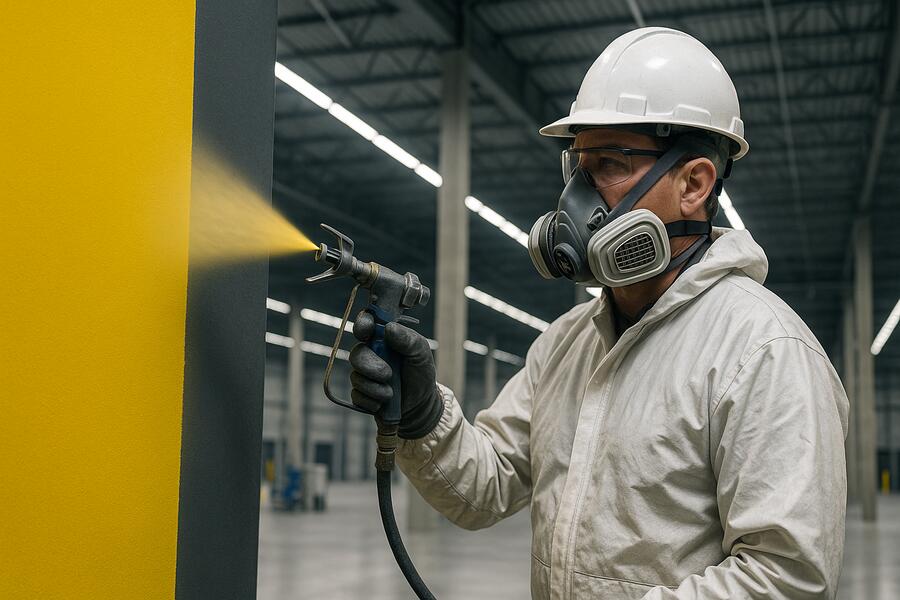
When it comes to maintaining the structural integrity and aesthetic appeal of commercial and industrial facilities, property managers and business owners often face a crucial decision: should they hire a general painting contractor or a specialized industrial painting crew? While both types of contractors apply paint, what sets industrial painting crews apart from general contractors is a profound difference in expertise, equipment, safety protocols, and the very nature of the work itself. Industrial environments—from factories and warehouses to manufacturing plants and chemical processing facilities—present unique challenges that far exceed the scope of typical commercial or residential painting.
Our experience has shown that understanding these distinctions is vital for ensuring project success, long-term coating performance, and most importantly, the safety of everyone involved. Generic approaches simply don’t cut it in industrial settings. This article will break down the key differentiators, highlighting why specialized industrial painting crews are indispensable for projects that demand more than just a fresh coat of paint.
Specialized Knowledge of Industrial Coatings and Substrates
The most significant distinction between industrial painting crews and general contractors lies in their understanding and application of industrial coatings.
Advanced Coating Systems
- Beyond Decorative: General contractors primarily work with architectural paints designed for aesthetic appeal and moderate durability in residential or standard commercial settings. Industrial painting crews, however, are experts in high-performance coatings like epoxies, urethanes, polyureas, specialized primers, and corrosion-resistant systems. These coatings are engineered for specific functions: resisting chemicals, abrasions, extreme temperatures, UV radiation, and heavy impacts.
- Functional Purpose: Industrial coatings serve a critical protective function, extending the life of machinery, structural steel, tanks, pipes, and concrete floors against harsh operational environments, not just providing a finish.
Diverse Substrate Expertise
- Complex Materials: Industrial facilities often feature a wide array of substrates—structural steel, galvanized metal, concrete, specialized alloys, and even operational machinery. Each material requires a unique approach to surface preparation and coating selection.
- Corrosion Control: A deep understanding of corrosion science and cathodic protection is standard for industrial painters. They know how to identify different types of corrosion and apply the correct multi-coat systems to mitigate it, which is rarely a concern for general contractors.
💡 Key Takeaway: Industrial painting crews possess specialized knowledge of advanced, functional coatings (epoxies, urethanes) designed for extreme durability and protection against industrial stressors, far beyond the decorative paints used by general contractors. They are also experts in preparing and coating diverse industrial substrates, including complex corrosion control.
Rigorous Safety Protocols and Certifications
Safety is paramount in industrial environments, and this is another area where industrial painting crews stand distinctly apart.
OSHA Compliance and Training
- Strict Regulations: Industrial painting projects are subject to rigorous OSHA (Occupational Safety and Health Administration) regulations, especially concerning confined spaces, fall protection, hazardous material handling, and respiratory protection. Industrial crews are extensively trained and certified to meet and exceed these standards.
- Specific Hazard Mitigation: They are adept at managing risks associated with lead-based paint, asbestos, hazardous fumes from solvents, combustible dust, and working around active machinery or hot surfaces. This includes developing site-specific safety plans, conducting regular safety briefings, and utilizing advanced PPE.
Specialized Equipment and Techniques
- Advanced Application Methods: Industrial painters utilize heavy-duty equipment such as airless sprayers, plural component sprayers, and specialized abrasive blasting equipment. They are trained in precision application techniques required for complex geometries and large-scale industrial assets.
- Containment and Environmental Controls: When working with hazardous materials or in sensitive environments, industrial crews employ sophisticated containment systems (e.g., scaffolding enclosures with negative air pressure) to protect surrounding areas and prevent environmental contamination. They also manage ventilation systems to control airborne contaminants.
These advanced capabilities are a hallmark of dedicated warehouse painting phoenix az specialists, ensuring both safety and quality.
💡 Key Takeaway: Industrial painting crews prioritize safety with extensive OSHA training, certifications for high-risk work (confined spaces, lead abatement), and specialized equipment for containment and advanced application, a level of rigor typically not found with general contractors.
Operational Acumen and Project Management
Industrial painting projects often occur in active facilities, requiring a unique approach to scheduling and execution to minimize downtime.
Working Around Operations
- Minimized Disruption: Industrial painting crews understand the critical need to maintain operational continuity. They are skilled at coordinating schedules, working off-hours, phasing projects, and implementing strict containment to avoid disrupting production or logistics.
- Efficient Workflow: Their experience enables them to plan for efficient material flow, equipment placement, and waste management within a busy industrial setting, ensuring smooth project progression.
Project Scale and Complexity
- Large-Scale Expertise: Industrial projects often involve vast surface areas, extreme heights, intricate machinery, and complex structural elements. Industrial painting crews have the workforce, equipment, and logistical capabilities to handle projects of this scale and complexity.
- Long-Term Planning: They focus on providing coating systems that offer long-term protection, reducing future maintenance cycles and overall lifecycle costs for the client, whereas a general contractor might focus more on immediate aesthetic results.
| Feature | Industrial Painting Crews | General Painting Contractors |
|---|---|---|
| Coating Expertise | High-performance, functional, protective coatings (epoxies, urethanes, corrosion control). | Architectural, decorative, standard commercial paints. |
| Substrate Knowledge | Diverse industrial materials (steel, concrete, specialized alloys), corrosion science. | Common building materials (drywall, wood, standard concrete). |
| Safety Training/Compliance | Extensive OSHA training (confined space, fall protection, HazMat), site-specific safety plans. | General safety practices, less specialized OSHA focus. |
| Equipment & Techniques | Heavy-duty sprayers, abrasive blasting, sophisticated containment. Precision industrial application. | Standard brushes, rollers, airless sprayers. General application techniques. |
| Project Management | Coordination around active operations, large-scale logistics, long-term asset protection. | Focus on aesthetics, shorter-term projects, less operational complexity. |
💡 Key Takeaway: Industrial crews excel in complex project management, minimizing disruption in active facilities through strategic scheduling and efficient workflow. Their ability to handle large-scale projects and focus on long-term protection significantly differentiates them from general contractors.
The distinction between industrial painting crews and general contractors is clear and critical. Industrial environments demand a level of expertise, safety adherence, specialized equipment, and operational understanding that general contractors are simply not equipped to provide. For facility managers and business owners, selecting a painting crew with proven industrial experience ensures not only a superior, durable finish but also compliance with stringent safety regulations and minimal disruption to operations. When your project involves more than just aesthetics—when it’s about protection, longevity, and safety in a challenging environment—a specialized industrial painting crew is the only reliable choice.
Have questions about what sets industrial painting crews apart from general contractors? Reach out to our team today.
Frequently Asked Questions
What specific types of facilities do industrial painting crews typically work on?
Industrial painting crews typically work on a wide range of facilities including manufacturing plants, warehouses, chemical processing facilities, power plants, water treatment plants, refineries, heavy equipment, and large-scale commercial structures like distribution centers. Any facility with harsh operational conditions or specialized coating needs falls within their expertise.
Do industrial painting crews require special certifications?
Yes, often beyond standard general contractor licenses. Industrial painters may hold certifications in specific areas like NACE (now AMPP) coating inspection, SSPC (The Society for Protective Coatings) surface preparation and coating application, lead abatement, confined space entry, and various OSHA safety certifications. These certifications demonstrate a specialized level of competence and adherence to industry standards.
How do industrial painters ensure minimal disruption to ongoing operations?
Industrial painters employ several strategies to minimize disruption, including scheduling work during off-hours, weekends, or plant shutdowns; carefully phasing projects to allow operations to continue in adjacent areas; using advanced containment systems to isolate work zones; and maintaining clear communication with facility management to adapt to operational changes. Their project planning is heavily focused on logistical efficiency.
What’s the difference between surface preparation for industrial vs. general painting?
Surface preparation in industrial painting is significantly more rigorous. It often involves abrasive blasting (sandblasting) to achieve specific surface profiles (e.g., SSPC-SP 10 Near-White Blast Cleaning) for maximum coating adhesion and performance. General painting might involve basic washing, sanding, and scraping. Industrial prep removes all contaminants and provides an optimal anchor pattern for specialized coatings, which is crucial for their longevity in harsh environments.
